
OPEC+ members will set 2027 production targets at their next ministerial meeting though the impact of the ongoing Middle East conflict will have a much greater bearing on short-term direction for oil prices.
Debate on capacity levels could lead to more friction embedding in the exporters' alliance, risking the impact of production coordination in 2027.
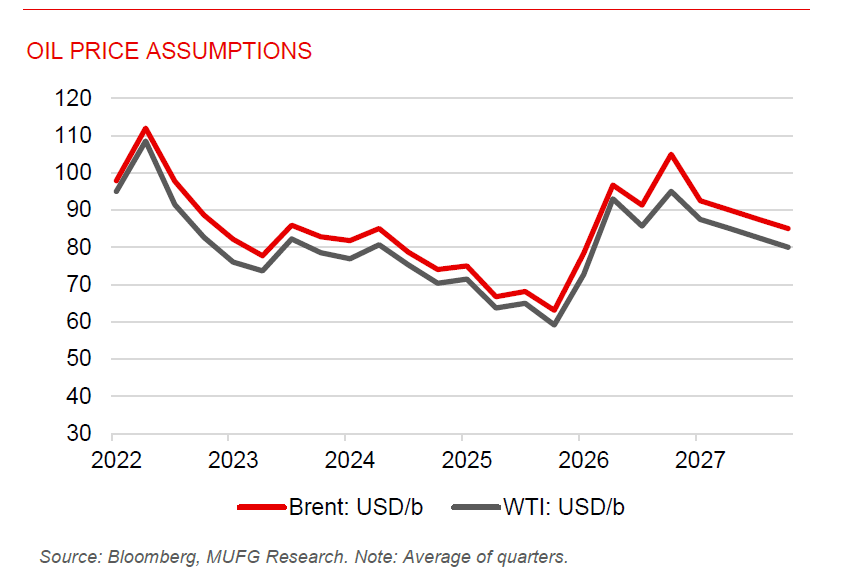
We expect oil prices will hold near recent levels for the balance of 2026 before trending modestly lower in 2027 as markets still price in a high degree of geopolitical uncertainty.
OPEC+ to set target levels amid unresolved conflict in the Middle East
OPEC+ countries hold a ministerial meeting on 29 November where they will review production capacity estimates and decide on target levels for 2027. Throughout this year OPEC+ members have gradually unwound production restraint that was introduced in 2022 and then subsequently adjusted depending on market conditions over the last several years. But in 2026, the “unwind” of production restraint has been largely notional given many OPEC+ members, including key producers in the Middle East, have seen production and exports negatively impacted by the regional conflict.
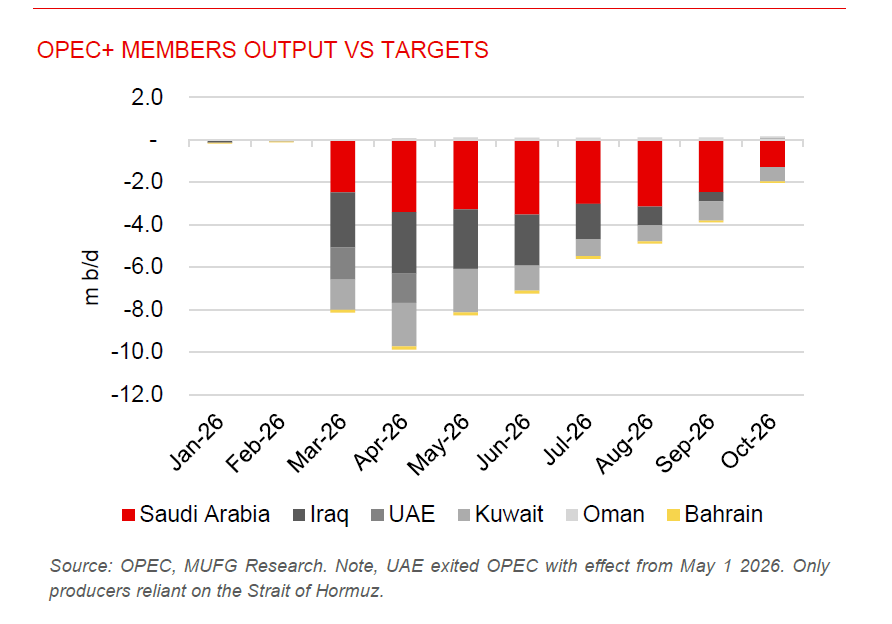
As of October, production from OPEC+ members reliant on the Strait of Hormuz for export was still 1.8m b/d below target levels as disruption to exports via attacks on shipping or higher freight and insurance costs feeds back into lower production volumes. Only Oman, whose export capacity sits outside the Strait of Hormuz, has been able to increase production steadily this year, exceeding production quotas by an average of 89k b/d per month so far this year.
OPEC+ will need to debate production capacity levels for members
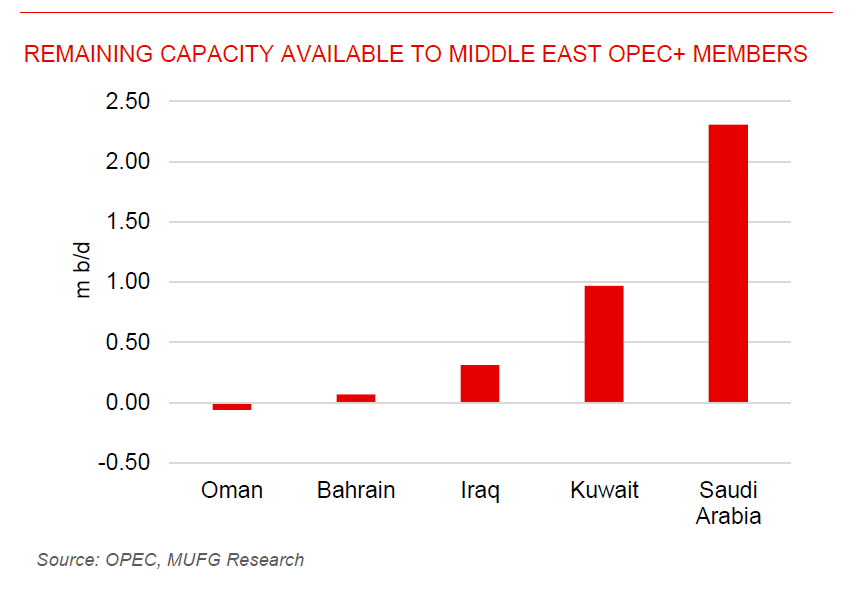
A key determinant for target levels in 2027 will be OPEC+ estimates of individual countries’ production capacities. Disagreement between members on total capacity has led to frustration between OPEC+ members in the past as individual members have balked at restraint imposed collectively despite the scale of capital expenditure that some countries have taken. Ahead of this ministerial meeting, Iraq and Kazakhstan have both been pushing for higher production targets according to press reports and lack of agreement between OPEC+ members on capacity estimates could see more fractures emerging within the exporters’ alliance. On the assumption that OPEC+ members keep their existing baseline production estimates then there is roughly 3.6m b/d of capacity that could come back into the market, the bulk of which is held by Saudi Arabia. However, on historic performance Saudi Arabia has always kept a sizeable buffer between production levels and capacity to be able to intervene and influence short-term oil market balances.
Outlook for regional geopolitics outweighs OPEC+ influence for now
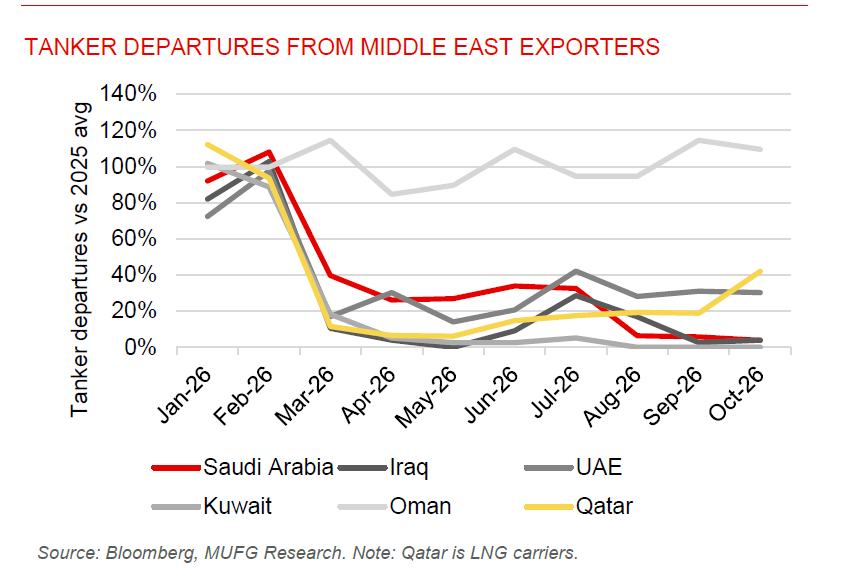
If Iraq successfully argues for a higher baseline level then the potential flood of OPEC+ oil would be even larger. However, this OPEC+ decision is being held in the context of the still unresolved conflict in the Middle East that is specifically impacting volumes from regional producers. Despite an improvement in flows in the last few months as the US military has been escorting ships moving through the Strait of Hormuz, regional export volumes remain low relative to pre-war levels. The outlook for the regional conflict and whether it will escalate once again or ease back will have a much greater influence on near-term oil market balances and prices than OPEC+ production targets for next year.
OPEC+ members face a large surplus pending for 2027
Also weighing against a large increase in OPEC production targets will be the pending market oil market surplus that is growing in market consensus. The IEA’s most recent estimates for 2027 demand and non-OPEC supply imply a sharp drop in the required output from OPEC members to balance markets (the call on OPEC). Spot oil prices fell sharply for much of November in the absence of a renewed US – Iran conflict, leaving markets to focus on the outlook for 2027 and pending build in stockpiles.
Oil price outlook contingent on stability in regional geopolitics
We expect that oil prices will hold close to recent levels for the balance of 2026 and then trend slightly downward in 2027, targeting an average of USD 88.75/b in Brent markets, down from USD 93/b in 2026, and an average of USD 83.75/b in WTI in 2027 compared with USD 86.60/b this year. However, that outlook is highly contingent on no material deterioration on regional geopolitics. Attacks this week from Houthi militants in Yemen against key sites in Saudi Arabia, including the Ras Tanura export and refining facility, highlight how volatile Middle East geopolitics remains.