

Risk-off rally in Treasuries
Ahead Today
G3: Fed Chair Warsh remarks
Asia: Singapore NODX, Malaysia GDP
Market Highlights
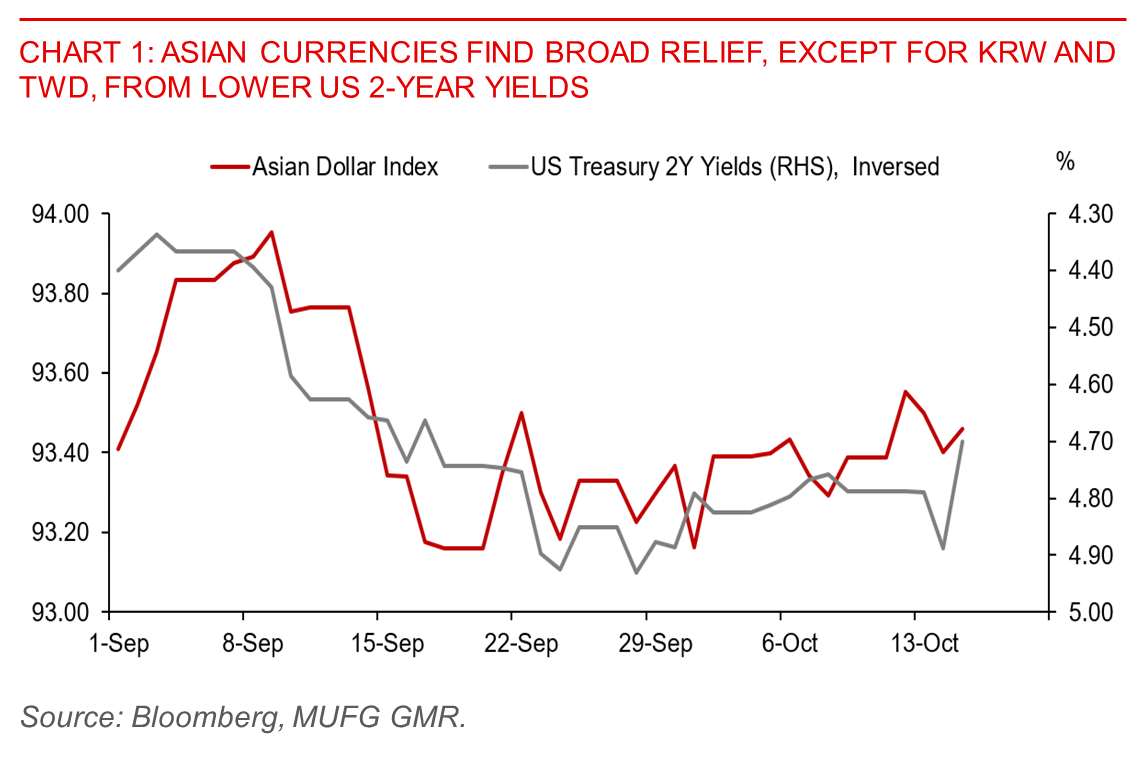
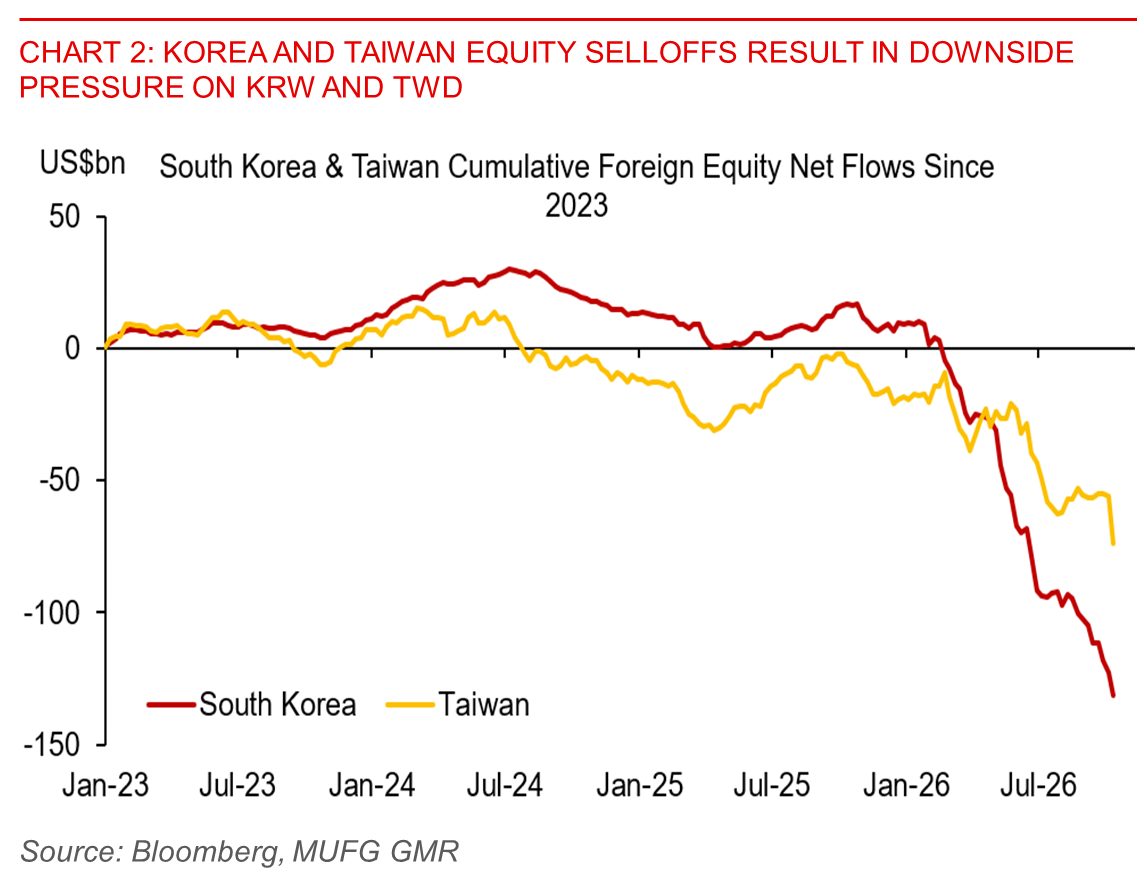
The US 2-year Treasury yield fell sharply to the 4.7% level as the technology-led equity selloff drove demand for safety, reversing all the initial post-CPI rise in rates. The rally extended further along the curve, with the 10-year yield falling from 5.32% following the CPI release to around the 5.05% range, while the dollar retreated from its recent highs. Concerns over AI funding and the sustainability of infrastructure spending weighed heavily on semiconductor shares, with the KOSPI falling nearly 8% and foreign investors selling USD$2.6bn of Korean equities.
Fed Vice Chair Bowman’s patient policy stance reinforced the decline in short-end Treasury yields as the technology-led equity selloff intensified. Her view that there was no urgency to tighten again after September’s hike gave markets greater scope to focus on the risk-off move, helping the US 2-year yield fall despite stronger-than-expected inflation data.
The regional flow shock was even more pronounced in Taiwan, where foreign equity outflows reached a record US$9.9bn yesterday, after Tuesday’s US$5.4bn outflow, marking the two largest daily withdrawals in its history. For Asia FX, lower US yields have brought broad relief across the region. KRW and TWD are the notable exceptions, with heavy equity outflows leaving them as two of Asia’s weakest currencies this week.
Meanwhile, stronger-than-expected US producer prices did little to dislodge the haven bid for Treasuries, even as markets continued to price further Fed tightening. Headline PPI rose 1.3%mom and accelerated to 6.3%yoy in September, with the increase driven in large part by higher energy prices. Underlying pressures were also firm, with PPI excluding food and energy rising 0.7%mom, although the components feeding into PCE inflation were more mixed. Treasuries remained higher following the release, suggesting that concerns surrounding the technology selloff continued to outweigh the immediate inflation surprise. Nonetheless, markets still priced around a 27% probability of an October Fed hike and fully priced a 25bps increase by year-end. Markets are also awaiting Fed Chair Warsh’s comments for further guidance on the policy outlook.
In Japan, Bank of Japan Board Member Junko Koeda reinforced the case for further tightening, with a more explicit warning against excessive caution than in her previous speech. Her latest remarks placed greater emphasis on upside price risks and still-accommodative financial conditions, while she judged the neutral rate to be considerably above 1%. In our view, Koeda’s comments reinforce the case for continued policy normalisation, while stopping short of signalling the timing of the next move. Her emphasis on upside price risks and still-accommodative financial conditions is consistent with further rate increases in the coming months, with the pace dependent on incoming economic and inflation data. Overnight swaps imply only around a 4% probability of a move in October but an 82% probability by December.
Elsewhere in the region, attention turns to Singapore’s September non-oil domestic exports and Malaysia’s advance 3Q GDP release. Malaysia’s GDP growth is expected to ease to 5.1%yoy from 6.0%yoy in 2Q.