

MSCI downgrade risk adds to IDR headwinds
Ahead Today
G3: US NAHB housing index, Japan tertiary industry index
Asia: China GDP and activity data, Malaysia CPI and trade, Philippines BOP
Market Highlights
The dollar softened after Fed Chair Warsh offered no hawkish steer at the IMF meetings, prompting markets to scale back expectations of another rate hike at the 27-28 October FOMC meeting. The implied probability of a rate hike fell from around 27% before his remarks to around 17%. Nonetheless, we think the broader backdrop remains challenging for several Asia currencies given still-high global yields. Political risks are also back in focus in Europe after nationwide protests in France turned violent, potentially weighing on the euro keeping DXY supported.
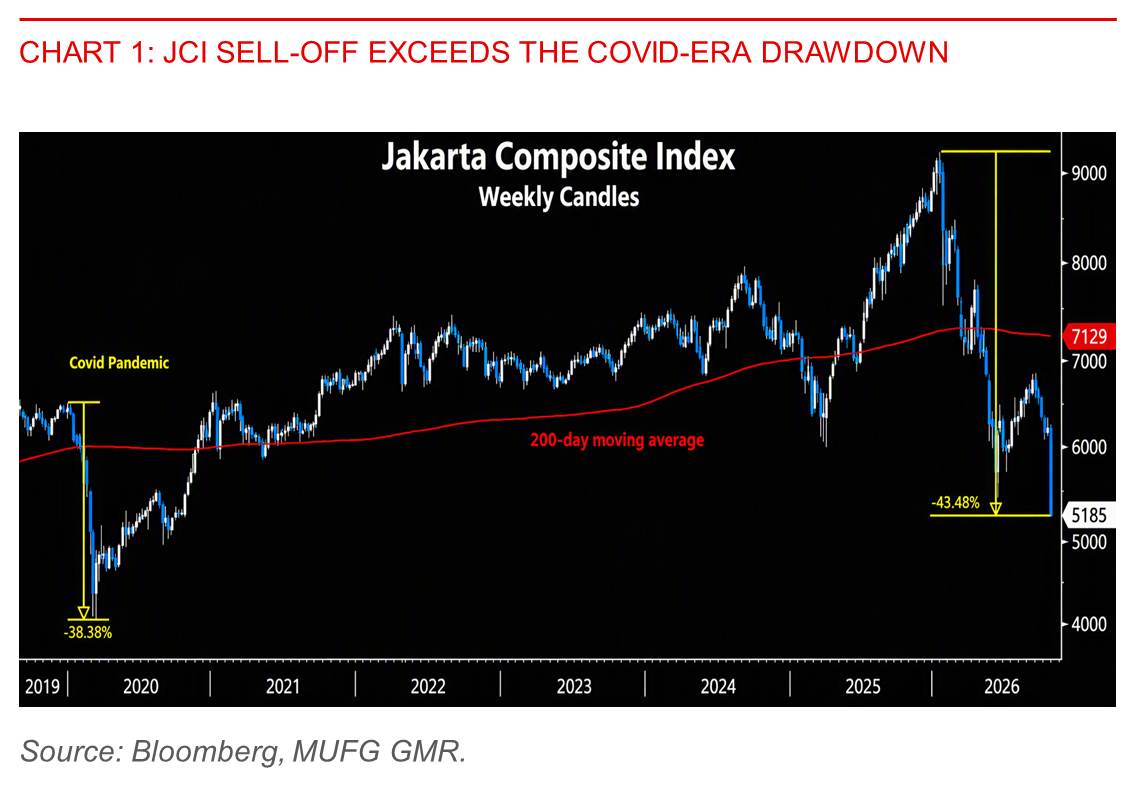
We remain cautious on Asia FX as elevated global yields and oil prices continue to weigh on the more externally vulnerable currencies. Indonesia remains one of our key concerns. The rupiah has weakened above IDR18,000/USD, while our existing framework points to a combination of higher US yields, weaker external balances from elevated oil prices and a tougher trade-off for Bank Indonesia.
MSCI concerns add another layer of pressure on the rupiah. MSCI has launched a consultation to potentially reclassify Indonesia directly from Emerging Market to Standalone Market status, citing a continued lack of transparency. Importantly, MSCI noted that a move to Frontier Market status would not be enough to reflect the depth of the concerns. A final decision by MSCI on Indonesian equities market classification is due by 30 June 2027.
Importantly, cheap equity valuations have yet to restore foreign conviction. Our analysis shows net foreign equity flows turning negative again, while the earnings outlook has been revised down. The important constraint is whether international investors are comfortable with market governance, liquidity and investability.
The MSCI consultation risks keeping foreign participation subdued for longer. MSCI will maintain its existing freeze on selected index changes. This matters for IDR because persistent weakness in foreign equity participation removes one potential source of portfolio inflows at a time when Indonesia is already facing pressure from higher oil prices and a weaker external balance.
Not all of the domestic stories are weak. Indonesia’s investment cycle remains reasonably supportive, with investment-loan growth accelerating and infrastructure-related investment providing a notable bright spot. However, this has yet to translate into a broad earnings recovery or stronger foreign demand for Indonesian equities. The divergence matters: domestic investment can remain firm even while foreign portfolio investors stay cautious.
We maintain a cautious bias for IDR. A potential Fed pause in October may temporarily ease the external pressure, but we do not think it is sufficient to reverse the rupiah trend while Indonesia-specific risks are increasing. The oil shock is already eroding the trade balance, while the MSCI consultation now adds another potential drag through the portfolio-flow channel. We therefore maintain our bias for further USD/IDR upside, with our existing forecasts at 18,350 in Q4 2026 and 18,500 in Q1 2027.