

US PCE and tariff risks in focus
Ahead Today
G3: US PCE, Personal Spending, 3Q GDP (2nd Release), Durable Goods, Initial Jobless Claims
Asia: -
Market Highlights
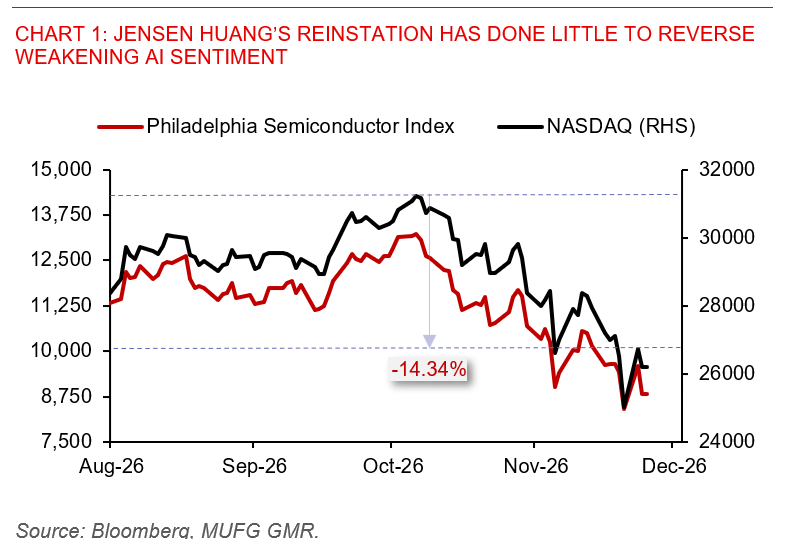
US equities gave back part of Monday’s rally as reports of possible US tariff increases weighed on sentiment. Nasdaq slipped by 2% while the Philadelphia Semiconductor Index fell by nearly 8% as Jensen Huang’s return to NVIDIA did little to resolve broader concerns about returns on AI spending. The proposed duties could lift the effective US tariff rate back towards levels seen before February’s court ruling.
The equity sell-off supported demand for Treasuries, with US 2-year and 10-year yields each falling 2bp. The dollar also weakened sharply, with DXY retreating to around 103.8 after briefly touching 104.5.
Attention now turns to US PCE inflation, with the October headline expected to rise 3.8%yoy today. With a December hike fully priced in, core PCE could shape expectations for the Fed’s subsequent policy path. A firmer print could bring forward expectations for further hikes and support the dollar, while a softer reading could extend its decline.
For Asian FX, markets will monitor both the PCE figures and tariff developments, balancing potential relief from a weaker dollar against renewed trade uncertainty.
In Asia, Tuesday’s equity rally offered little support to KRW and TWD. The TAIEX rose 9.0% and the KOSPI gained 6.3% to reclaim the 5,000 level. With the dollar still strong during Asian trading hours yesterday, USD/KRW edged just 0.1% lower to a touch above 1,340, while USD/TWD rose 0.17% to near 33. TWD weakened despite Taiwan’s industrial production growth accelerating to 29.8% YoY in October from 19.4% the previous month, its fastest pace since 2010. Markets will watch whether Tuesday’s equity gains are reversed following the US tech sell-off. Any pullback could weigh on KRW and TWD, though a softer PCE print and a weaker US dollar could offer some relief.
In Singapore, final Q3 GDP growth was revised up to 6.1% YoY from the advance estimate of 5.4%, above consensus of 5.6%. Strong AI-related demand helped lift the government’s 2026 growth forecast to around 6% from 4.5–5.5%, though it expects growth to slow to 2.5–4.5% in 2027 as AI investment moderates.