

Higher Oil and US Yields deepen Asian FX Divergence
Ahead Today
G3: Eurozone Economic Confidence, Fed speakers including Waller, Williams, Barr, Bowman, Musalem, Goolsbee, US consumer confidence, US JOLTS
Asia: RBA monetary policy decision, China current account, Taiwan monitoring indicator
Market Highlights
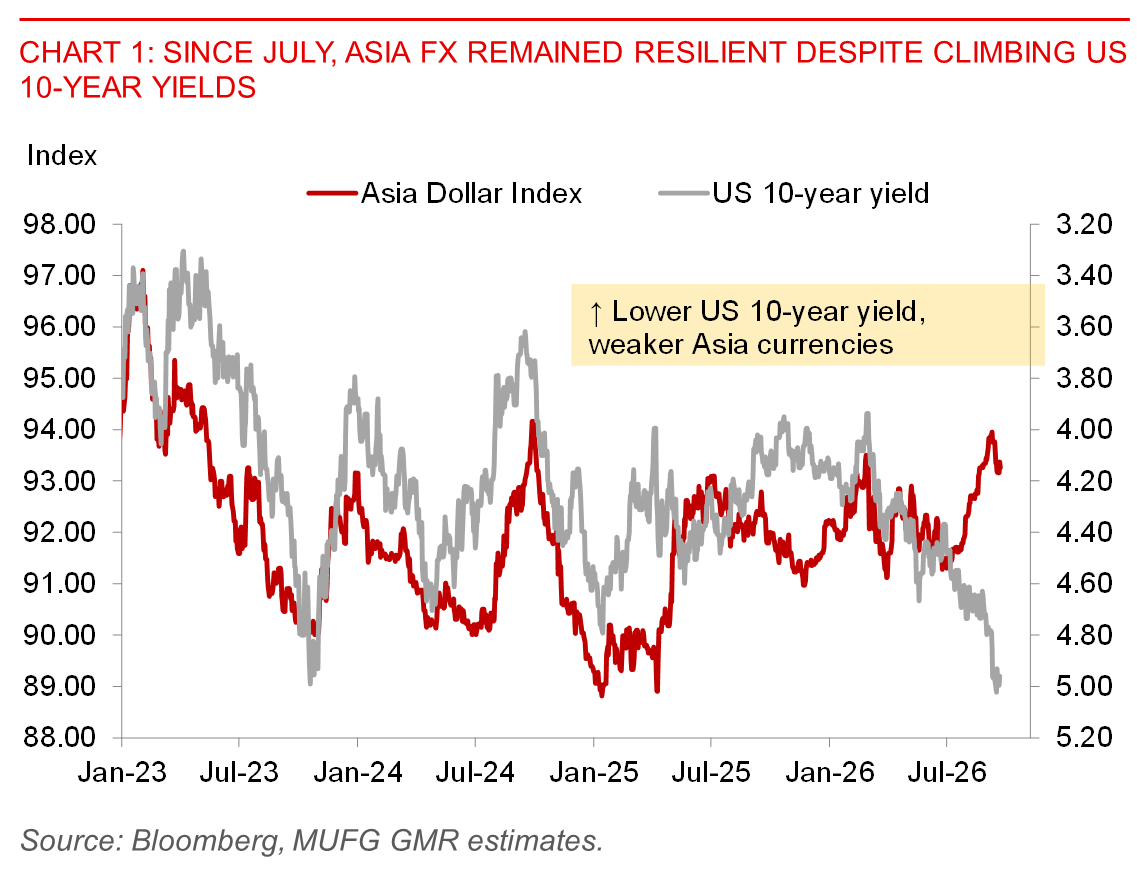
The external backdrop remains challenging for Asia FX, although regional currencies have remained relatively resilient despite the sharp rise in US yields since July. The dollar index rose to around 101.1 and the US 10-year Treasury yield moved above 5.2%, as higher oil prices reinforced concerns over inflation and tighter monetary policy. Brent also remained above $100/bbl, presenting Asia’s oil importers with a negative terms-of-trade shock and higher-for-longer global yields.
The Asia Dollar Index has fallen below its July highs but remains well above the lows recorded in Q1 2025, likely reflecting strong AI-related exports, resilient regional growth and local policy buffers. Nonetheless, Asia FX has weakened over the past two weeks as markets adopted a more hawkish view of the Fed, suggesting that this resilience is being tested. We expect SGD and CNY to remain more defensive, while IDR and THB look more exposed if oil prices, US yields and dollar strength remain elevated.
In Japan, the BOJ’s July meeting minutes released yesterday reinforced its hawkish policy shift. Many members judged that underlying inflation was approaching 2%, with some arguing that hikes could proceed faster than the roughly six-month intervals expected by markets. While the minutes predate September’s hike to 1.25%, they suggest that the tightening cycle is not over. Further hikes and intervention risk should help contain JPY weakness, although a sustained decline in USD/JPY would likely require some moderation in US yields and broader dollar strength.
China’s industrial profit data reinforced the uneven nature of its recovery. Profits rose 15.7%yoy in January-August, but slowed to 4.2%yoy in August, the weakest pace this year. Electronics contributed 62% of overall profit growth, while automobile and other consumer-facing industries remained weak. Strong AI-related demand continues to support China’s technology sector, but has yet to generate a broad domestic recovery. We do not think the data materially alter the near-term CNY outlook, with exporter conversions and the PBOC’s lower USD/CNY fixing bias remaining more important drivers.
The key event today will be the RBA decision, although forward guidance should matter more for AUD than the decision itself. A widely expected 25bp hike would take the cash rate to 4.60%, shifting attention towards the vote and whether further tightening is signalled. A hawkish message could support AUD through higher short-end yields, although upside may be constrained by existing pricing and the difficult global backdrop. A hold or more balanced guidance would likely weigh on AUD.