

Oil relief, but flow risks keep regional FX on the defensive
Ahead Today
G3: US JOLTS Job Openings, Durable Goods, Factory Orders
Asia: Australia Policy Rate, Vietnam CPI and Trade
Market Highlights
Oil prices slumped after Iran's Supreme Leader Mojtaba Khamenei gave the government approval to pursue peace talks, offering Asia FX some reprieve from the energy shock. Brent fell to around $105/bbl. Still, the geopolitical premium has not disappeared, though the risk-reward of maintaining large oil-shock trades is becoming less compelling as diplomacy appears to emerge.
Beyond oil, the bigger risk for tech-related Asia FX remains the AI trade, as investors question whether record capex will pay off. The Nasdaq lost almost 7% in October, its worst month since April 2025, while the US midterms add event risk. This keeps foreign equity flows into Asia’s tech-heavy markets fragile.
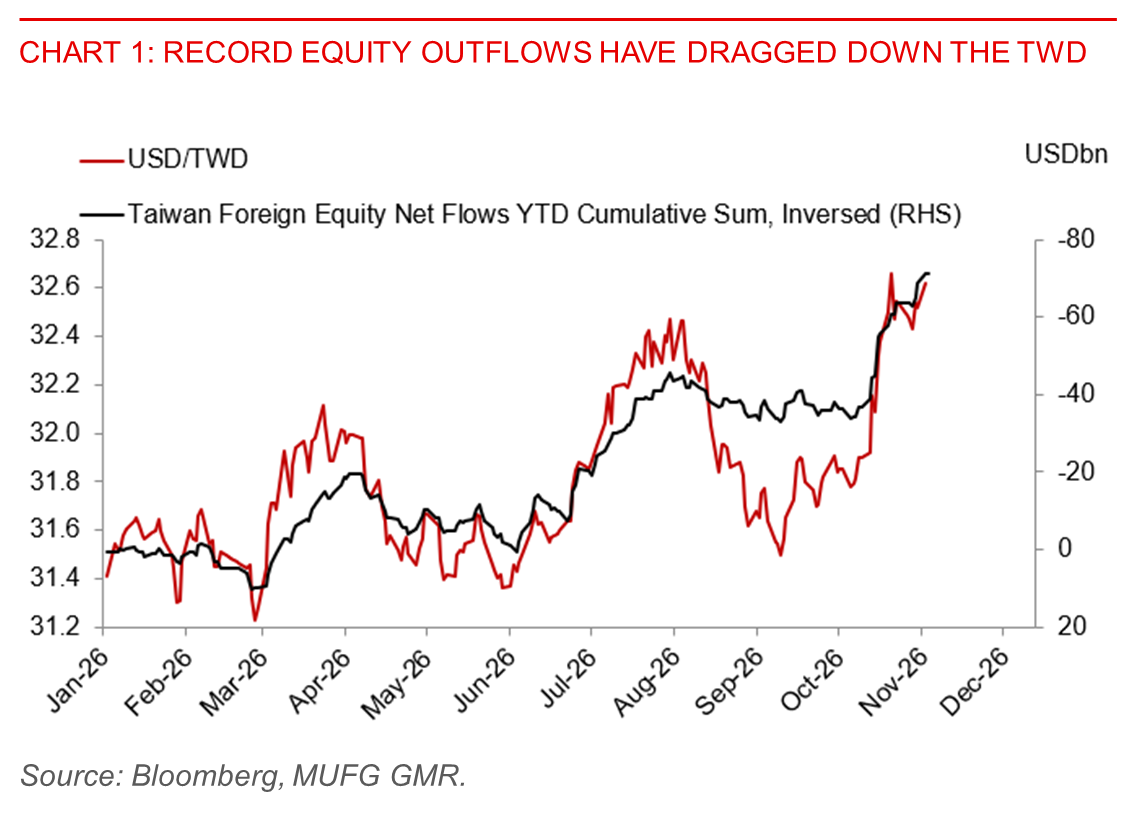
That fragility was evident yesterday, as KRW and TWD underperformed regional peers despite a softer dollar, with net foreign equity outflows continuing to dilute strong technology-driven fundamentals. USD/KRW rose 0.9%, while USDTWD rose 0.3%. Taiwan's central bank reportedly removed daily limits on exporters' USD sales following large foreign equity outflows in October. The move suggests authorities may be less tolerant of further TWD weakness. Meanwhile, October PMIs eased from elevated levels, with South Korea's at 51.3 from 53.9, and Taiwan's at 54.9 from 56.7, though both remain in expansion. The technology upcycle still underpins relative strength for both economies, but flows remain the key constraint on how far that feeds through to the currencies.
Indonesia's October CPI came in softer than expected, with headline inflation easing to 3.23%yoy from September's 3.28%yoy print and core inflation slowing to 2.56%yoy from 2.84%yoy, giving Bank Indonesia little inflation-driven reason to tighten, though IDR weakness remains a binding constraint. USD/IDR held above 18,000, while the 10-year Indonesian bond yield rose to 7.7%. Thursday's Q3 GDP release and Friday's FX reserves data will be key ahead of BI's 18 November policy meeting. We remain cautious on IDR, and a BI hike cannot be ruled out in the next policy meeting should currency pressures intensify.
Elsewhere, India's manufacturing PMI eased to 54.7 in October from 55.1, though new export orders grew at the fastest pace in six months and input cost inflation fell to its lowest since February. INR edged higher against the USD, helped by lower oil prices. Thailand's PMI improved to 54.8 from 54.3, but THB was little changed,. Meanwhile, MYR softened ahead of Thursday's BNM decision, where the policy rate is expected to be kept unchanged.