

RBI – Hikes a matter of time?
Ahead Today
G3: US MBA Mortgage Application
Asia: India Policy Rate
Market Highlights
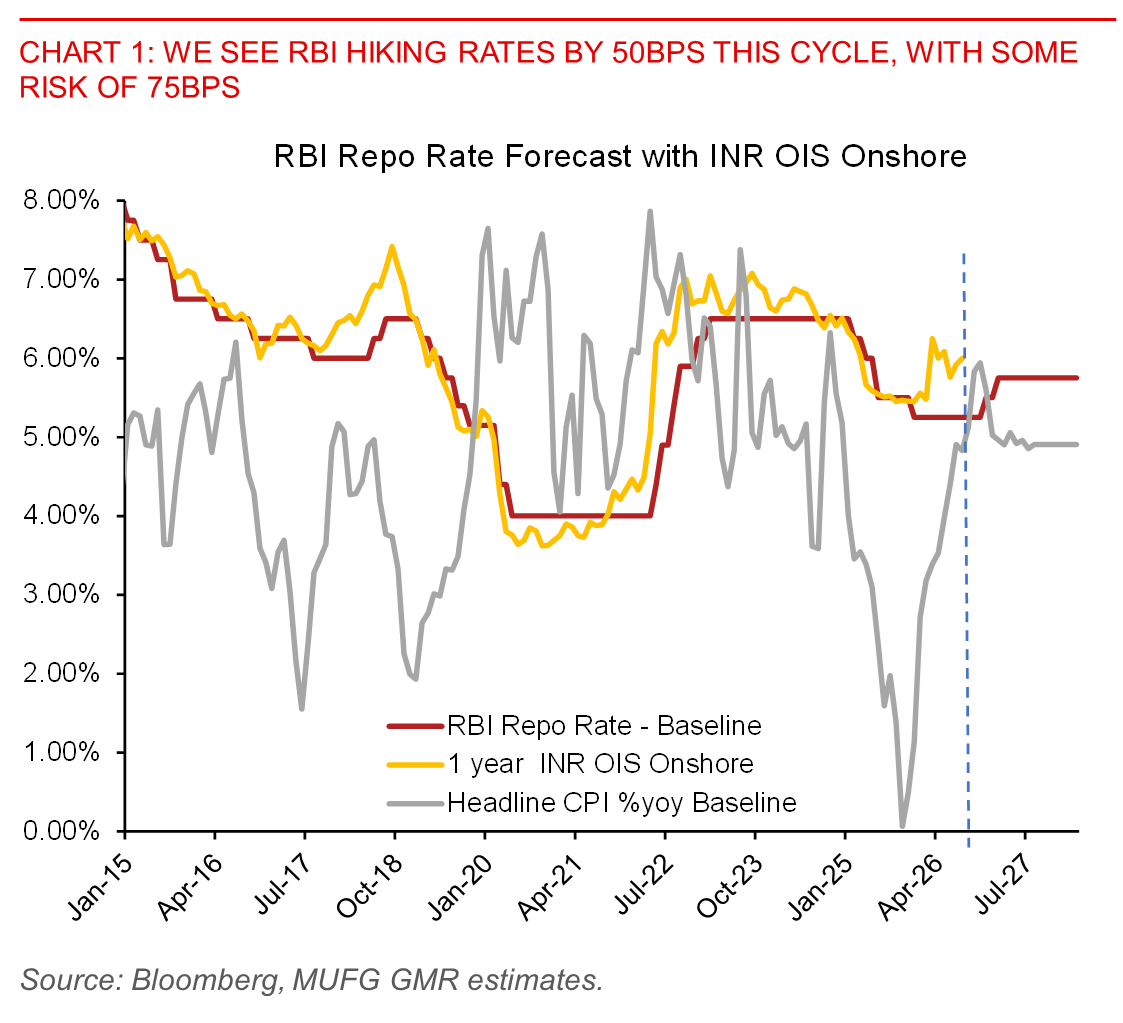
Markets will be closely watching today’s RBI policy decision, with investors focused on how policymakers assess inflation risks against a backdrop of abundant INR liquidity and global risks including higher US yields. While we expect the RBI to leave the repo rate unchanged at 5.25%, recent developments have reinforced our view that the current pause is likely temporary. Higher oil prices and weather-related risks have increased upside inflation pressures, while resilient domestic demand and still-abundant liquidity conditions should keep underlying price pressures elevated into 2027. At the same time, global conditions remain key risks with higher US yields putting pressure on INR from an FX perspective even as RBI has ample ammunition to defend against currency weakness. We continue to expect the RBI to begin a gradual tightening cycle with 25bp rate hikes in December and February as inflation risks become more persistent, with some risk of 75bps hikes in total this cycle. Nonetheless, this would still be less than what rates markets are currently pricing in total right now for the rate cycle.
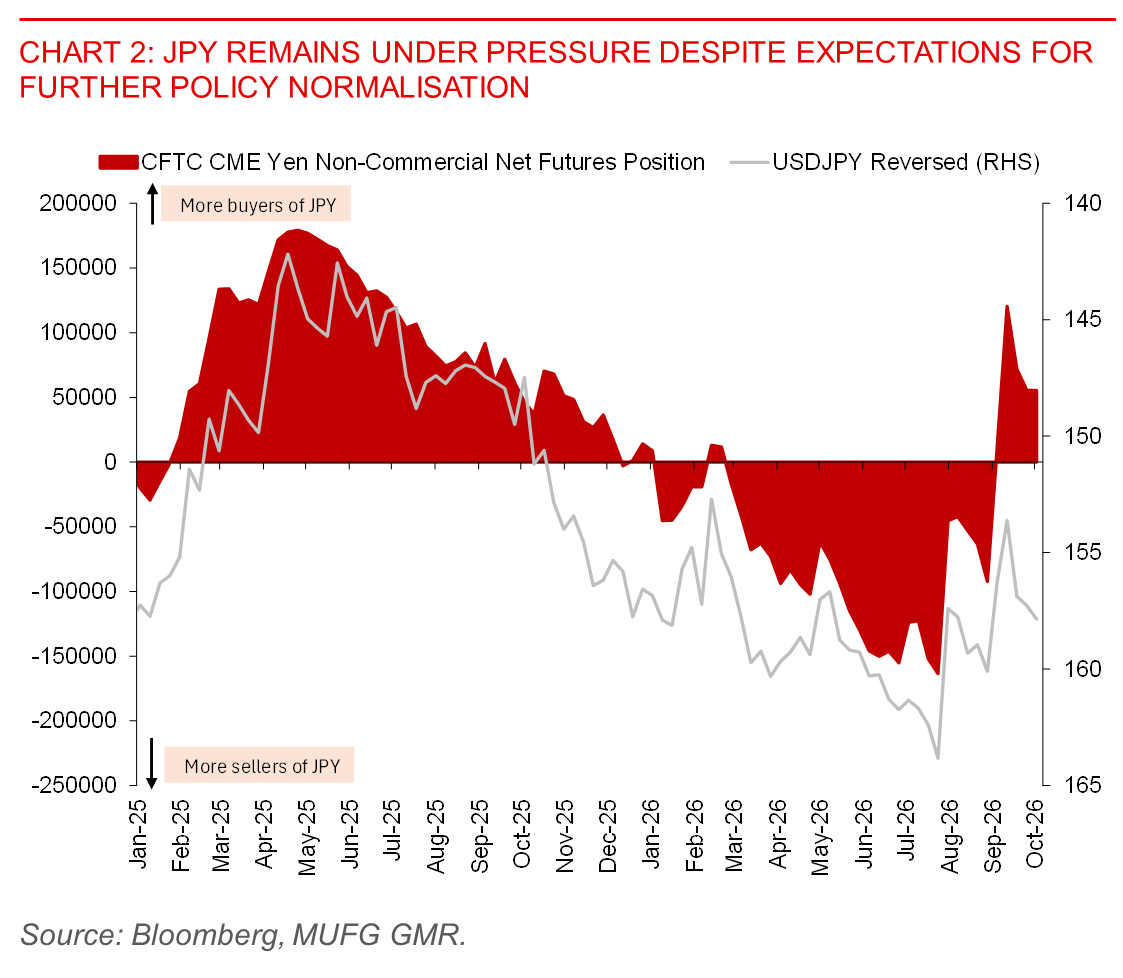
USDJPY continues trading above the 158 level, although Governor Ueda’s remarks continued to point towards further BOJ policy normalisation. Ueda emphasised the importance of anchoring underlying inflation around 2% and highlighted upside risks from import costs, AI-related demand and JPY weakness. Meanwhile, the 10-year JGB auction drew stronger-than-average demand as yields above 3% attracted buyers, suggesting investors are better compensated for duration risk despite lingering fiscal concerns. However, the solid auction result may also limit further upward pressure on yields.
Our global team remains constructive on the yen, but further gains will likely require the BOJ to validate expectations for a faster pace of rate hikes, particularly after the GPIF report prompted some unwinding of recent JPY strength. The report was interpreted as signalling continuity in portfolio allocation rather than a meaningful shift towards domestic assets, dampening expectations for an additional source of structural JPY demand and prompting some unwinding of long-JPY positions.
Inflation data from the Philippines and Thailand pointed to continued price pressures in the region.
In the Philippines, headline CPI accelerated to 7.2%yoy in September from 6.8%yoy in August, above the 6.1%yoy consensus forecast.
In Thailand, headline CPI moderated to 2.82%yoy from 3.10%yoy previously but remained above the 2.53%yoy consensus, while core CPI edged higher to 1.50%yoy from 1.44%yoy in August. The data point to underlying price pressures remaining relatively resilient despite some moderation in headline inflation.