

China-EU trade talks key focus
Ahead Today
G3: US University of Michigan Sentiment and inflation expectations
Asia: China-EU trade negotiations, Malaysia industrial production
Market Highlights
US Treasury bonds rallied, tech stocks fell, while the Dollar was somewhat weaker, with a strong 30-year Treasury auction, curbs on visas by the Trump administration and lower than expected reported revenues by OpenAI key drivers of these market moves. In particular, we saw lower yields across the US Treasury curve as a 30-year bond auction met with solid demand, with a decent bid-to-cover ratio of 2.54 (higher than the average of 2.41 times over the last 6 auctions), while indirect bids which includes foreign investors took 72% of the supply up from 69% over the last 6 auctions. Of course whether Treasury yields actually stabilises from here would also depend on many factors including the US-Iran conflict and how oil prices pan out from here. For what it’s worth, Trump said that US would “not be attacking Iran” before the midterm elections, citing what he said were “productive discussions” with the Islamic Republic, but this would also be dependent on whether and when Iran decides to escalate the conflict on its end.
Meanwhile, tech and semiconductor stocks fell, as the Trump administration announced moves to take aim at the Permanent Labour Certification Program , or PERM, which allows companies to sponsor a foreigner who has been working in the US under the H-1B and other visa holders to become a legal permanent resident. This could potentially have some impact on countries such as India and Indian IT firms as well, given the importance of H-1B visas for IT outsourcing work in the US, although we note that this reliance has generally fallen over time. Meanwhile, OpenAI’s annualized revenue is about US$20bn less than the company had signalled according to a FT report, which can help to explain some declines in sentiment in semiconductor stocks.
Overall for Asia, the macro picture looks quite resilient so far, with Taiwan’s September exports up a meaningful 61%yoy, while South Korea’s current account balance continues to be strong reaching around 20% of GDP annualised so far. Our base case is for some modest slowing in exports, but given higher levels of activity implies that the AI investment trend continues into 2027 and likely beyond.
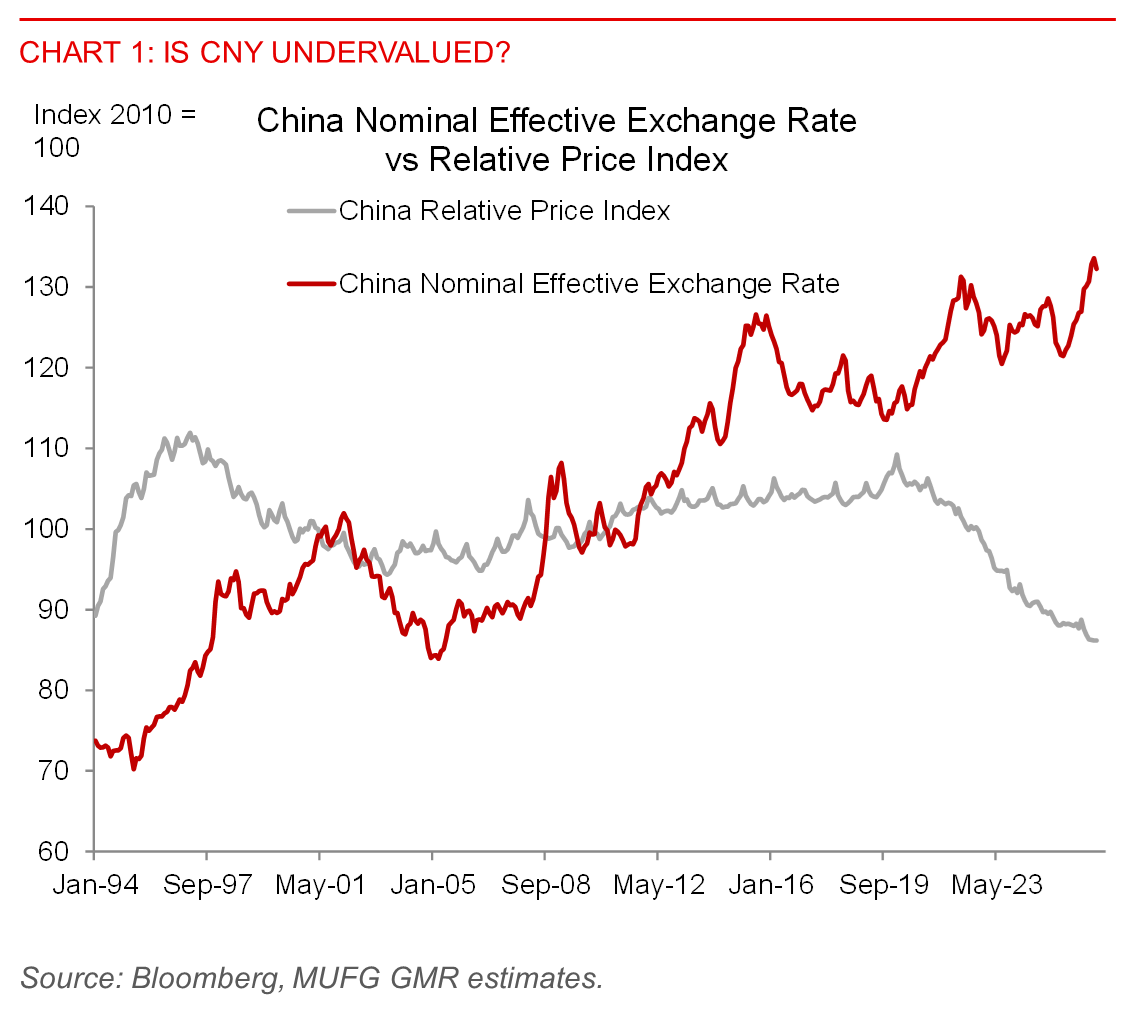
Ahead of EU-China trade negotiations today, the PBOC issued a formal document rejecting claims the CNY is undervalued, and said that China has no need or intent to gain competitive advantages through currency devaluation. It also argued that exchange rate adjustments will not resolve structural imbalances in the global economy, pushed back against the IMF’s assessment of CNY’s undervaluation, and also said that it will begin reporting some foreign exchange operation data to the IMF in 2027 as part of efforts to improve transparency. Whether EU actually starts to implement some of the key trade safeguard measures talked about including in a recent paper by Germany and France to the EU Commission will be key. Overall exchange rates are in part a reflection of the fundamentals, and the bigger issue is still a structural imbalance across the world in gaps between savings and domestic demand, divergence in competitiveness, coupled with high fiscal deficits on the public side especially in developed markets.