
Ahead Today
G3: US S&P PMI, US Conference Board Consumer Confidence, US New Home Sales
Asia: HSBC India PMI, Thailand FX Reserves
Market Highlights
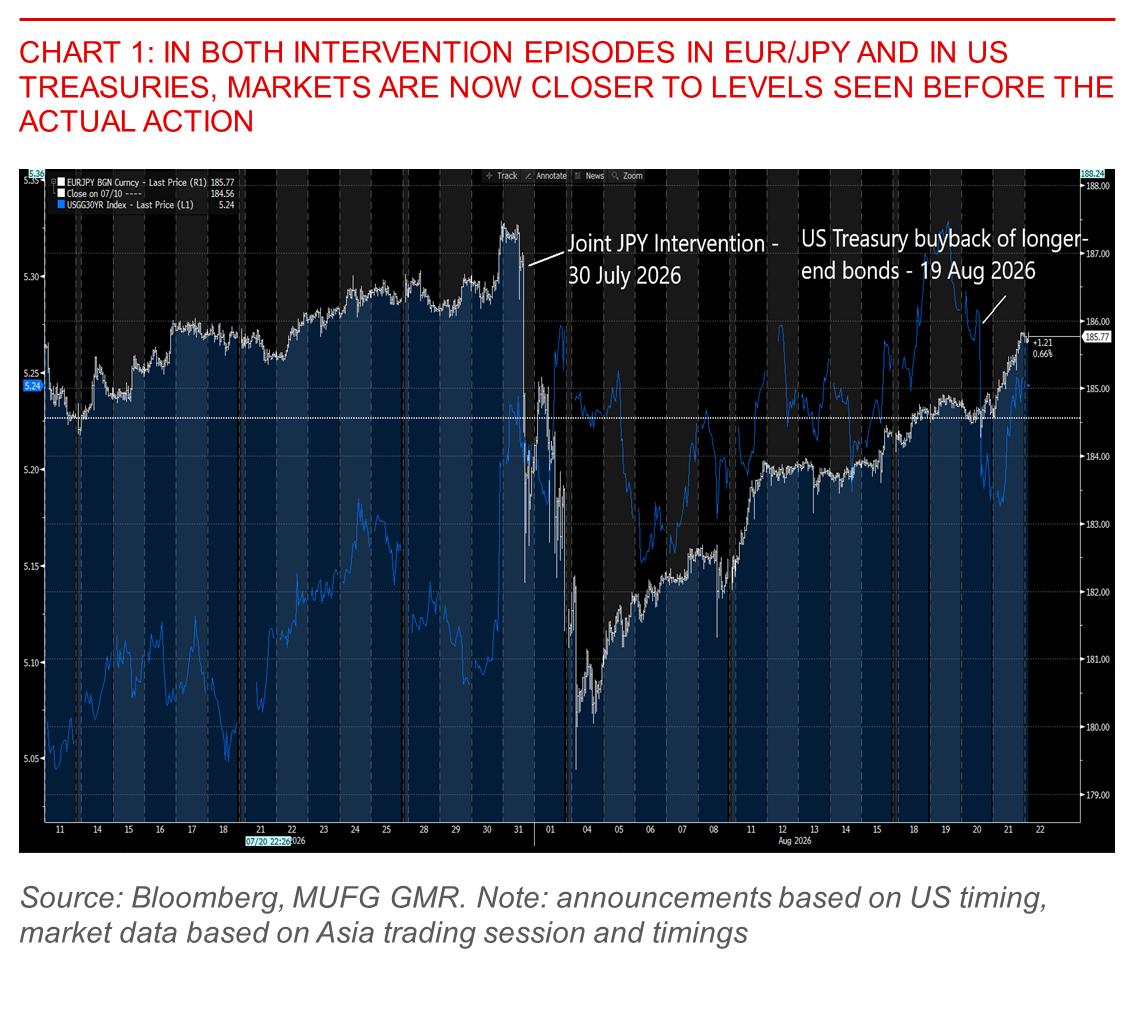
US longer-end yields rose back closer to levels seen before the US Treasury’s announcement of the buyback operation, with the 10-year now at 4.7% and the 30-year at 5.24% while risk assets took a corresponding hit with the S&P500 down 0.9%. From an FX perspective, the Dollar Index initially sold off but subsequently rose through the trading session, but we note that this seems to reflect factors specific to Japanese Yen underperformance, with USD/JPY rising closer to the 159 levels, and EUR/JPY in particular rising to 185.71 levels.
Overall, there is no irony lost that in both cases of key market intervention over the past month that levels are now closer to that seen before the action – first in the joint FX-intervention in the Japanese Yen between the US and Japan on 30 July, and second through the buyback announcement in the US Treasury market on 19 August.
The big picture as the global team and ourselves have been saying is that fundamentals matter, and for intervention to truly work in changing market trends be it as it may in FX or rates some underlying macro has to shift (see G10 FX Weekly – USD/JPY helped by negative NFP and Asia – 1st joint JPY buying FX intervention since 1998). On the US in particular a large part of the underlying issue has to do with the fiscal trajectory. On that front even though US Treasury Secretary Scott Bessent said that there will be a new initiative on fiscal consolidation to be announced at the end of this week or the beginning of next week, but markets do not seem to be buying into the ability of the US to credibly consolidate its fiscal deficit so far (see Asia – Why US yields rise matter for Asia). To be fair this is a global phenomenon and more so acutely in developed markets, and with rising spending needs globally in areas such as defence, infrastructure, climate adaptation and mitigation, coupled with AI, social and pension spending and so much more, it’s perhaps far easier politically for governments to take the easy way out here through financial repression and also letting inflation rise (and FX weaken as a possible release valve) rather than take the road less travelled.
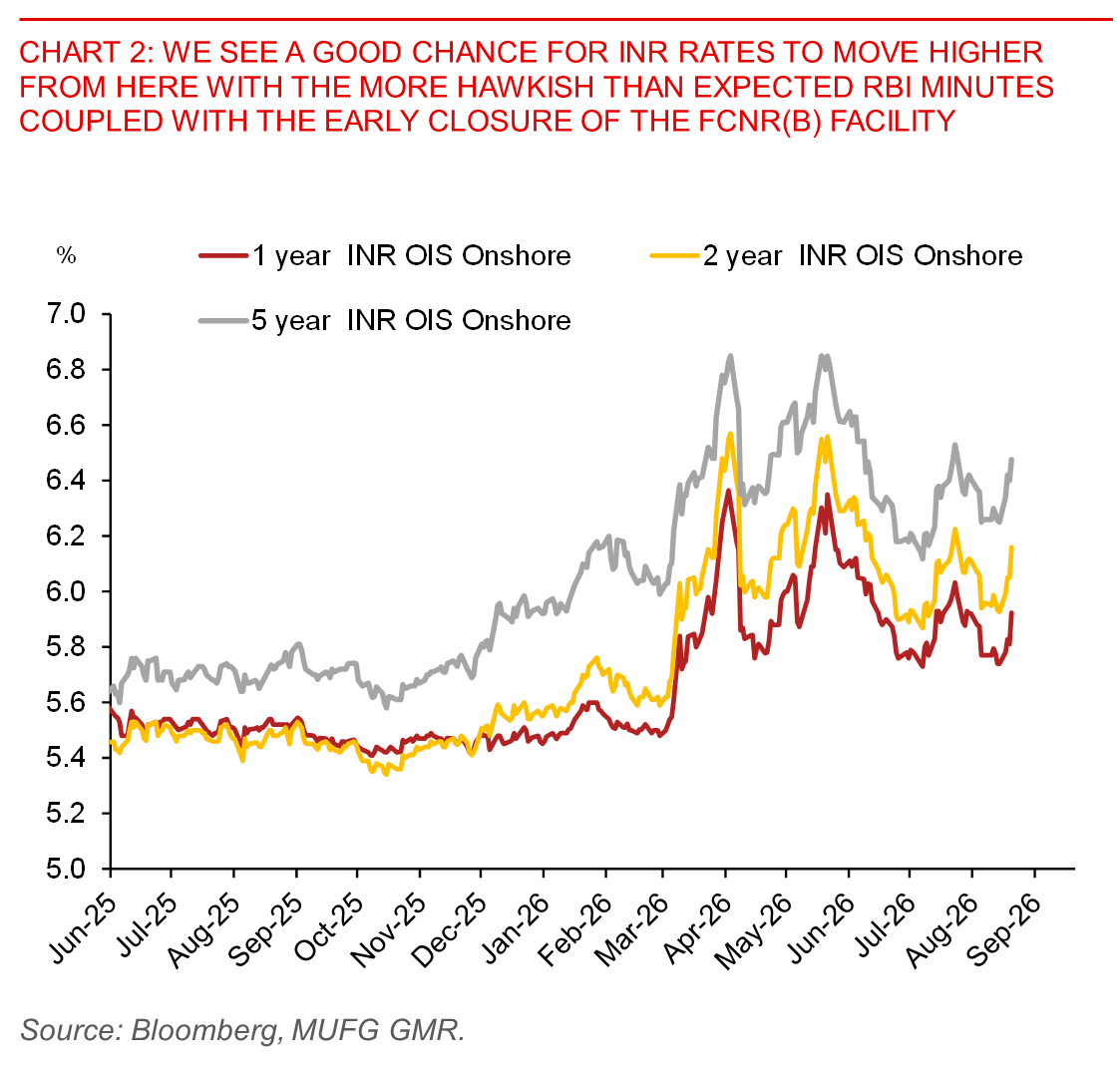
In Asia, another key example where there has been intervention is in India, with the FX measures to draw Dollar inflows including through the FCNR(B) route having quite a meaningful impact on lowering INR rates through an influx of liquidity and to a much smaller extent USD/INR.
Moving forward, we think that there’s a good chance INR rates move higher from here, and we like paying INR 5y NDOIS (current: 6.467%) as a potential way to express that view. For corporate clients, this could also mean it’s worth fixing at least some part of their interest rate risk and exposure.
First, the August MPC minutes was more hawkish than the actual policy meeting and also what markets expected, and also suggests the RBI has reached the end of its easing cycle with the next move higher rather than lower. In particular, we found Deputy Governor Poonam Gupta’s view to be the key shift at the margin among the MPC. We continue to expect RBI to hike rates by 50bps starting in the December meeting, with domestic growth remaining quite robust, credit growth accelerating, the lagged mipact from earlier oil price increases, fiscal policy supportive with a likely wider fiscal deficit, coupled with possible interaction with adverse weather events (see India: Waiting on the world to change)
Second, the early closure of the FCNR(B) facility also suggests that the incremental market pricing from here is for liquidity absorption by the RBI and less room for lower rates. In particular, RBI Governor Malhotra’s comments yesterday said the early closure of the FCNR(B) window reflect stronger than expected inflows reducing the need to keep the facility open, particularly as each additional dollar carries diminishing benefits and higher sterilisation costs. With the RBI expecting at least US$80bn from its foreign currency mobilisation measures, the external buffer should remain supportive of the INR. However, the record forward position and associated liquidity management suggest that the RBI will continue to prioritise orderly currency movements rather than outright appreciation.