

Ahead Today
G3: US empire manufacturing
Asia: China activity data, Malaysia CPI, Thailand GDP
Market Highlights
Some softness emerged in July US economic data, following the moderation in PPI and the weaker-than-expected nonfarm payrolls report. Retail sales fell 0.6%mom in July, reversing the 0.2%mom gain in June and missing market expectations for a 0.1% increase. Core retail sales, excluding autos and gasoline, also declined 0.2%mom after rising 0.4%mom in June, versus consensus expectations of a 0.3% gain. Consumer sentiment weakened as well, with the University of Michigan sentiment index falling to 51.0 from 55.2, below the 55.0 consensus expectation. Despite the softer macro backdrop, US 2-year Treasury yields remain elevated above 4%, while the DXY has eased but continues to trade near the 100 level. Markets are still pricing in one additional Fed rate hike this year.
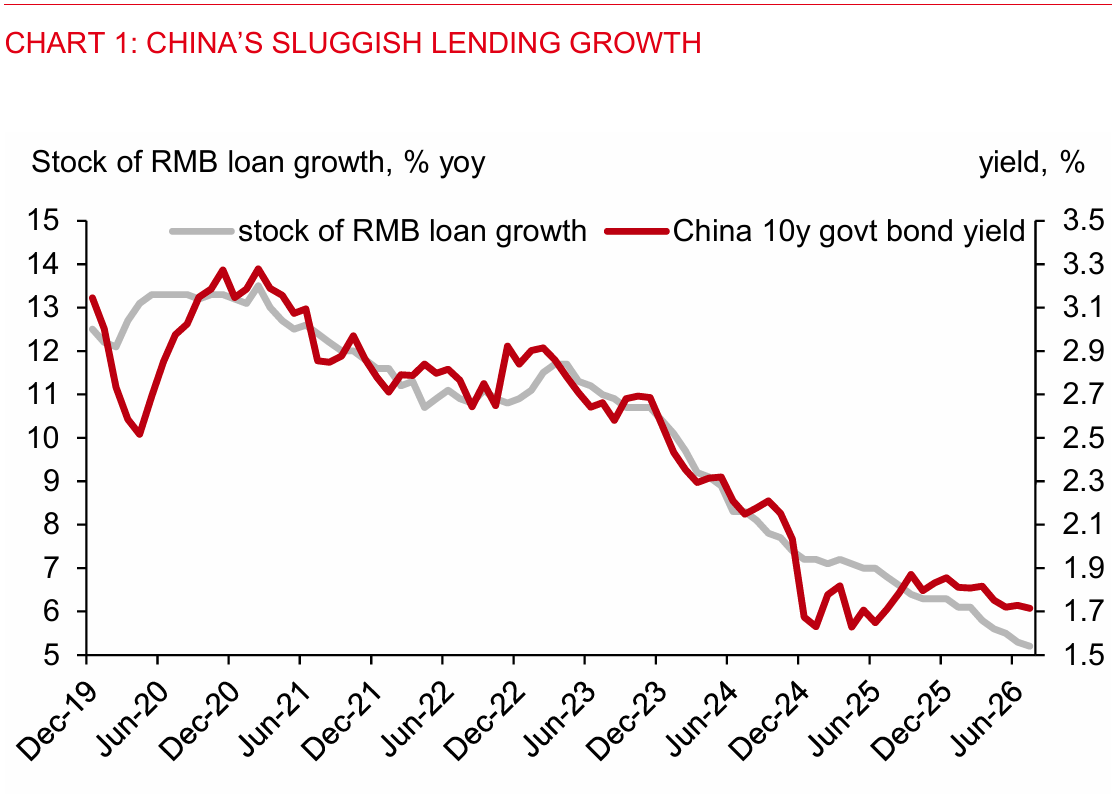
Attention now turns to China's July activity indicators following a weak Q2 GDP print. Fixed asset investment is expected to remain subdued, highlighting persistent challenges in the property sector. The key questions for markets are whether domestic demand is beginning to stabilize and whether the PBOC remains comfortable with further CNY strength. China's new CNY loans fell by RMB340bn in July, while growth in aggregate financing stock slowed to 7.4% and RMB loan growth moderated to 5.2%. Any downside surprise in China's activity data could weigh on regional risk sentiment and pressure Asian currencies that are closely linked to China's growth outlook.
Meanwhile, Malaysia's economy continued to outperform expectations, with GDP growth accelerating to 6.0%yoy in Q2, above the 5.8% consensus expectation. Robust growth, combined with inflation likely to remain contained around 2.0%yoy in July due to fuel subsidies, should help provide a buffer for MYR amid domestic political uncertainties. Political risks have eased somewhat after Malaysia's Democratic Action Party (DAP) voted to remain within Prime Minister Anwar's coalition government, offering some relief following the coalition's weaker showing in recent state elections.
Elsewhere, Singapore’s non-oil domestic exports accelerated further to 24.2%yoy, reinforcing SGD support from the ongoing semiconductor upcycle and highlighting the economy's continued leverage to the recovery in global technology demand. In contrast, Thailand's likely weaker Q2 GDP growth could reinforce growth concerns and weigh on the baht.