

Ahead Today
G3: US wholesale inventories, Conference Board consumer confidence
Asia: India industrial production
Market Highlights
Brent prices fell amid a pause in attacks between US and Iran. But the dollar continues to hold firm while US 2-year yield was little changed. Markets appear reluctant to price a sustained easing in inflation risks, given heightened geopolitical uncertainty and the proximity of this week's FOMC meeting. On rates, markets continue to retain a hawkish bias, with about 38% chance being priced in for a 25bps Fed hike this week, while fully pricing for a hike in September. This underscores market expectations that the Fed may keep the door open to additional tightening should inflation pressures re-emerge.
Looking ahead, the FOMC decision is likely to be a key market catalyst. While no policy change is expected, the focus will be firmly on the Fed's guidance, if any, on whether policymakers remain inclined to tighten policy. For now, elevated US yields and ongoing Middle East tensions continue to support the dollar.
Meanwhile, US tariffs are coming back into focus, as the Trump administration looks to rebuild its tariff policy after the Supreme Court had struck down Trump’s global reciprocal tariffs early this year.
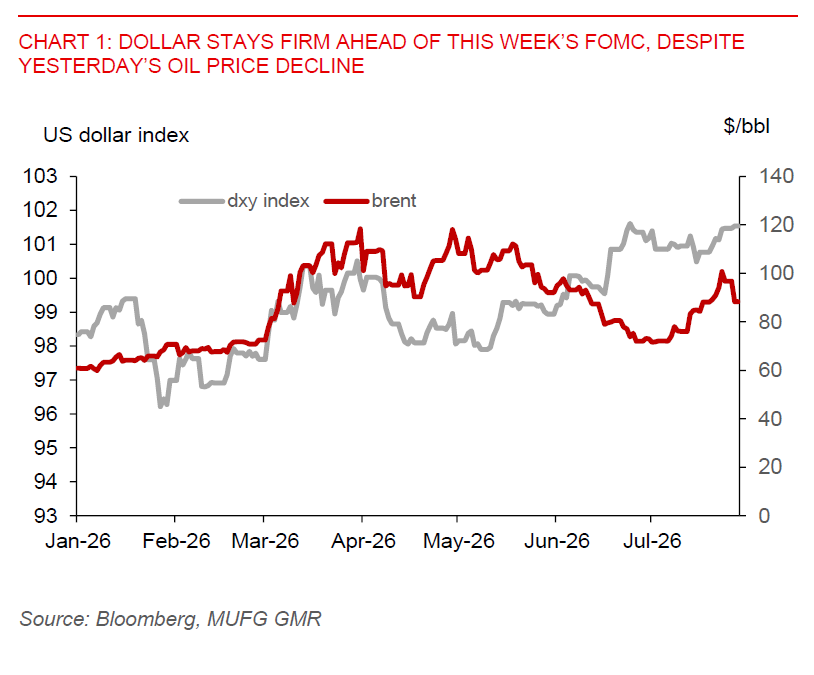
The decline in oil prices yesterday has provided a breather for several Asian currencies, with INR notably leading gains (+0.7%) against the dollar in the region. But we remain cautious, given how quickly Middle East tensions can escalate.
The rupiah, however, has weakened moderately. The resignation of Bank Indonesia governor adds to institutional challenges, following last year’s departure of former finance minister Sri Mulyani, marking two high profile exits that highlight political and policy risks. While the rise in domestic yields have helped to attract net foreign bond inflows, sustainability of those flows remains in question. We see policy and geopolitical headwinds keeping the rupiah under pressure.