

JPY strengthens in anticipation of policy changes in Japan
USD/JPY: Scott Bessent fuels speculation over policy shift to support JPY
The yen has continued to strengthen overnight resulting in USD/JPY falling back towards the 153.00-level. The stronger yen has been encouraged by bullish comments from US Treasury Secretary Scott Bessent overnight who stated that “I am the house now, so when we intervene with the Japanese yen, I have pretty good insight into what the Japanese, what the Bank of Japan is going to do, what Japanese policymakers are going to do…and you can bet against me if you want”. He pushed back against his critics who have criticized the decision to intervene alongside Japan to support the yen by stating “whenever people say, ‘Oh, well, Treasury Secretary is taking a risk’, - well, it’s my dream, I have asymmetric information”. The comments will reinforce expectations that the Japan has agreed to change domestic policies to provide more support for the yen and back up support from joint intervention. It already appears increasingly likely the BoJ will speed up the pace of rate hikes this month which is helping the yen to rebound without the need for further intervention.
At the same time, Treasury Secretary Scott Bessent attempted to downplay criticism of the recent decision to expand the buyback program for older US government securities. The US Treasury announced it plans to double the size of its long-dated bond buybacks starting from today’s operation from USD2 billion to USD 4 billion. He stated that the decision was aimed at quelling a “fever” in the bond market. He believes “my job is to try to push things back towards equilibrium” although he doesn’t believe that he can change the equilibrium price. He then went on to downplay concerns that the recent rise in US government yields have been driven by the scale of US borrowing highlighting that “if that were true, Treasuries would be underperforming German securities”.
The more interventionist approach from US Treasury Secretary Scott Bessent in the US Treasury market appears at least initially to have undermined confidence in the US dollar. The bond buyback expansion was announced on 19th August and since then the dollar index remains around 1% lower despite the short-end of the US yield curve moving to price in more Fed rate hikes. The 2-year US Treasury yield has increased by almost 25bps over the same period. The current spot rate for EUR/USD is currently around 1.5% above the fair value estimate from our short-term valuation model indicating that a higher US policy risk premium has been priced into the USD recently.
HIGHER US POLICY RISK PREMIUM PRICED INTO USD?
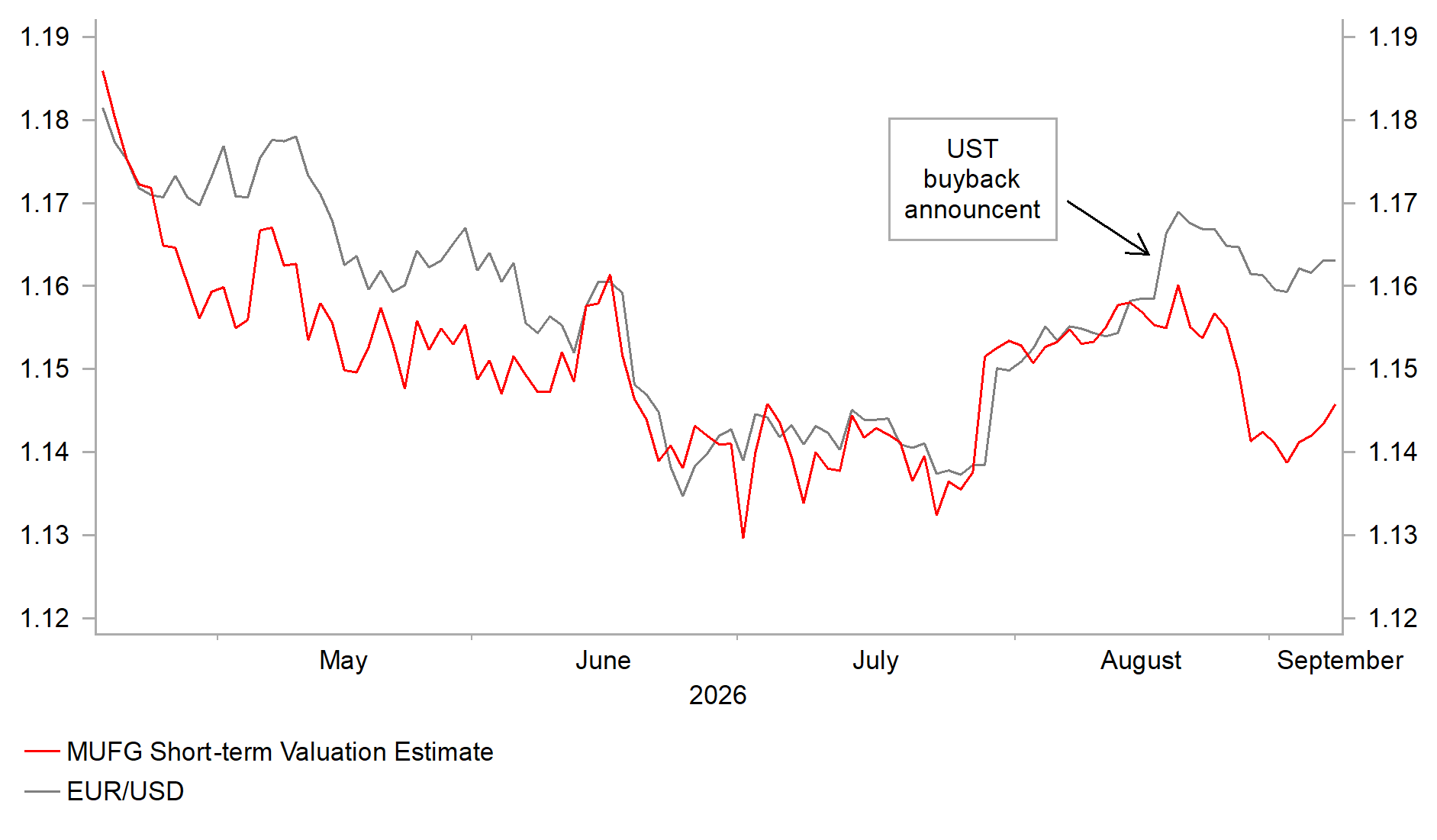
Source: MUFG Research, Macrobond, Bloomberg
Commodity FX: Global economic growth resilience providing support
The other main development overnight was from the Middle East where it has been reported that US forces destroyed five Iranian tankers carrying crude oil in response to two attempts to hit a US Navy warship with ballistic missiles in as many days according to the US Central Command. The Iranian ships belonged to the Islamic Revolutionary Guard Corps. The ongoing tit-for-tat strikes and fading hopes for military de-escalation in the region are contributing to renewed upward pressure for energy prices ahead of the US mid-term elections. The price of Brent has risen back to within touching distance of USD100/barrel, and the price of natural gas in Europe is now up by just over 90% since the lows in late June.
The unfavourable energy price developments will continue to encourage expectations that central banks will have to be more active in tightening policy and thereby maintaining upward pressure on global bonds yields. Higher energy prices have also helped to lift Bloomberg’s commodity price index to the highest level since 2012. It helps to explain why commodity-related currencies have outperformed over the last couple of months including the Australian dollar, Norwegian krone and Canadian dollar amongst G10 currencies. We expect the current favourable external backdrop for commodity currencies to continue in the near-term so long as global growth remains resilient to the energy price shock. According to Bloomberg, global economic data has been surprising to the upside in recent months as fears over a slowdown in global growth have not yet materialized. Positive economic surprises have been running at their highest levels since early in 2023.
KEY RELEASES AND EVENTS
Country | BST | Indicator/Event | Period | Consensus | Previous | Mkt Moving |
US | 13:15 | ADP Employment Change Weekly | - | - | 11.80K | !! |
US | 13:55 | Redbook (YoY) | - | - | 9.6% | ! |
US | 18:00 | 10-Year Note Auction | - | - | 4.683% | !! |
DE | 18:00 | German Buba President Nagel Speaks | - | - | - | !! |
EU | 18:00 | ECB President Lagarde Speaks | - | - | - | !! |
Source: Bloomberg & Investing.com