

FX market in holding pattern ahead of US CPI report
USD: US CPI report to determine whether sell-off will extend further
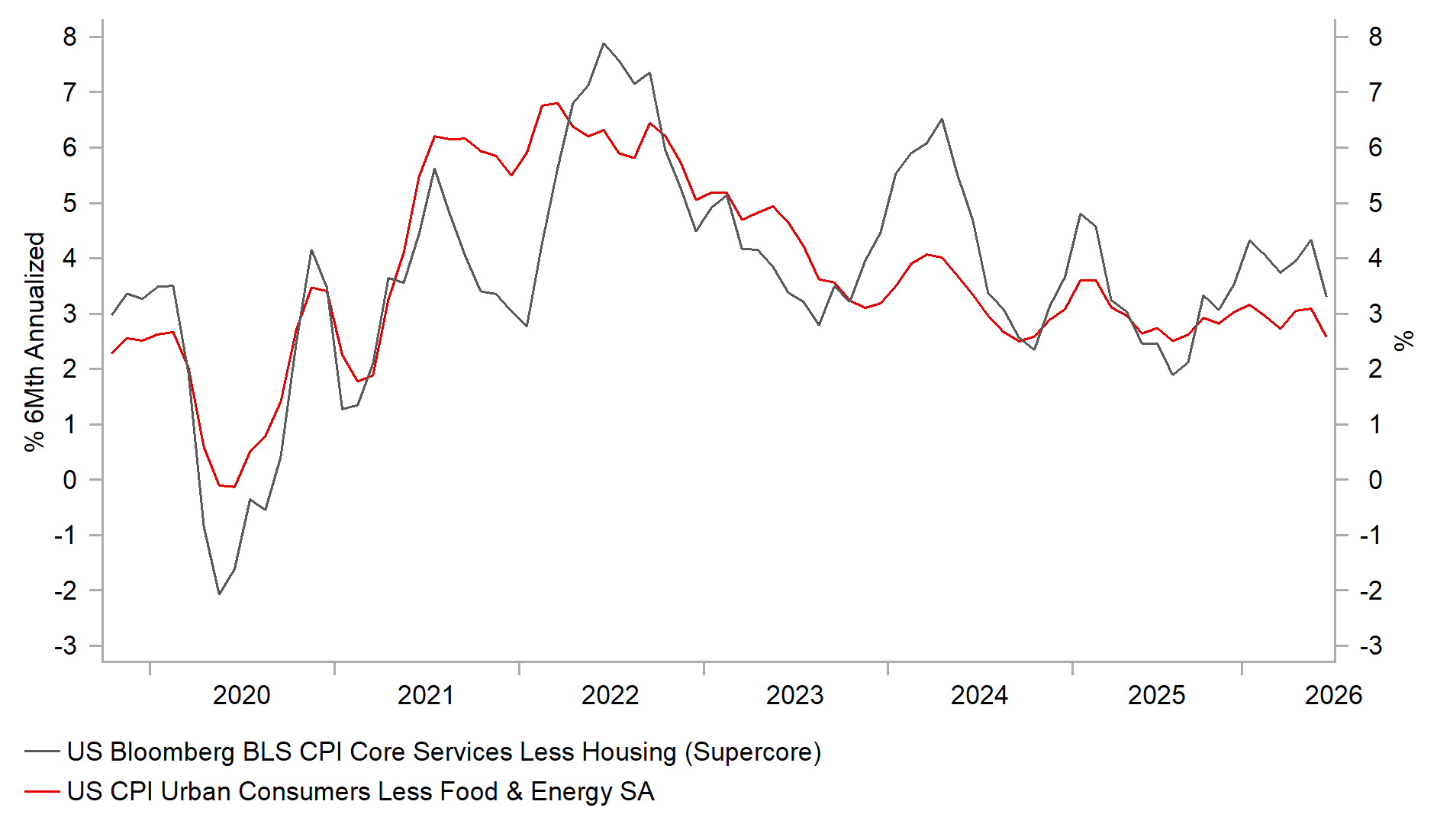
The US dollar has stabilized at weaker levels ahead of the release today of the latest US CPI report for July. The dollar index has been trading just below the 100.00-level since the sell-off at the end of last week triggered by the much weaker nonfarm payrolls report for July. The lack of follow through for US dollar weakness at the start of this week highlights that market participants are waiting to see if today’s US CPI report will further dampen expectations for a Fed rate hike as soon as September. The US rate market is currently pricing in around a 50:50 probability of a Fed hike in September. A 25bps hike had been fully priced in ahead of the July FOMC meeting. The recent scaling back of Fed rate hike expectations has contributed to the 2-year US Treasury bond yield falling back around 15bps from the high of 4.37% on 23rd July. Market participants will be closely scrutinizing today’s US CPI report for July to see if there is further evidence of disinflation pressures after the June CPI revealed muted underlying inflation pressures. Core inflation in June was surprisingly flat on the month and the weakest monthly reading since during the initially COVID shock in early 2020.
The Bloomberg consensus forecast is expecting core inflation to pick-up modestly by 0.2%M/M in July which would result in the annual rate easing to 2.5%. The US dollar is likely to continue to trade on a weaker footing in the near-term unless inflation surprises to the upside in today’s report thereby encouraging market participants to price back in a higher probability of a September rate hike. The lack of progress to reopen the Strait of Hormuz and gradually normalize global energy supplies leaves market participants understandably nervous over more persistent upside risks to inflation from the energy price shock. The price of Brent has risen back up towards USD90/barrel, and currently stands around USD20/barrel higher than pre-Middle East conflict levels. There has been some renewed optimism over the potential for a US-Iran deal over the last twenty-four hours after Pakistan’s defence minister Khawaja Asif told reporter that “things are shaping up nicely for peace, and noting that the US and Iran as “close to some sort of arrangement” over the Strait of Hormuz.
The risk of second round inflation effects from the energy price shock have been dampened by further evidence of soft labour market conditions. It makes it harder for employees to push for higher wages to compensate for the rising cost of living when labour demand remains weak. Private employment growth has averaged only 40k/month over the last three months to July. The release yesterday of the latest NFIB small business optimism survey for July did provide some encouragement though that employment growth could pick-up later this year. The hiring plans sub-component jumped by 9ppts to 20% in July which was the highest reading since October 2022 when nonfarm private employment growth was increasing by closer to 300k/month.
US CORE INFLATION HAS BEEN WELL-BEHAVED DURING ENERGY SHOCK
Source: MUFG Research, Macrobond, Bloomberg
JPY: BoJ rate hike expectations failing to prevent a weaker yen
The yen has continued to weaken overnight giving back more of the intervention driven gains. It has resulted in USD/JPY moving back closer to the 160.00-level ahead of the release of the US CPI report later today. The price action clearly highlights that market participants remain unconvinced that intervention will prove successful in supporting a stronger yen without a change in fundamentals. The release of the latest CFTC report at the end of last week did show that that intervention triggered a sharp squeeze of speculative short yen positions. Short yen positions held by leveraged funds fell sharpy by around 40% in the week ending 4th August to 60,825 contracts. If there is no change in fundamentals, speculators will be encouraged to rebuild short yen positions at a time when stable financial market conditions remain supportive for carry trades.
One potential change in fundamentals is that it appears more likely now that the BoJ will speed up the pace of rate hikes. Recent hawkish rhetoric from the BoJ and joint intervention alongside the US to support the yen have given market participants more confidence that the BoJ will hike rates sooner. The Japanese rate market has moved more in line with our view to price in around 19bps of tightening from the BoJ by September. However, the hawkish repricing of the BoJ rate hike expectations has so far failed to prevent the yen from re-weakening.
KEY RELEASES AND EVENTS
Country | BST | Indicator/Event | Period | Consensus | Previous | Mkt Moving |
US | 13:30 | CPI (MoM) | (Jul) | 0.1% | -0.4% | !!! |
US | 13:30 | Core CPI (MoM) | (Jul) | 0.2% | 0.0% | !!! |
DE | 13:30 | German Current Account Balance n.s.a | (Jun) | - | 10.4B | ! |
US | 18:00 | 10-Year Note Auction | - | - | 4.580% | !! |
US | 19:00 | Federal Budget Balance | (Jul) | -361.2B | -120.0B | !! |
Source: Bloomberg & Investing.com