

AI wobble puts dampener on USD strength
USD: AI sell-off triggers quick reversal of US CPI report driven gains
The US dollar has weakened overnight quickly giving back yesterday’s initial gains after the release of the stronger than expected US CPI report for September. After hitting a fresh year-to-date high at 102.95 yesterday, the dollar index has since fallen back towards the 102.00-level. It has been a similar story for US yields. the 2-year US Treasury initially jumped higher by around 18bps after the release of the US CPI report hitting a high of 4.95% before dropping back towards 4.70% overnight. The reversal lower for Us yields and US dollar appears to have been driven mainly by an unwind of AI-related trades overnight resulting in more risk-off trading conditions. The biggest sell-off has been in South Korea’s equity market where the Kospi index has fallen sharply by almost 9% extending its decline since the peak in June to just over 40%. The share prices of South Korea’s two main chipmakers SK Hynix and Samsung Electronics have both fallen by around 12% after breaking below support from their 200-day moving averages this week.
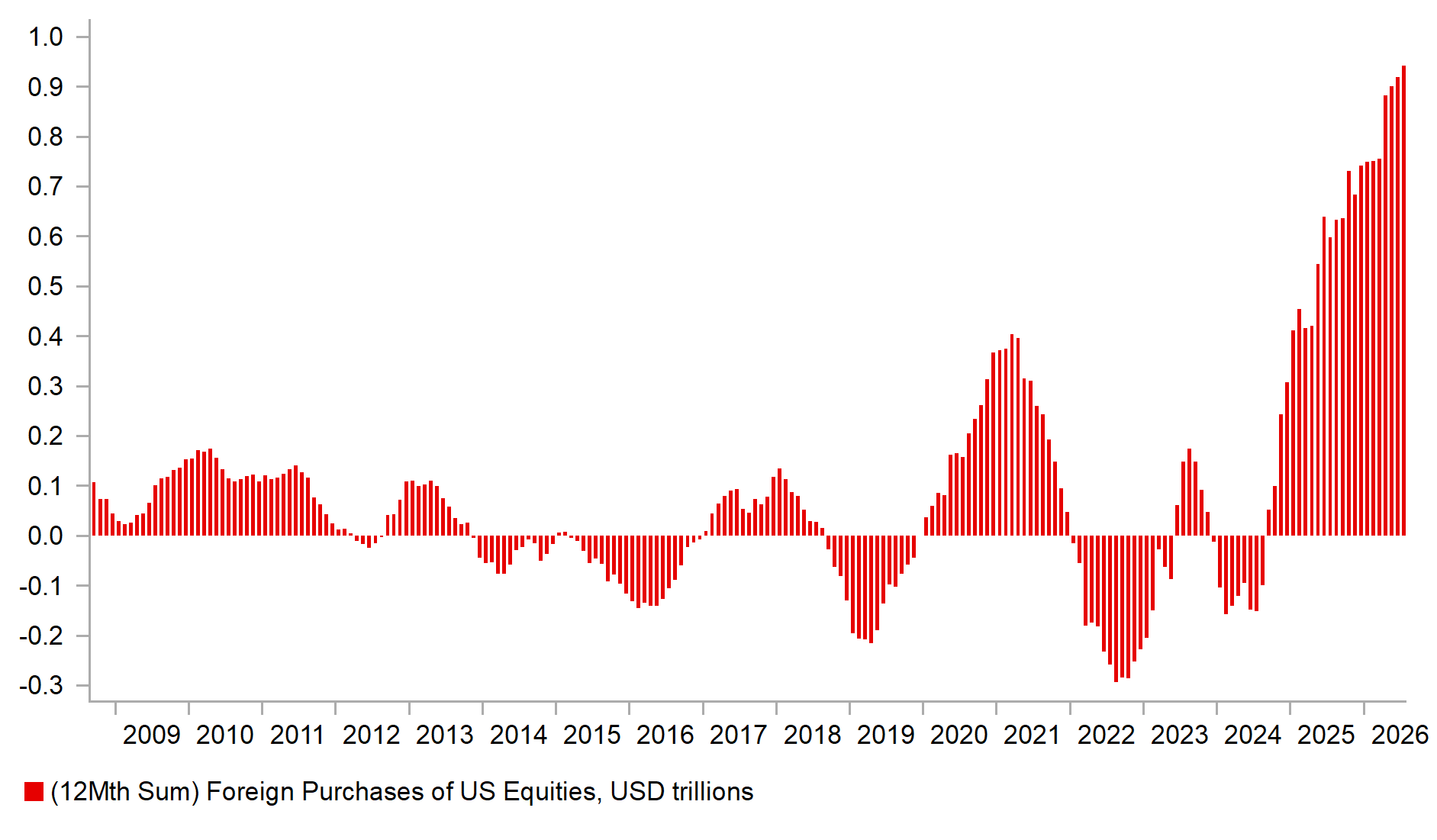
Bloomberg has reported that investor confidence in AI-related confidence has been undermined in part funding concerns. CoreWeave, the world’s biggest and most established neocloud, a relatively new term for companies that rent out computing power to AI model developers and teach leaders, saw its shares plunge in value by as much as 17% yesterday, and its debt due in 2032 traded at less than 78 cents on the dollar. According to Bloomberg, credit default swaps on the company are pricing in more than a 50% chance of default within the next five years. Core weave has drawn attention for being an early entrant in the business that has been heavily reliant on the high-yield debt markets to finance its build out. After record capital inflows into the US equity market encouraged by investor optimism over AI (click here), the price action overnight highlights that it leaves the US dollar vulnerable to a correction lower when investor sentiment towards AI sours.
Nevertheless, the current fundamental backdrop remains supportive for the US dollar. The release yesterday of the stronger US CPI report for September will keep pressure of the Fed to keep hiking rates and has raised the probability of a back-to-back hike later this month. The report revealed that both headline and core inflation picked up by more than expected to 3.7% and 2.6% respectively in September. The pick-up in the headline rate of inflation since the US-Iran conflict began is still mainly driven but higher energy prices but there is building concern over broadening inflation pressures. Core goods prices increased by 0.25%m/m and core services inflation by 0.37%M/M. The report has raised market expectations for core PCE deflator to increase by around 0.3-0.4%M/M in September. Those estimates will be adjusted further after the release later today of the latest US PPI report for September. We are still assuming that the Fed will leave rates on hold this month after comments from Fed officials indicating that they are not in a rush to hike again as soon as this month. Fed Cahir Kevin Warsh’s comments at the Annual IMF meetings in Thailand on Friday will be scrutinized even more closely now after the stronger US CPI report.
RECORD INFLOWS INTO US EQUITIES
Source: MUFG Research, Macrobond, Bloomberg
JPY: BoJ comments signal further hikes on the way
The yen has benefitted from more risk-off trading conditions overnight resulting in USD/JPY dropping back below the 158.00-level although its performance has been more mixed against non-USD currencies. The stronger yen has also been encouraged by encouraged by hawkish comments from BoJ board member Junko Koeda. In a speech to local leaders in Kumamoto overnight, she stated “given that there are considerable upside risks to prices in addition to continued accommodative financial conditions, the Bank should not become overly cautious about raising the policy interest rate”. She believes that the “Bank should adjust the policy interest rate in a timely manner with an eye on the economic and price situation, while keeping in mind the estimated range of the neutral interest rate”. The BoJ has indicated that the estimated range of the neutral policy rate is between 1.1%and 2.5%. Junko Koeda stated that she believes the level of the neutral interest rate is considerably above 1%” which indicates that she still sees room for further rate hikes with the current policy rate at 1.25%. The next BoJ policy meeting is scheduled for 30th October. We still expect the BoJ to leave rates on hold this month but hike again before the end of this year in December providing more support for the yen.
KEY RELEASES AND EVENTS
Country | BST | Indicator/Event | Period | Consensus | Previous | Mkt Moving |
GB | 08:30 | BoE Gov Bailey Speaks | - | - | - | !!! |
EU | 10:00 | Industrial Production (MoM) | (Aug) | 0.0% | -0.1% | !! |
US | 13:30 | Retail Sales (MoM) | (Sep) | 0.3% | 1.2% | !!! |
US | 13:30 | PPI (MoM) | (Sep) | 0.6% | 0.4% | !!! |
Source: Bloomberg & Investing.com