

Markets Cry Debasement, History Suggests Otherwise
USD: USD Consolidates Post-Buyback Shock
DXY is little changed after Monday's modest rebound, but the broader market narrative remains centred on US fiscal concerns, Treasury buybacks and the prospect of "USD debasement". Despite the buyback announcement, yields remain elevated, with the 10Y near 4.72% and the 30Y above 5.2%, suggesting investors remain unconvinced that buybacks can reverse the ongoing long-end sell-off.
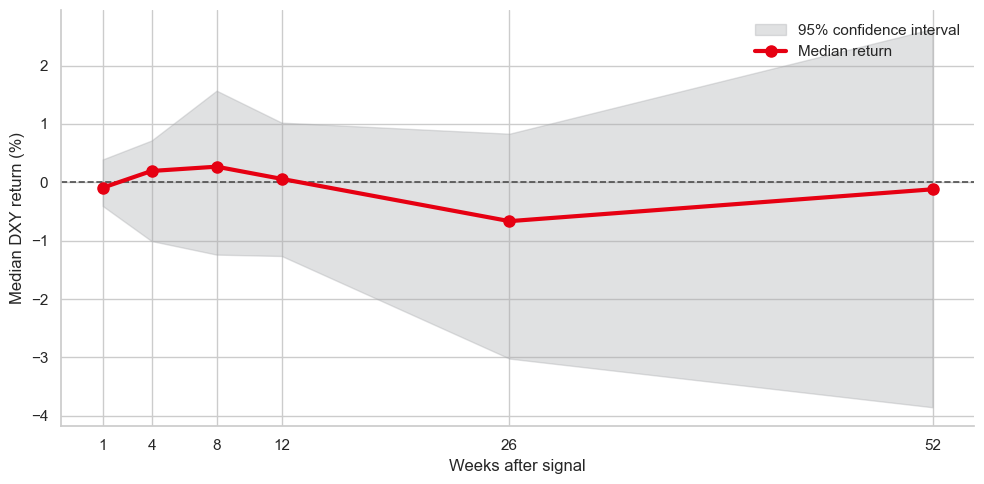
Our analysis examines similar previous episodes of USD weakness, gold strength and rising Treasury yields testing whether subsequent market behaviour validates the debasement narrative. The historical evidence suggests it does not. Across prior episodes, extreme readings in the signal were not followed by persistent USD weakness. Instead, DXY typically stabilised, while gold frequently corrected over the subsequent one to three months. The strongest and most consistent outperformers were not gold or safe havens, but high-yielding EM FX, while JPY and CHF tended to underperform. Therefore, the current market conditions generating debasement fears have historically been associated with crowded positioning and subsequent mean reversion rather than an accelerating loss of confidence in US assets. The current episode is defined by elevated long-end yields and ongoing bear-steepening. If that backdrop were to change and yields began falling materially, history points to a different regime. In previous episodes where USD weakness and gold strength coincided with declining yields, gold continued to rally and sustained USD softness became more likely. A move from rising to falling yields represents an important signal that the market is transitioning from a fiscal and term-premium story towards an easing-driven USD bearish environment.
So, while fiscal concerns, Treasury buybacks and record debt levels continue to support the debasement narrative, historical experience suggests caution in extrapolating to US asset sell-off. As long as yields remain elevated, the more likely outcome is dollar stabilisation, gold consolidation and selective outperformance in carry-sensitive FX rather than a sustained debasement.
DXY SHOWS NO CONSISTENT DIRECTION
Source: MUFG Research, Macrobond, Bloomberg
MXN: Peso gains capture continued draw to carry
We are in the midst of an escalation to the conflict in the Middle East that has lasted longer than most assumed when it began in late February, US-China relations could be about to come under renewed strain, fixed income duration risk is rising and the Trump administration is intensifying its trade war with Canada. But FX vol remains remarkably low and investors continue to be drawn to carry. The Mexican peso performance highlights the continued attractiveness in carry trading strategies in FX with USD/MXN breaking below the 17.00-level this month for the first time since June 2024. We have now reached levels well below what we expected at this stage and will likely have to adjust our USD/MXN forecast profile lower. USD/MXN rebounded modestly yesterday but after a notable decline this month helped by stronger expectations that Banxico will maintain its current monetary stance.
Real GDP expanded by 1.4% Q/Q in Q2 confirming a pick-up while headline inflation picked up modestly. Last week, the minutes from the latest Banxico policy meeting this month, released last week, revealed a policy board that was more comfortable with keeping the monetary stance on hold. Services inflation was described as “sticky” and the convergence of the inflation rate to the target level was estimated to happen only by Q4 2027, compared to Q2 previously. With the policy rate at 6.50% that provides reassurances for investors that carry in Mexico will remain attractive. The US Treasury bond buyback announcement could raise expectations that these trades can continue to fuel high returns. Low vol has persisted and USD/MXN 1mth implied volatility is close to the low recorded toward the end of last year, which was the lowest since 2019.
Mexico is also drawing demand for other reasons. MXN is being views as an avenue in FX markets to AI-related exposure. Mexico’s exports are recording some huge increases in AI-related goods. According to S&P Global, computer server Mexican exports reached USD 83bn in H1 2026. Those exports surged by 172% YoY in the 12mths to June. after growth of 211% in 2025. 94% of those exports were destined to the US. Mexico appears to be moving up the value chain into an advanced technology hub. Imports from Taiwan surged 146% in the year to June.
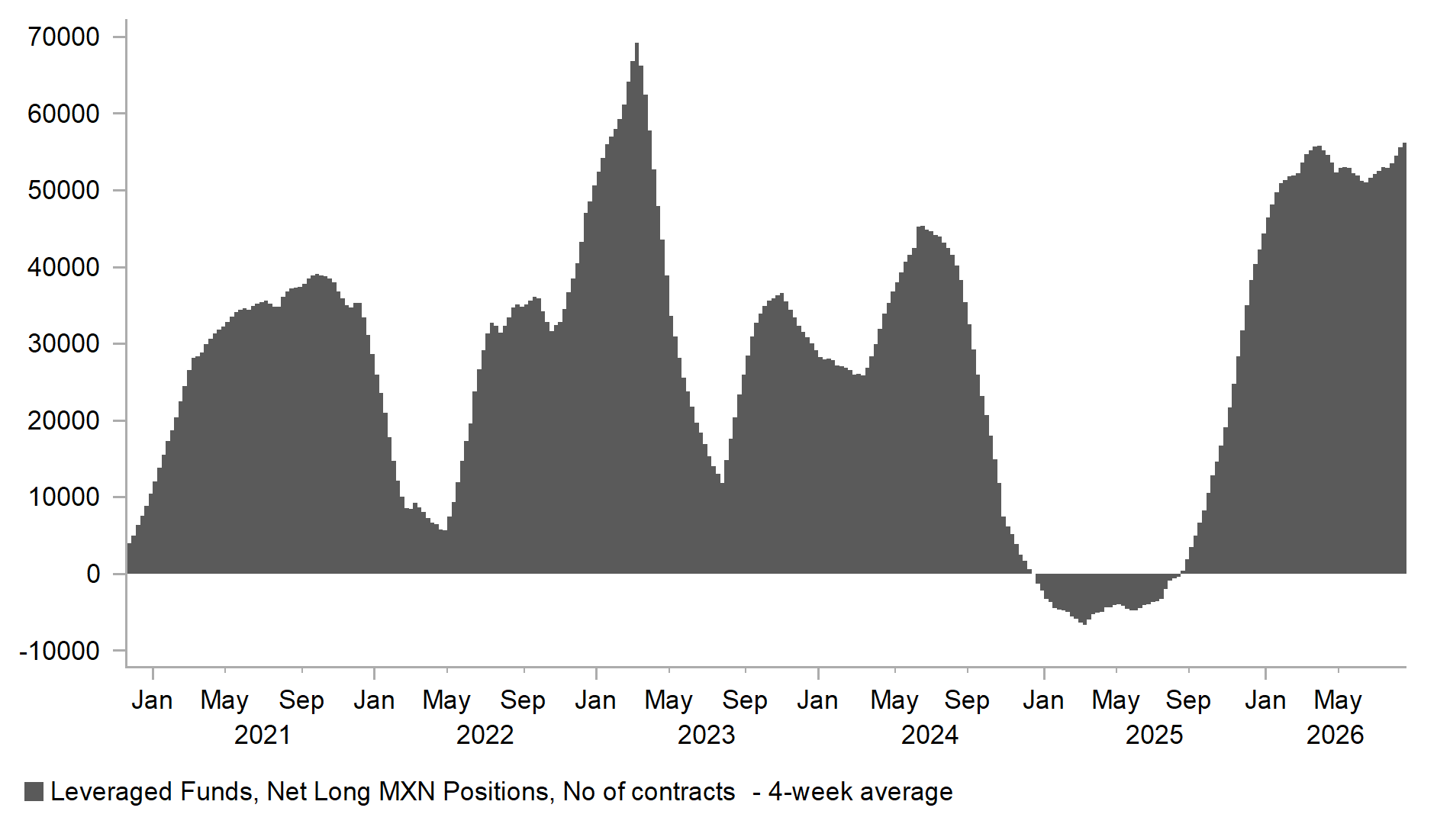
As always with a trade that has performed so well, one risk is that the trade is now crowded and hence a sharp reversal is possible, if say for example the Fed hike rates and the US curve reprices for more hikes. The IMM Leveraged Funds positioning data shows the 4-week average approaching the highest level in the post-covid period.
LEVERAGED FUNDS MXN POSITIONING – NET LONG POSITION CLOSE TO LARGEST IN POST-COVID PERIOD
Source: Bloomberg, Macrobond, MUFG Research
KEY RELEASES AND EVENTS
Country | BST | Indicator/Event | Period | Consensus | Previous | Mkt Moving |
GE | 09:00 | German Ifo Business Climate Index | (Aug) | 87.3 | 86.6 | !! |
US | 13:00 | FOMC Member Barkin Speaks | - | - | - | !! |
US | 14:00 | S&P/CS HPI Composite - 20 n.s.a. (YoY) | (Jun) | 1.9% | 1.6% | ! |
US | 14:00 | House Price Index (MoM) | (Jun) | 0.2% | 0.3% | ! |
US | 15:00 | CB Consumer Confidence | (Aug) | 90.3 | 90.8 | !!! |
US | 15:00 | New Home Sales | (Jul) | 620K | 628K | !!! |
US | 15:00 | Richmond Manufacturing Index | (Aug) | 7 | 5 | ! |
US | 21:00 | FOMC Member Barkin Speaks | - | - | - | !! |
Source: Bloomberg & Investing.com