

From Energy Shock to Fiscal Shock: What's Hurting the EUR
EUR weakness has been driven by higher US yields and rising fiscal and political risks in the euro area, particularly in France.
French bond market stress has intensified fragmentation concerns, with wider France-Germany yield spreads adding to EUR downside pressure.
High foreign ownership of French government debt increases the risk of capital outflows and may be amplifying the bond sell-off.
Our base case remains a "muddle-through" scenario, but further spread widening, reduced ECB tightening expectations, or building TPI speculation could push EUR/USD lower.
What has been driving the sharp EUR sell-off?
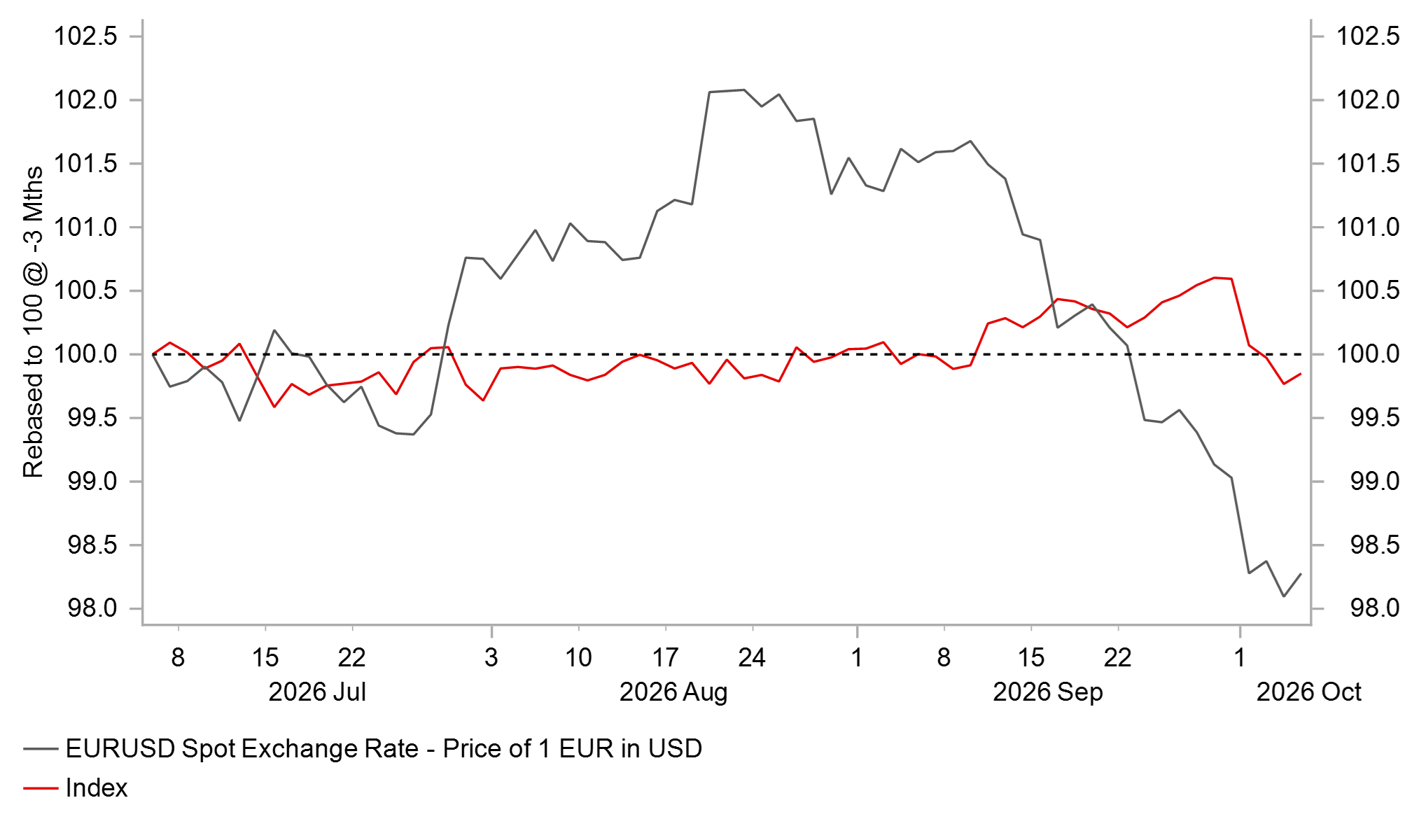
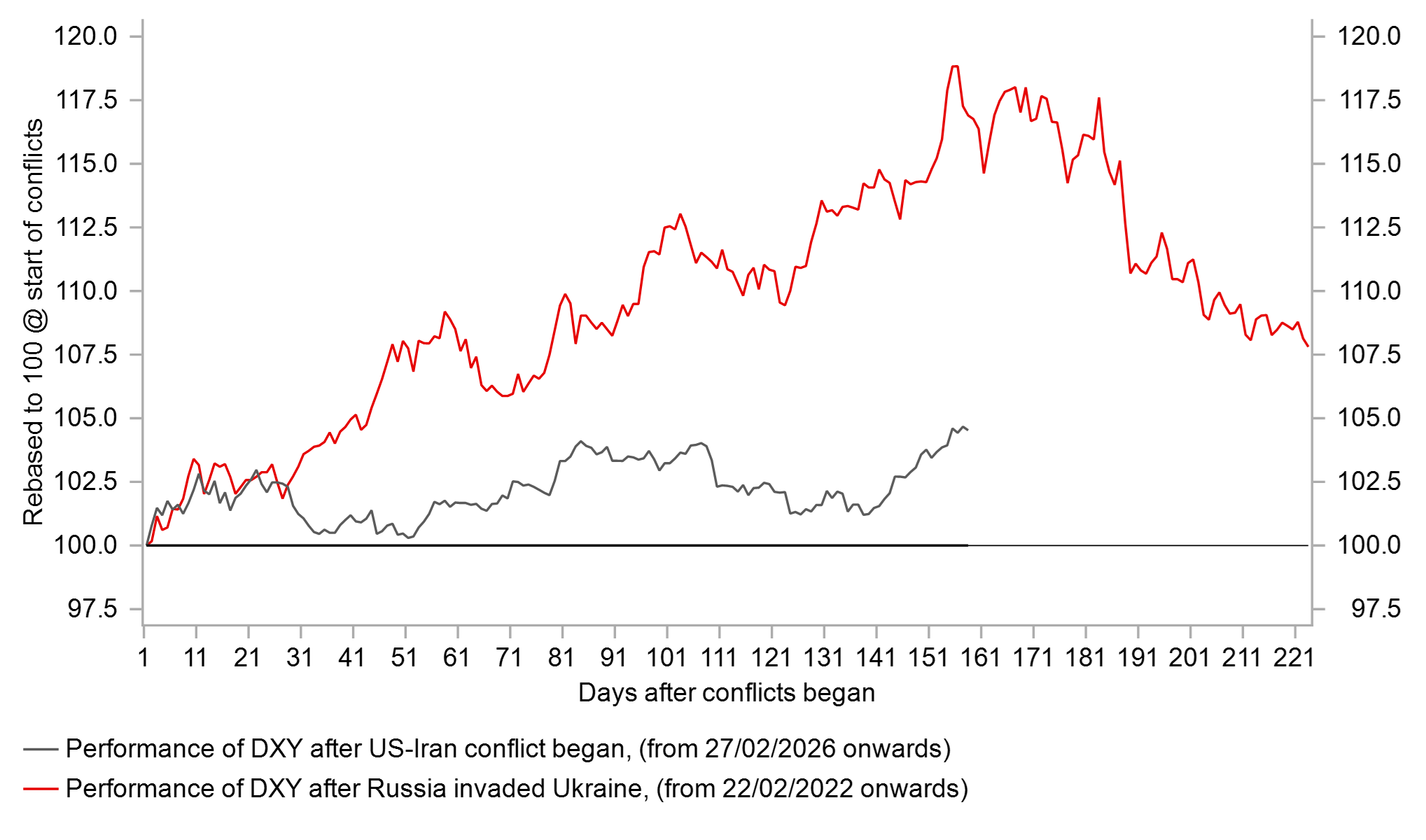
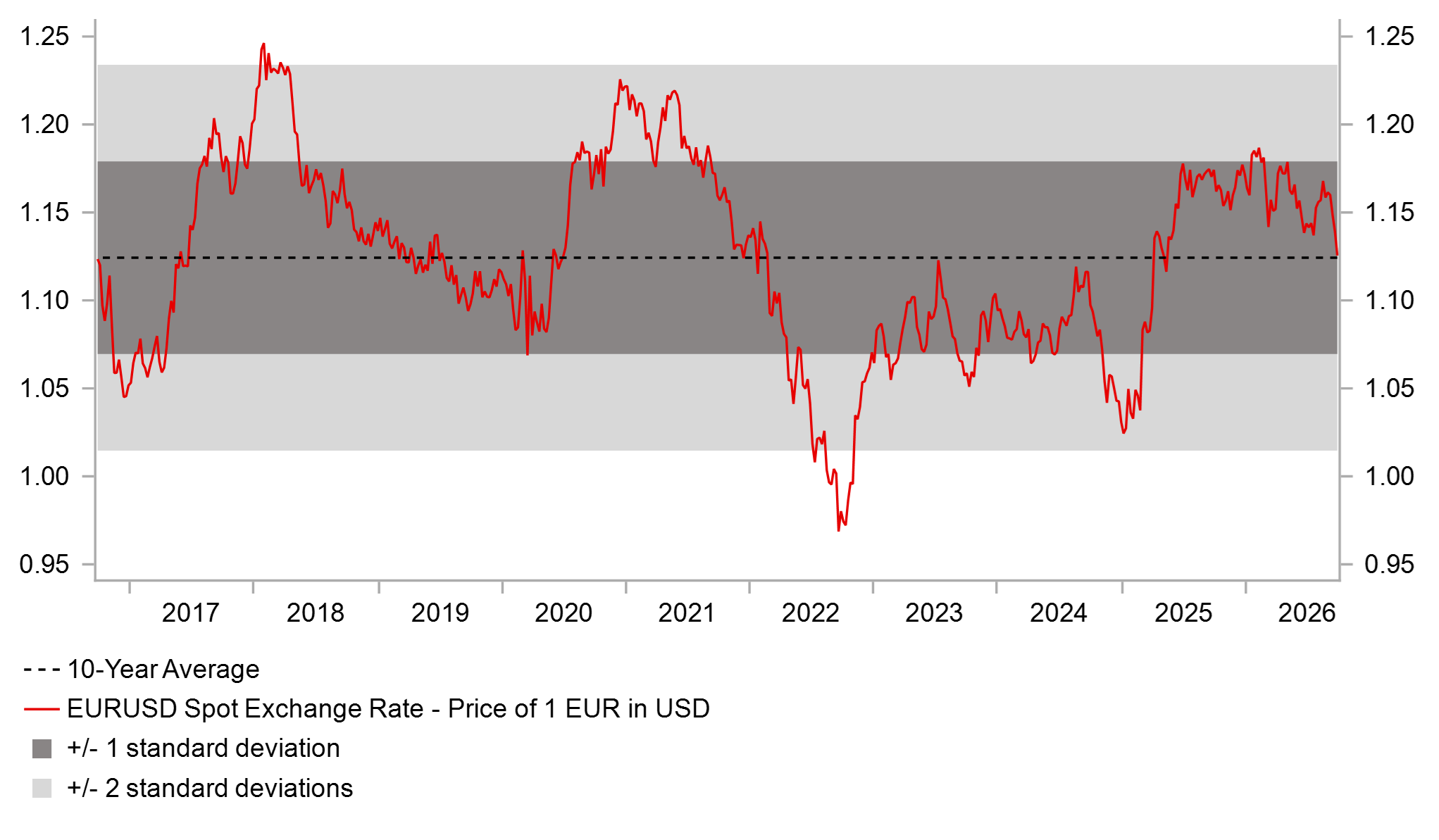
The EUR has come under increased selling pressure over the past month, resulting in EUR/USD breaking below the 1.1400-1.1800 trading range that had been in place since the middle of last year. EUR weakness has also broadened over the past couple of weeks, becoming increasingly evident against other European currencies, including the CHF, GBP, NOK and SEK. There have been two main drivers behind the recent EUR sell-off. First, the Fed began raising rates in September for the first time since the US-Iran conflict began and signalled that it intends to deliver at least one further rate hike before the end of this year. The US rates market has gone even further, pricing in the potential for just over three additional hikes over the coming year. Softer US PCE deflator and non-farm payrolls reports, alongside more cautious rhetoric from the Fed's leadership, including New York Fed President Williams and Vice Chair Jefferson, have yields have since dampened expectations for another hike as soon as this month. Still, the USD has not strengthened as sharply as it did following the previous energy price shock in 2022. On this occasion, USD gains have been constrained by the resilience of global growth, particularly in Asia and Europe, where economic activity has held up better than expected. In addition, the Fed has been slower to tighten policy and has remained cautious about the extent of further tightening that may be required.
EUR SELL-OFF BROADENS OUT
Source: Bloomberg, Macrobond & MUFG GMR
PERFORMANCE OF USD DURING ENERGY SHOCKS
Source: Bloomberg, Macrobond & MUFG GMR
The second trigger behind the sharper and more broad-based EUR sell-off in recent weeks has been growing concerns over fiscal and political risks within the euro area. The global bond market sell-off has had a more pronounced impact on European bond markets, with the rise in French government borrowing costs proving particularly unsettling for investors. The 10-year French government bond yield increased by around 100bps between the end of July and last week's peak of 4.99%. This marked the largest sell-off over a comparable period since August-October 2022 and pushed France's long-term borrowing costs to their highest level since July 2002. The sharp rise in yields has fuelled fears of a potential re-run of the euro-zone sovereign debt crisis of 2011-12. The spread between 10-year French and German government bond yields has already moved back towards the highs reached during that period, widening to more than 150bps last week. At its widest, the spread had almost doubled from its level at the end of July. Yield spreads have also widened between Germany and other euro-zone sovereigns, including Italy and Spain, although the moves have been less pronounced than in France.
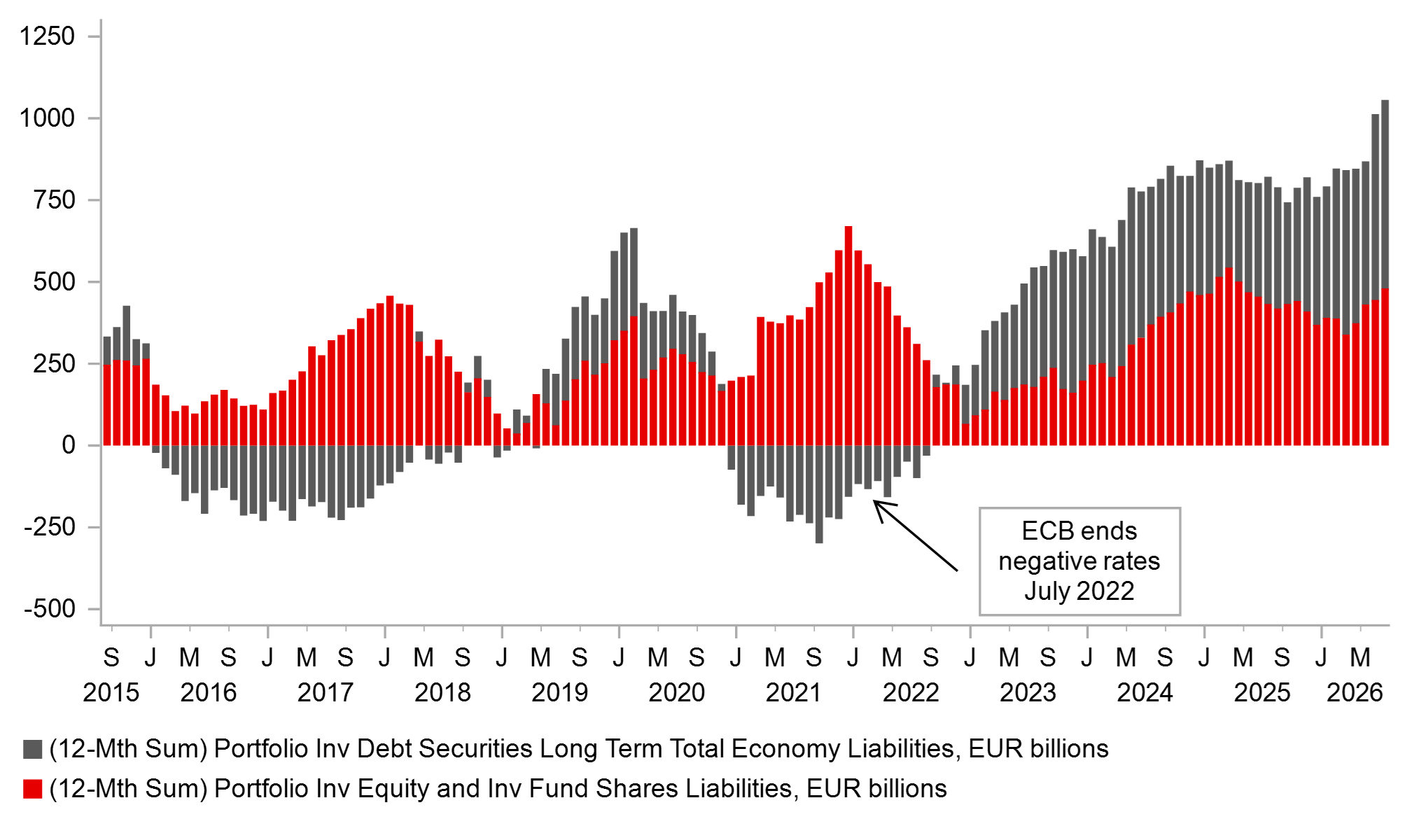
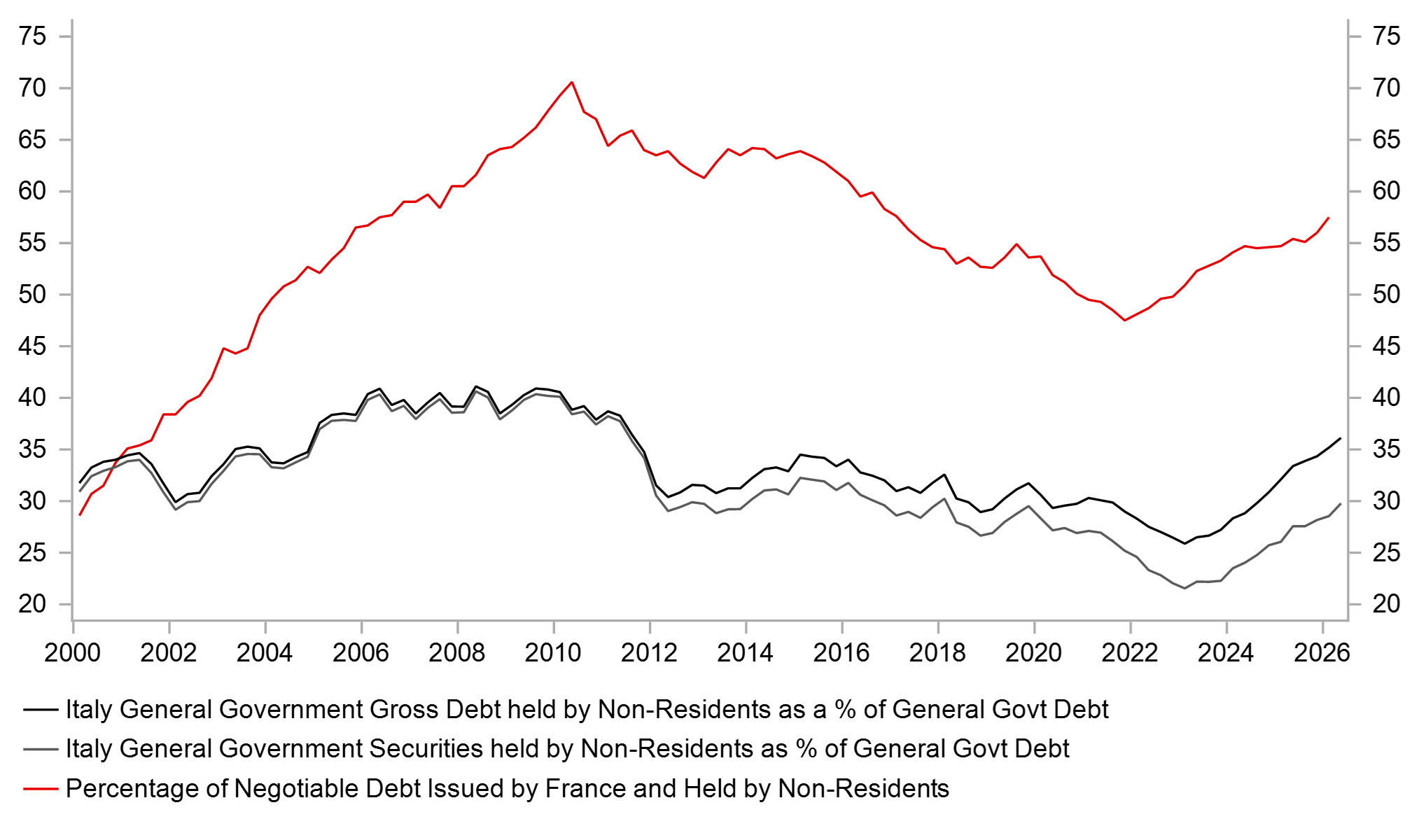
In recent years, demand from foreign investors for euro-area debt securities has strengthened, supported by the ECB's shift away from negative interest rates in 2022. The latest ECB balance of payments data show that foreign purchases of euro-area debt securities totalled a record EUR673 billion in the twelve months to July, following a prolonged period of net selling that characterised much of the 2016-2022 period when negative rates were in place. A similar trend is evident in the French government bond market. According to the Banque de France, the share of French government debt held by non-residents fell to a low of 47.5% in Q4 2021 before rising steadily to reach 57.5% in Q1 2026. According to the IMF’s investment position data, we estimate that roughly around half of non-resident holdings are accounted for by euro area countries. The latest quarterly breakdown shows that non-residents are by far the largest holders of French government debt, accounting for 57.5% of the total. They are followed by French credit institutions (10.5%), French insurance companies (9.6%), French UCITS (Undertakings for Collective Investment in Transferable Securities) (1.8%), and other French investors, including the Banque de France, households, corporates, pension and retirement vehicles, and public sector entities, which together account for the remaining 20.6%.
RECORD FOREIGN DEMAND FOR EZ DEBT
Source: Bloomberg, Macrobond & MUFG GMR
FOREIGN HOLDINGS OF GOVERNMENT DEBT
Source: Bloomberg, Macrobond & MUFG GMR
The relatively high share of foreign ownership in the French government bond market may have exacerbated the recent sell-off, as foreign investors tend to be more price-sensitive and can reallocate capital relatively quickly across global bond markets. In contrast, domestic investors are often viewed as more stable, long-term holders of government debt. By comparison, Italy's government bond market benefits from a more resilient domestic investor base, with foreign investors holding only around one-third of Italian government debt. This ownership structure may help to reduce the risk of abrupt capital outflows during periods of market stress. Recent reports have added to these concerns. According to Bloomberg (click here), Sumitomo Mitsui Asset Management's global fixed income team has sold its entire position in French government bonds, reallocating funds into German Bunds and short-dated Japanese government bonds. The move has fuelled broader speculation that Japanese investors may accelerate the reallocation of capital away from French government debt, adding to upward pressure on French borrowing costs.
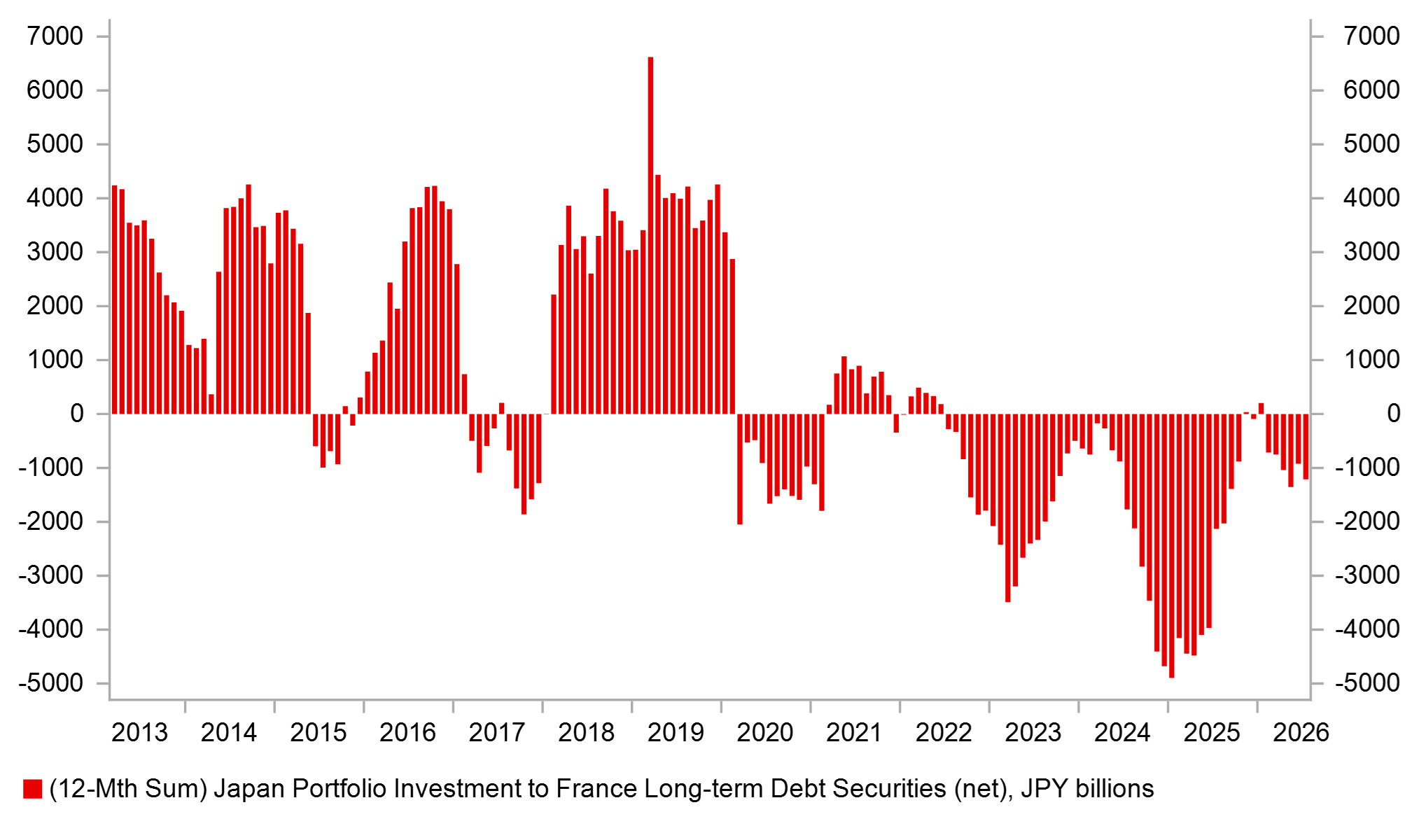
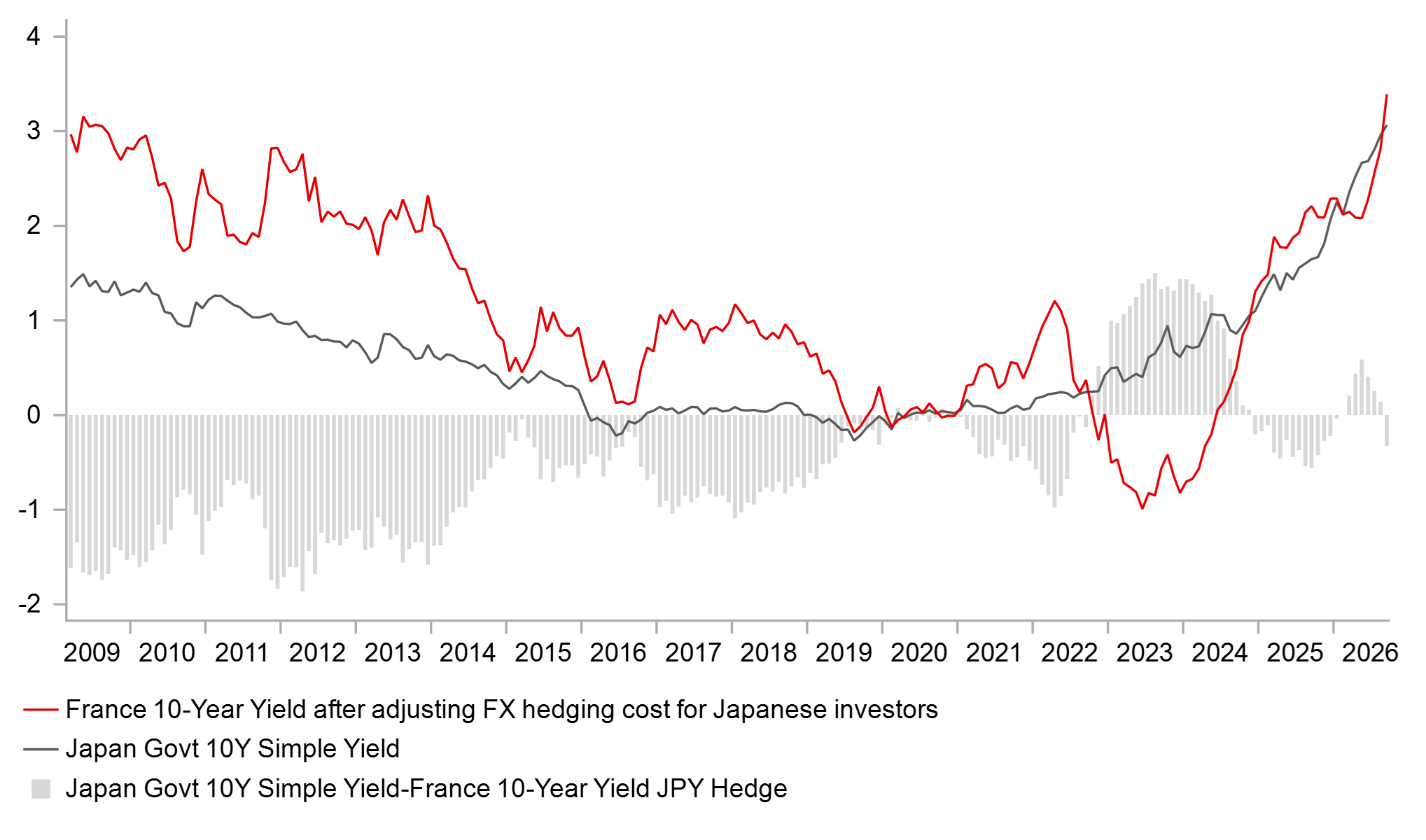
The latest weekly flow data from Japan's Ministry of Finance (MoF) show that Japanese investors were significant net sellers of foreign bonds during the five weeks leading up to 18th September. Looking at the latest balance of payments data, Japanese investors have been consistent net sellers of French long-term debt securities since 2022. However, the pace of selling had moderated in the twelve months to July, totalling JPY1.21 trillion, down from JPY2.13 trillion in the year to July 2025, and a peak of JPY4.89 trillion in the twelve months to January 2025. Japanese investors are increasingly being encouraged to reduce their exposure to French debt securities by both rising fiscal risks in France and the improved returns available in Japan. After adjusting for foreign exchange hedging costs, French long-term government bonds no longer offer a meaningful yield advantage over JGBs. As a result, the relative attractiveness of French government debt has diminished, increasing the risk of further portfolio reallocation by Japanese investors.
JAPANESE INVESTORS HAVE BEEN SELLERS
Source: Bloomberg, Macrobond & MUFG GMR
HIGHER YIELDS ENCOURAGING RE-ALLOCATION
Source: Bloomberg, Macrobond & MUFG GMR
Weighing up risks to the EUR from fiscal & political risks in the euro-zone?
The latest developments have increased downside risks for the EUR. In our latest monthly FX Outlook report (click here), we lowered our EUR/USD forecasts and now expect the pair to end this year close to current levels at 1.1200. Our baseline forecast assumes a "muddle-through" scenario (see table at end of document). Under this scenario, the French government is able to pass next year's budget, including fiscal tightening measures that help restore investor confidence in French government debt ahead of the presidential election in April next year. At the same time, growth in France remains subdued, reflecting the combined impact of higher interest rates, fiscal tightening and ongoing political uncertainty.
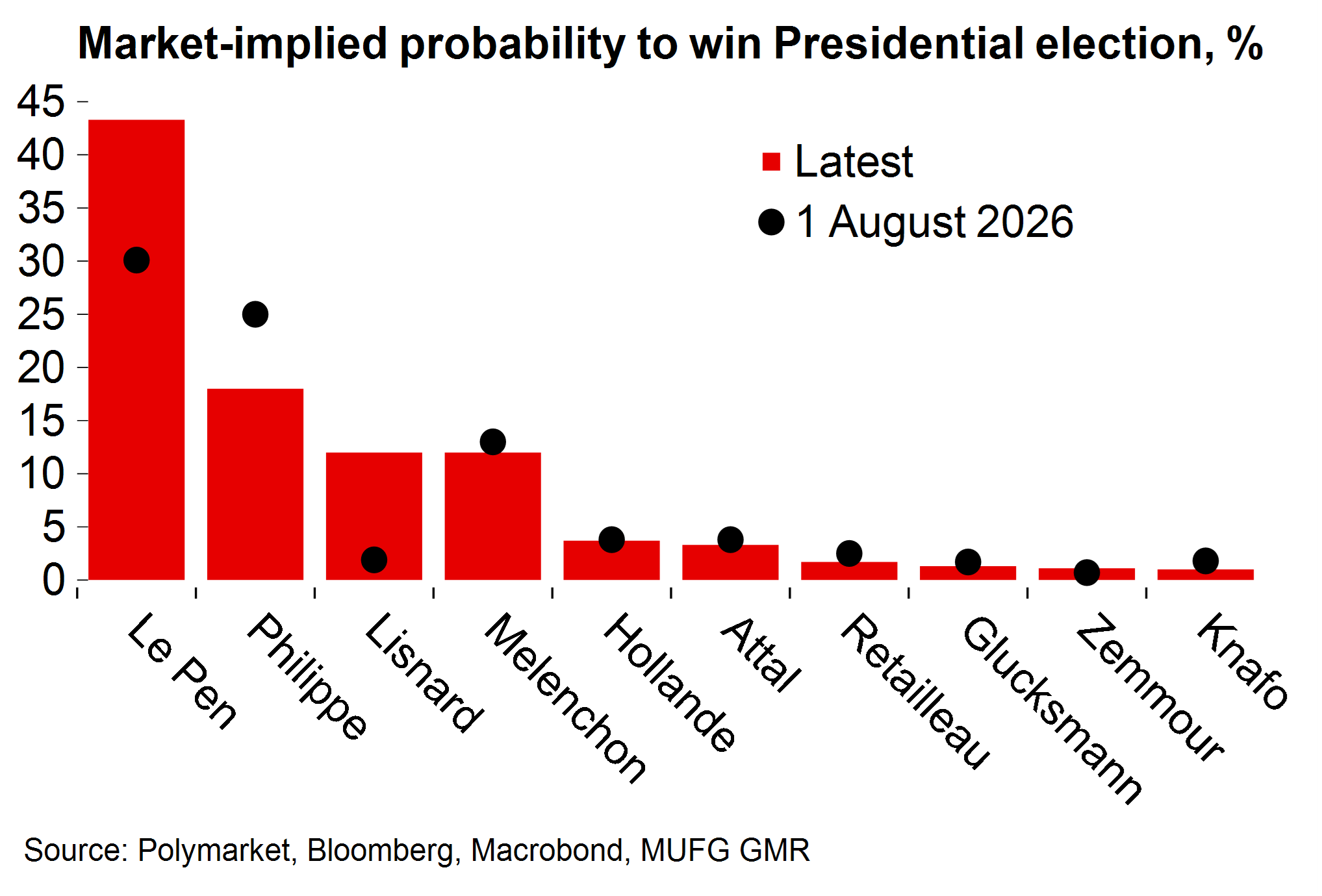
There have been some reassuring comments recently from Marine Le Pen, who is the current favourite to win the presidential election, indicating that she appears to be prioritizing fiscal consolidation although her plans lack credibility. Bringing the primary budget into balance within 18 months, as the RN proposes, would require fiscal consolidation of about EUR100billion or 3% of GDP over two years according to Bloomberg, which would deliver a significant hit to economic growth. We analyse France’s budget plans in more detail here and at the end of this report.
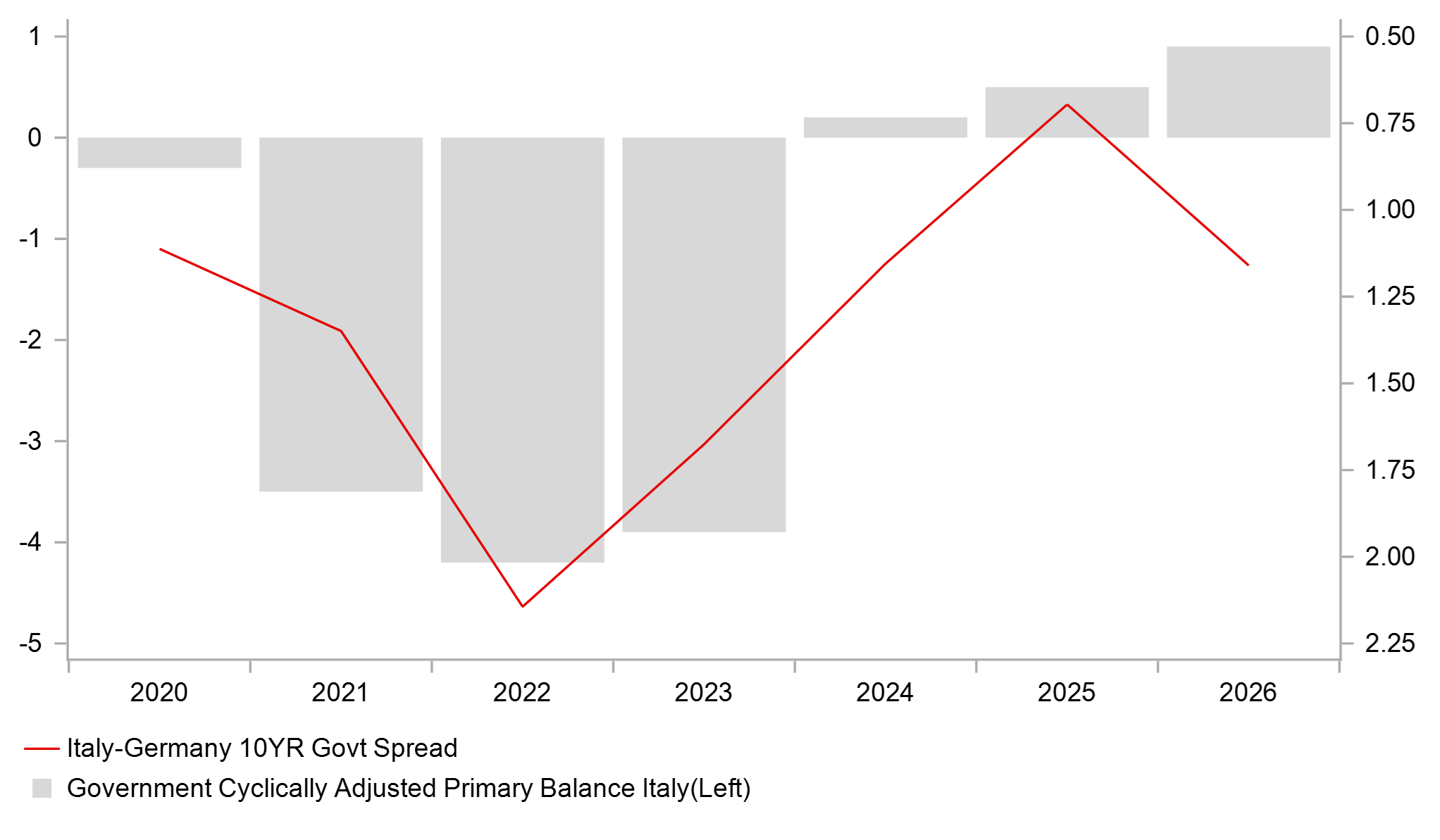
A stronger commitment to fiscal consolidation following the election could help to reduce downside risks for both the EUR and French government bonds. A recent precedent is Italy, where government bonds significantly outperformed following the election victory of the centre-right coalition led by Prime Minister Giorgia Meloni in autumn 2022, demonstrating that investor confidence can be restored when policymakers commit to a credible fiscal framework. Meloni's government pledged to follow a multi-year deficit reduction path agreed with the European Commission, helping to reinforce confidence in Italy's public finances. The subsequent return to primary budget surpluses provided further evidence of fiscal discipline and contributed to improved sentiment towards Italian government debt.
The outperformance of Italian government bonds was also supported by the gradual fading of the energy price shock that followed Russia's invasion of Ukraine. Headline inflation in the euro area peaked at 10.6% in October 2022 before falling back to 2.9% a year later. Although inflation had already peaked, the ECB continued to tighten monetary policy for almost another year and did not begin cutting rates until the middle of 2024. A similar easing of the current energy price shock could help to reduce downward pressure on both the EUR and French government bonds. Potential catalysts include the US and Iran reaching a durable agreement to end the conflict and/or a sustained normalisation of energy shipments through the Strait of Hormuz towards pre-conflict levels. Under this scenario, we would still expect the ECB to deliver two additional rate hikes, lifting the policy rate to 3.00% by early next year.
PERFORMANCE OF EUR/USD OVER PAST DECADE
Source: Bloomberg, Macrobond & MUFG GMR
FISCAL IMPROVEMENT IN ITALY
Source: Bloomberg, Macrobond & MUFG GMR
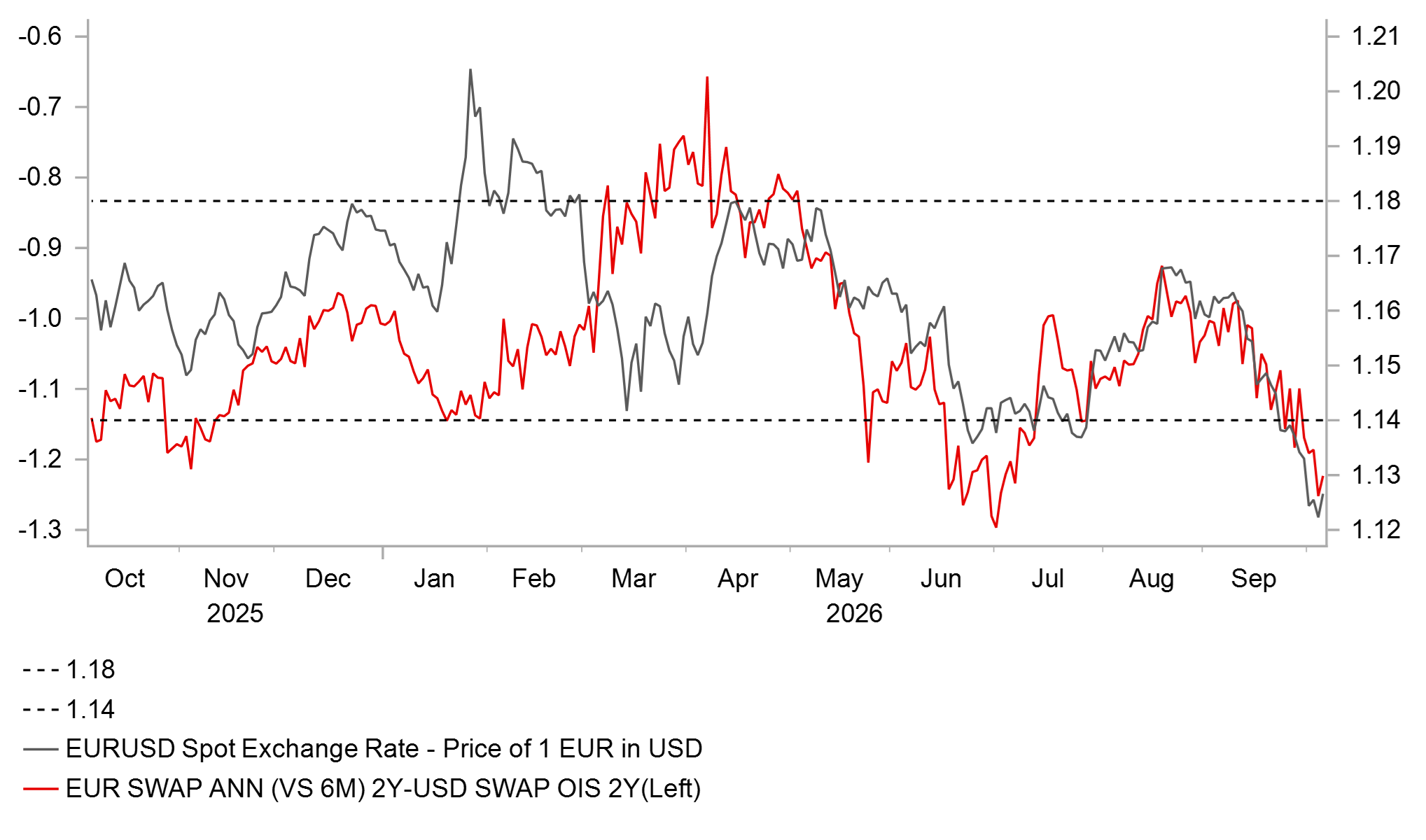
At the same time, recent developments have increased the risk of a deeper EUR decline that could pull EUR/USD back towards parity. Prior to breaking higher in the first half of 2025, the pair had spent 2023 and 2024 trading within a lower range of 1.0500-1.1000. One channel through which heightened fiscal and political risks are already weighing on the EUR is their potential impact on ECB policy. Last week, President Lagarde stated that "while growth has been resilient since our last meeting, long-term interest rates have risen notably, which will slow growth and reduce pass-through by more than projected in our September exercise". The comments suggest that higher market borrowing costs are doing some of the ECB's work by tightening financial conditions, thereby reducing the need for further increases in policy rates. Markets quickly took on board the more dovish signal, with the 2-year German government bond yield falling by around 25bps from its recent high. As a result, it now appears more likely that the ECB will leave rates unchanged this month, despite euro-area inflation surprising to the upside in September by rising to 3.8% (click here). Expectations for three further ECB rate hikes could prove too aggressive if financial conditions continue to tighten unexpectedly across the euro area.
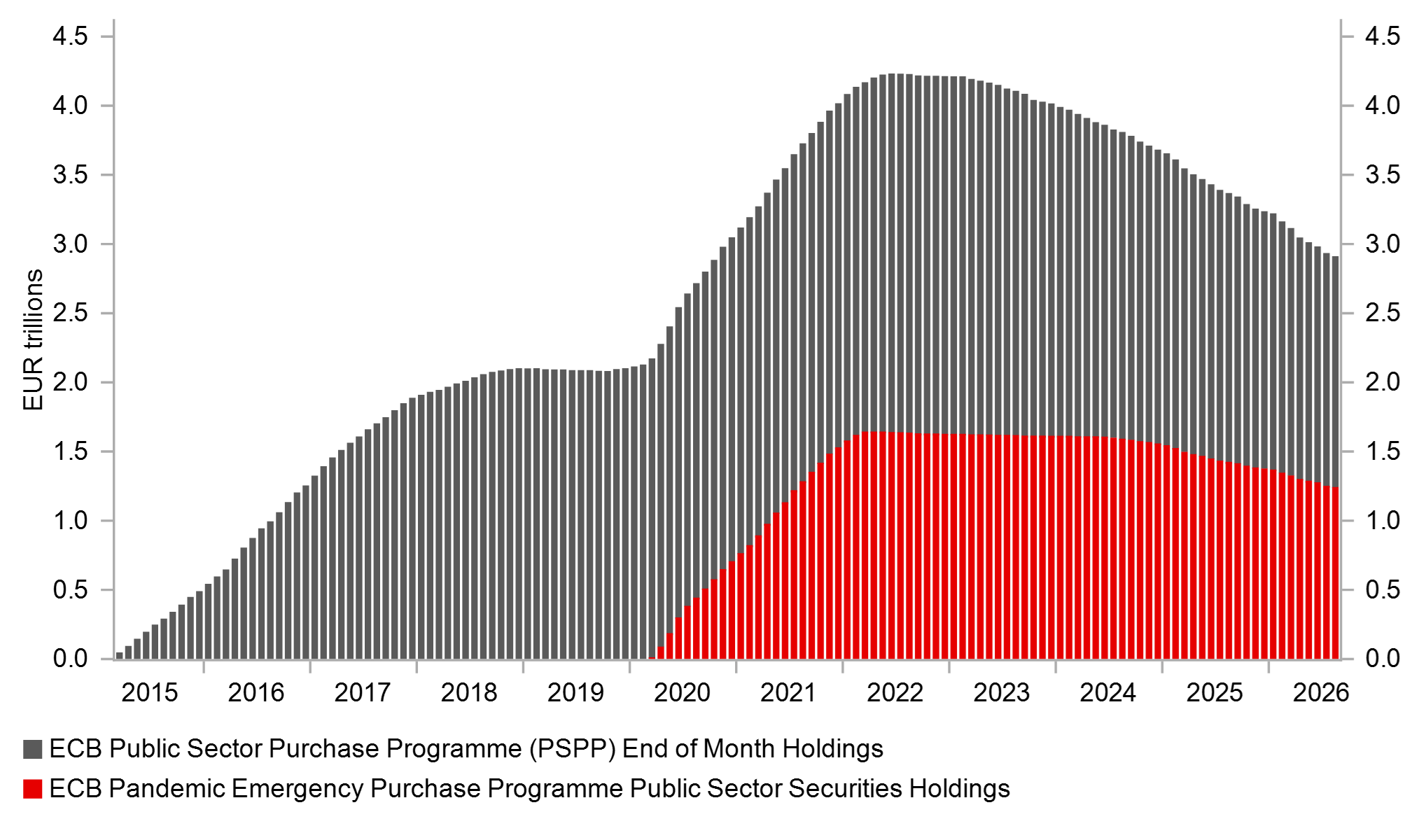
Higher government bond yields could also encourage the ECB to reconsider its current plans for quantitative tightening (QT). After peaking at EUR8.84 trillion in June 2022, the ECB's balance sheet has shrunk to just under EUR5.9 trillion, although it remains above its pre-pandemic level of around EUR4.7 trillion. The reduction in the balance sheet has been driven recently by the runoff of bonds purchased under the Asset Purchase Programme (APP) and the Pandemic Emergency Purchase Programme (PEPP). The ECB stopped reinvesting maturing bonds under the APP from July 2023 onwards, while PEPP reinvestments continued for longer before being discontinued at the end of 2024. Looking specifically at sovereign bond holdings, APP public-sector bond holdings (PSPP) have fallen from a peak of EUR2.59 trillion in June 2022 to EUR1.67 trillion in August. Over the same period, PEPP sovereign bond holdings have declined from a peak of EUR1.64 trillion in March 2022 to EUR1.24 trillion. The ECB has been steadily reducing its presence in euro-area government bond markets, increasing the amount of sovereign debt that must be absorbed by private investors.
SCALING BACK OF ECB HIKES WEIGHS ON EUR
Source: Bloomberg, Macrobond & MUFG GMR
ECB ALLOWING GOVT. BONDS TO ROLL-OFF
Source: Bloomberg, Macrobond & MUFG GMR
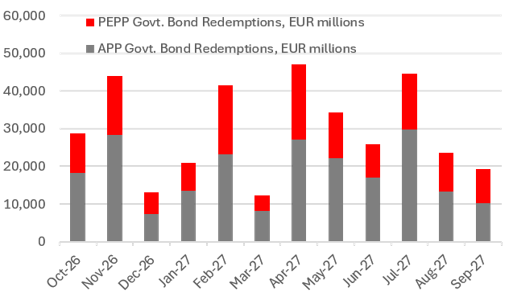
The ECB currently estimates that around EUR219 billion of government bonds held under the APP will mature between October 2026 and September 2027. Over the same period, a further EUR137 billion of government bonds held under the PEPP are scheduled to mature. Combined redemptions over the next twelve months therefore amount to roughly EUR355 billion. While purely coincidental, the scale of these redemptions is comparable to the French Treasury's (click here) planned medium- and long-term government bond issuance for 2027, net of buybacks, of EUR340 billion. This highlights the significant amount of sovereign debt that private investors will need to absorb as the ECB's balance sheet continues to shrink. Against this backdrop, a slowdown or temporary pause in quantitative tightening (QT) could help provide additional support for euro-area government bond markets. The ECB has historically enjoyed greater flexibility under the PEPP framework to adjust purchases and reinvestments across jurisdictions when warranted by market conditions. While slowing down QT would likely be viewed negatively for the EUR, we not believe it would trigger a significant sell-off as it is viewed as a less important driver than the policy rate.
The biggest downside risk for the EUR, at least initially, would be if the ECB were forced to adopt a much more interventionist approach to support sovereign bond markets to safeguard the smooth transmission of monetary policy across the euro area. To address such risks, the ECB created the Transmission Protection Instrument (TPI) in July 2022. The facility was designed to ensure that the ECB's monetary policy stance is transmitted smoothly across all euro-area countries and can be activated to counter unwarranted and disorderly market dynamics that pose a serious threat to the transmission mechanism. The TPI has not been used to date. If activated, it would allow the Eurosystem to conduct secondary-market purchases of securities issued by jurisdictions experiencing a deterioration in financing conditions that is not justified by country-specific fundamentals. The scale of any purchases would depend on the severity of the risks facing monetary policy transmission and would be calibrated accordingly. Purchases would be focused primarily on public-sector securities with remaining maturities of between one and ten years.
However, the hurdle for activating the TPI is high. To be eligible for bond purchases under the programme, a country must be judged to be pursuing sound and sustainable fiscal and macroeconomic policies. The ECB's eligibility criteria include: (i) compliance with the EU fiscal framework, (ii) the absence of severe macroeconomic imbalances, (iii) fiscal sustainability, and (iv) sound and sustainable macroeconomic policies. For France, compliance with the EU fiscal framework is likely to be the most contentious criterion. France has been subject to an Excessive Deficit Procedure since 20242024, with the procedure remaining ongoing. However, this does not automatically render France ineligible for the TPI. Under the ECB's framework, countries can still qualify if they are assessed as taking effective corrective action in response to EU recommendations. As a result, the French government's willingness and ability to implement credible fiscal consolidation measures will be an important factor in determining whether French government bonds could qualify for support under the TPI. If fiscal policy were viewed as being on a sustainable path and yield spreads were judged to have widened significantly beyond levels justified by fundamentals, the combination of credible fiscal tightening and potential ECB support could prove particularly powerful in restoring investor confidence and narrowing spreads.
ECB GOVT. BOND REDEMPTIONS FOR YEAR AHEAD
Source: Bloomberg, ECB, Macrobond & MUFG GMR
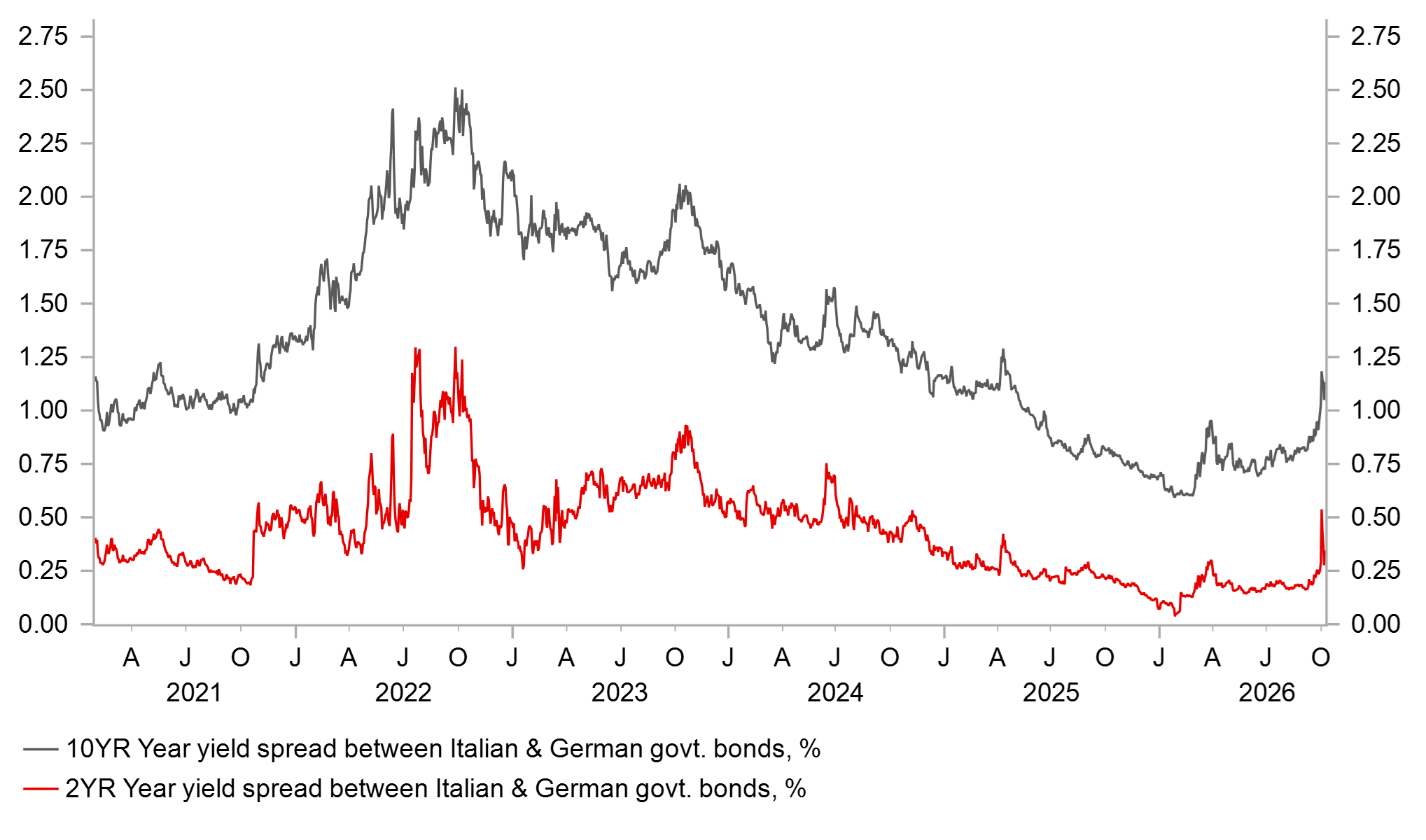
WATCHING FOR CONTAGION/FRAGMENTATION RISKS
Source: Bloomberg, Macrobond & MUFG GMR
Recent history also suggests that the ECB would be reluctant to deploy the TPI unless market conditions deteriorated significantly further. For example, the 10-year Italy-Germany government bond yield spread widened towards 250bps in the autumn of 2022 without triggering activation of the Transmission Protection Instrument. On this occasion, ECB policymakers have given little indication that such action is currently under consideration. Emmanuel Moulin, Governor of the Banque de France, stated today that "the ECB is not there to deal with the fiscal problems of countries. It is here to fight inflation and keep inflation around 2%. So the conditions are not met today for intervention by the ECB." He added that France's fiscal situation is "serious", but stressed that it can be addressed by approving a budget and committing to reducing the deficit to below 5% of GDP.
Instead, ECB officials and market participants will be monitoring closely for signs of contagion and rising fragmentation risks across the euro area, which would strengthen the case for intervention. A further increase in fragmentation concerns would likely reinforce downward pressure on the EUR and fuel speculation that the ECB could eventually be forced to activate the TPI. While any TPI-related bond purchases would likely be temporary, they could initially be perceived by investors as a form of monetary financing, undermining confidence in the EUR. Over time, however, the impact could turn more supportive if ECB intervention and credible fiscal consolidation measures help place public finances on a more sustainable footing. In that scenario, lower borrowing costs and improved financing conditions across the euro area would support economic growth and, ultimately, the EUR.
Macro view: The latest on the French budget process
We set out our initial views on the draft French budget last week (see here: Another test of fiscal credibility). A key point we stressed was that the budget should be viewed as an opening bid rather than a final package.
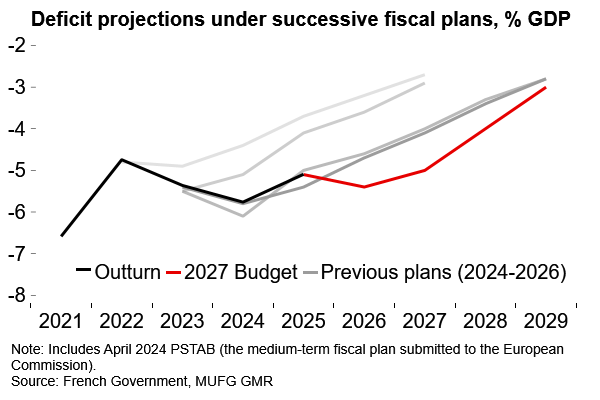
The most notable development since then has been Marine Le Pen's response. Instead of opposing fiscal consolidation, the RN leader unveiled a notably more ambitious fiscal path than the government. The counter proposal targets a reduction in the deficit from 5.4% of GDP in 2026 to 3.7% next year, compared with the government's objective of 5.0%, before declining further in subsequent years. To achieve this, RN is proposing more than €140bn of fiscal adjustment by 2032, up from the €125bn figure previously discussed by Le Pen. The objective is to reduce public spending from around 57% of GDP currently to below 50% by the end of a first term.
On the measures themselves, the RN proposal sets out a broad rationalisation of public spending, reforms to social security, immigration-related savings, lower contributions to the EU budget and reductions in local government spending. The savings from this would be used both to reduce the deficit and to finance a sizeable package of tax cuts. RN is continuing to advocate reversing the central element of the 2023 pension reform by restoring the retirement age to 62, but has also set out a plan to create a funded pillar through mandatory worker contributions.
Whether these sorts of numbers are remotely achievable is another question. There is a lot of hope pinned on administrative restructuring and broader efficiency gains which are always difficult to quantify. The proposed 1.7pp deficit reduction in a single year looks quite optimistic. Normally adjustments of that size are associated with post-crisis recoveries.
But Le Pen is currently the clear frontrunner for next year's presidential election and she is arguing that the government's own consolidation plans do not go far enough. At this stage that broad stance is more significant than the details. RN will reasonably see itself as a plausible governing party after the election and so there is a strong incentive to favour at least some degree of fiscal repair now, undertaken by somebody else, rather than inherit an even worse position. The bond market sell-off has likely concentrated some minds as well. Nobody wants a Liz Truss moment.
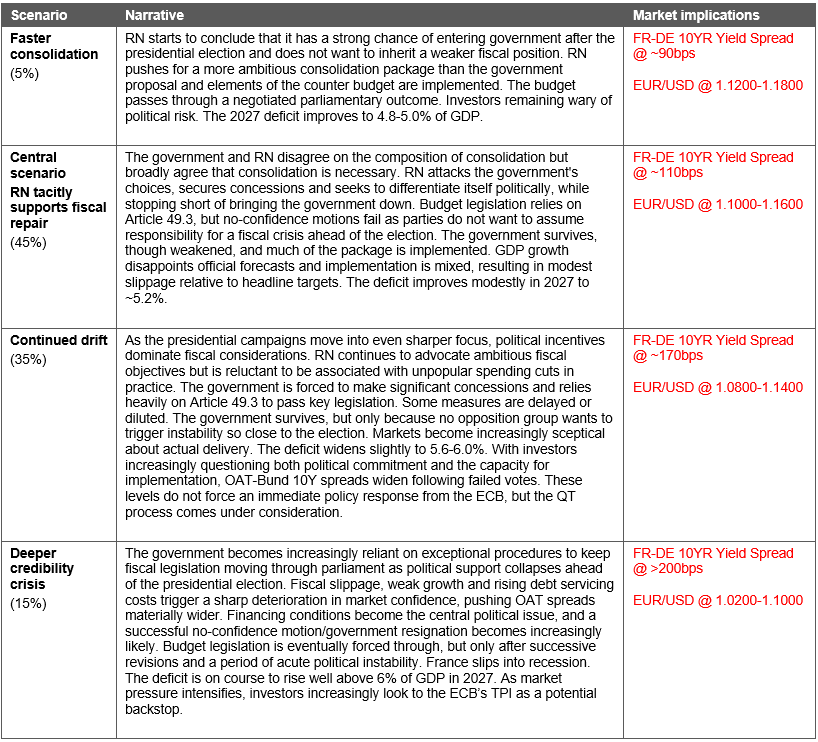
We set out some scenarios in the table below. As things stand our base case is that RN ultimately facilitates the passage of the budget, or something close to it. That’s not to say it will be a smooth process. RN will likely seek concessions, criticise the government's choices and try to differentiate itself politically. The first vote, on the revenue section, will be held on 20 October and should provide an early indication of how much common ground there is.
More broadly, we remain sceptical about the government's growth assumptions. It is hard to see what will drive French activity over coming quarters against a backdrop of political uncertainty, higher energy costs and, we assume, some degree of fiscal consolidation. The government's forecast of growth accelerating to 1.0% in 2027 still looks optimistic. We continue to expect growth closer to 0.7%, with risks skewed to the downside. As a result, our assumption remains that the eventual deficit next year will be marginally worse than the government’s current target, despite RN’s stated ambition to go faster, reflecting slippage in implementation, weaker growth and higher borrowing costs.
Fiscal consolidation has been repeatedly deferred
Le Pen is the front-runner to win the presidential election
FRANCE 2027 BUDGET PROCESS – MUFG SCENARIOS AHEAD OF THE PRESIDENTIAL ELECTION
Source: MUFG GMR