

Please download PDF from above for the following currencies.
Australian dollar // New Zealand dollar //Canadian dollar // Norwegian krone // Swedish Krona // Swiss franc // Czech koruna // Hungarian forint //Polish zloty // Romanian leu // Russian rouble // South African rand // Turkish lira // Indian rupee // Indonesian rupiah // Malaysian ringgit // Philippine peso //Singapore dollar // South Korean won // Taiwan dollar // Thai baht // Vietnamese dong // Argentine peso // Brazilian real // Chilean peso // Mexican peso // Saudi riyal // Egyptian pound
Monthly Foreign Exchange Outlook
DEREK HALPENNY
Head of Research, Global Markets EMEA and International Securities
Global Markets Research
Global Markets Division for EMEA
E: derek.halpenny@uk.mufg.jp
LEE HARDMAN
Senior Currency Analyst
Global Markets Research
Global Markets Division for EMEA
E: lee.hardman@uk.mufg.jp
LIN LI
Head of Global Markets Research Asia
Global Markets Research
Global Markets Division for Asia
E: lin_li@hk.mufg.jp
KHANG SEK LEE
Associate
Global Markets Research
Global Markets Division for Asia
E: khangsek_lee@hk.mufg.jp
LLOYD CHAN
Senior Currency Analyst
Global Markets Research
Global Markets Division for Asia
E: lloyd_chan@sg.mufg.jp
EDWARD BELL
Head of Research - MENA
DIFC Branch – Dubai
E: edward.bell@ae.mufg.jp
SOOJIN KIM
Analyst, ESG and Emerging Markets Research – EMEA
DIFC Branch – Dubai
E: soojin.kim@ae.mufg.jp
MUFG Bank, Ltd.
A member of MUFG, a global financial group
November 2026
KEY EVENTS IN THE MONTH AHEAD
1) BOE & RIKSBANK TO JOIN G10 TIGHTENING CYCLE
The US dollar (DXY basis) advanced by 0.4% in October but this was entirely down to the appreciation versus the euro. The dollar was flat versus the yen and weakened against the remaining G10 currencies. G10 central bank meetings in November will all be in the early part of the month – the RBA on 3rd November; the Riksbank of 4th November; and Norges bank and the BoE on 5th November. We expect the BoE to finally begin tightening policy in response to higher energy prices. BoE officials including Governor Bailey have already signalled that time is running out to keep looking through higher energy prices. At the same time, the case for tightening policy has been encouraged by the persistence of stronger growth in UK. However, we expect the BoE to push back against market expectations for more aggressive hikes in the year ahead. The RBA and Riksbank are also expected join the BoE in tightening policy this month. The increasingly synchronized tightening cycle should help to dampen USD strength alongside the Fed’s recent cautious message regarding the need for further hikes.
2) REPUBLICANS SET TO LOSE CONTROL OF CONGRESS
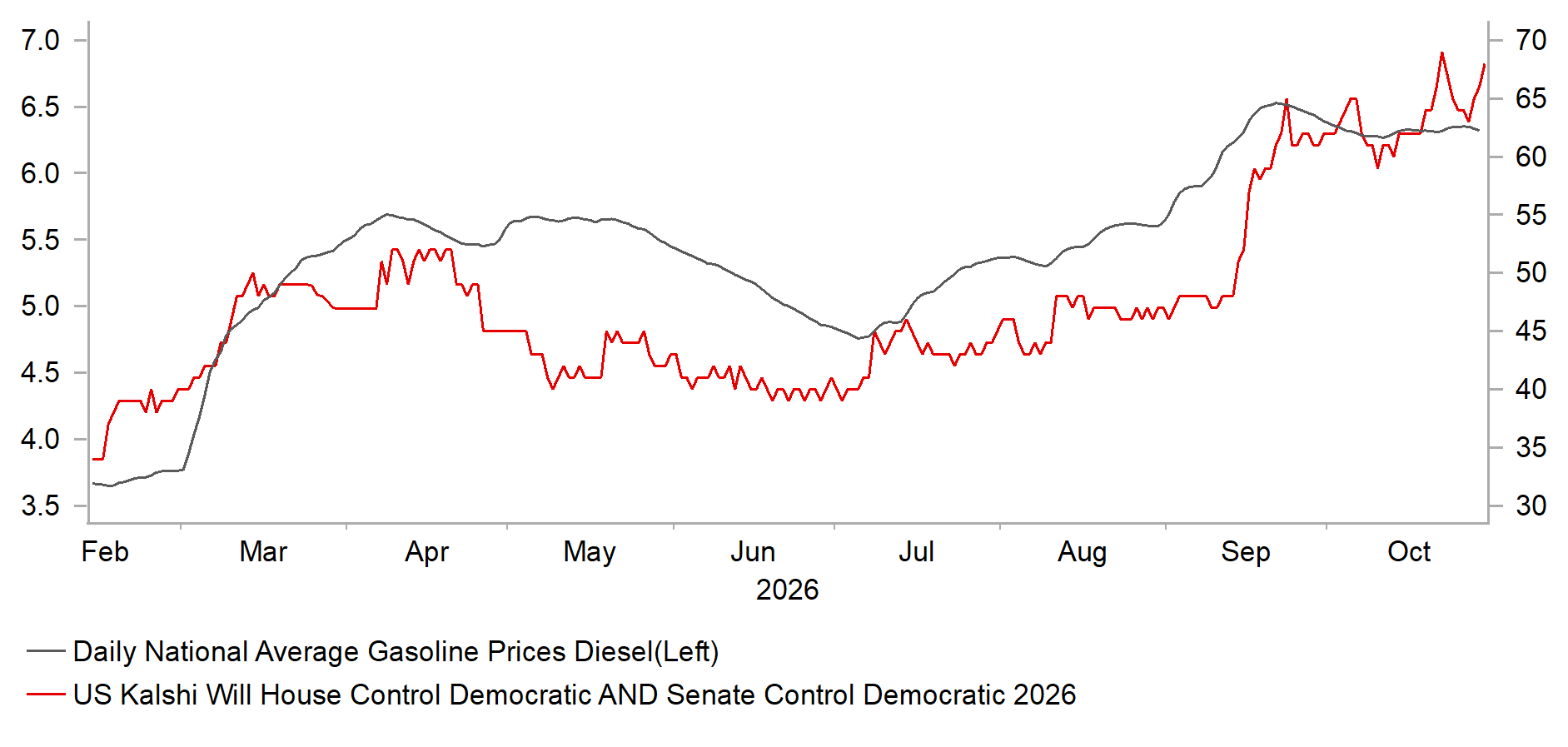
Another big event in November is also at the start of the month - the US mid-term elections will take place on 3rd November. The probability of the Democrats winning both the House and the Senate closed October at 68% (Kalshi prediction market), close to highs and correlated closely in recent months with the rising price of diesel and gasoline prices. Whichever way the vote goes we don’t think it will have a notable impact on rates and FX markets. However, a Democrat-controlled Congress will likely push for greater regulations in AI and hence the regulatory risk premium is set to gradually rise. President Trump has veto powers but medium-term regulatory risks could still influence AI sentiment over time. Democrat-launched investigations could undermine confidence in the Trump administration. It could also curtail scope for further fiscal stimulus. Overall, we believe a Democrat-controlled Congress would help dampen upside potential for the USD but is unlikely to be a game changer.
3) MARKETS WATCH APEC FOR FURTHER SIGNALS ON CHINA’S EXTERNAL RELATIONS
China's key near-term focus is the implementation of existing easing measures, including the mortgage interest subsidy, PSL rate cut, expanded relending quotas, and the RMB550bn previously unused local-government debt quota to support local government finances and investment. Markets will closely watch the APEC Economic Leaders’ Meeting, potentially important for trade relations, regional economic cooperation and geopolitical risk.
Forecast rates against the US dollar - End-Q4 2026 to End-Q3 2027
Spot close 30.10.26 | Q4 2026 | Q1 2027 | Q2 2027 | Q3 2027 | |
DXY | 101.91 | 101.98 | 100.14 | 98.550 | 97.030 |
JPY | 157.49 | 155.00 | 153.00 | 151.00 | 149.00 |
EUR | 1.1163 | 1.1200 | 1.1400 | 1.1600 | 1.1800 |
GBP | 1.3398 | 1.3330 | 1.3410 | 1.3490 | 1.3560 |
CNY | 6.6531 | 6.6500 | 6.6000 | 6.5500 | 6.5000 |
AUD | 0.7035 | 0.7000 | 0.7100 | 0.7200 | 0.7300 |
NZD | 0.5637 | 0.5650 | 0.5750 | 0.5850 | 0.5900 |
CAD | 1.3952 | 1.4200 | 1.4000 | 1.3800 | 1.3600 |
NOK | 9.1979 | 9.1960 | 9.2110 | 9.2240 | 9.1530 |
SEK | 9.8225 | 9.9110 | 9.6050 | 9.3100 | 9.0680 |
CHF | 0.8236 | 0.8260 | 0.8070 | 0.7890 | 0.7710 |
|
|
|
|
|
|
CZK | 21.804 | 21.790 | 21.230 | 20.690 | 20.170 |
HUF | 327.35 | 325.90 | 315.80 | 306.00 | 300.80 |
PLN | 3.9430 | 3.9730 | 3.8600 | 3.7500 | 3.6440 |
RON | 4.7789 | 4.8210 | 4.7810 | 4.6980 | 4.6610 |
RUB | 80.050 | 84.440 | 85.610 | 86.750 | 87.880 |
ZAR | 16.714 | 16.800 | 16.600 | 16.300 | 15.900 |
TRY | 49.945 | 51.500 | 53.500 | 55.500 | 57.500 |
|
|
|
|
|
|
INR | 94.950 | 96.000 | 96.500 | 97.000 | 97.500 |
IDR | 18143 | 18350 | 18500 | 18700 | 18600 |
MYR | 4.0555 | 4.0300 | 4.0000 | 4.0000 | 3.9800 |
PHP | 63.720 | 63.800 | 63.500 | 63.300 | 63.000 |
SGD | 1.2777 | 1.2750 | 1.2700 | 1.2700 | 1.2600 |
KRW | 1333.6 | 1320.0 | 1300.0 | 1300.0 | 1280.0 |
TWD | 32.588 | 32.000 | 31.800 | 31.600 | 31.200 |
THB | 33.768 | 34.100 | 34.000 | 33.800 | 33.500 |
VND | 25800 | 26100 | 26200 | 26300 | 26400 |
|
|
|
|
|
|
ARS | 1537.8 | 1575.0 | 1625.0 | 1675.0 | 1725.0 |
BRL | 5.4291 | 5.3000 | 5.2500 | 5.1500 | 5.0500 |
CLP | 991.46 | 980.00 | 960.00 | 940.00 | 900.00 |
MXN | 18.800 | 18.750 | 18.500 | 18.250 | 17.750 |
| |||||
SAR | 3.7527 | 3.7500 | 3.7500 | 3.7500 | 3.7500 |
EGP | 55.972 | 56.000 | 57.000 | 57.500 | 57.500 |
Notes: All FX rates are expressed as units of currency per US dollar bar EUR, GBP, AUD and NZD which are expressed as dollars per unit of currency. Data source spot close; Bloomberg closing rate as of 5:00pm London time, except VND which is local onshore closing rate. All consensus forecasts are Bloomberg sourced.
US dollar
Spot close 30.10.26 | Q4 2026 | Q1 2027 | Q2 2027 | Q3 2027 | |
USD/JPY | 157.49 | 155.00 | 153.00 | 151.00 | 149.00 |
EUR/USD | 1.1163 | 1.1200 | 1.1400 | 1.1600 | 1.1800 |
Consensus | Consensus | Consensus | Consensus | ||
USD/JPY | 157.00 | 156.00 | 155.00 | 153.00 | |
EUR/USD | 1.1300 | 1.1300 | 1.1400 | 1.1500 |
MARKET UPDATE
In October the US dollar strengthened against the euro in terms of London closing rates, from 1.1360 to 1.1163. In addition, the dollar strengthened against the yen, from 157.15 to 157.49. The FOMC at its meeting in October left the range for the federal funds unchanged at 3.75%-4.00%. The FOMC ended QT last December with the Fed no longer reducing UST bond holdings. MBS holdings continue to decline but are offset by buying of US T-bills, now running at around USD 25bn per month.
OUTLOOK
The US dollar gained versus the euro and the yen but actually weakened against the rest of G10 in October. There were periods in October when the AI/tech trade underwent a correction and that resulted in dollar underperformance. That in part reflected the drop in US yields which was reinforced toward month-end when the FOMC announced an unchanged policy. No change was expected but once again, market participants questioned the resolve of the Warsh-led FOMC to hike rates to tackle inflation. The economy was expanding at a “strong pace” and inflation remained “elevated”. Why did the Fed not hike? Warsh argued the FOMC wanted time to gather more information. Warsh also acknowledged financial conditions have tightened but were not tight. Still, this reference reinforced expectations that the Fed may be more cautious in hiking if financial conditions tightened further. We expect a hike in December, but unfavourable market conditions could alter that. We maintain that the OIS curve is overpriced for what the FOMC will ultimately deliver.
One of the key upcoming events is the mid-term elections on 3rd November. Polling and betting markets certainly point to an increasing prospect of the Democrats taking control of not just the House but also the Senate. One probability measure (Kalshi) shows a 70% probability of the Democrats taking both. The probability has increased very much in line with the increase in diesel and gasoline prices in the US. We see two possible implications for the US dollar. Firstly, while President Trump of course has a veto, Congress under the Democrats will likely push more forcefully for increased regulations related to AI. There could also be greater support from the Democrats for the growing opposition to data-centre rollouts. That scenario could impact the current optimistic forward earnings projections built into current AI-related valuations. Secondly, a wave of investigations into the conduct of the White House is likely and that could result in Trump’s behaviour becoming even more unpredictable, raising policy uncertainties further. We would view both of these scenarios as mild US dollar negatives.
The fact that the US dollar weakened across G10 apart from vs EUR & JPY indicates a degree of fragility and while AI-related inflows to US equities have been strong, it appears investors do not want to take much FX risk. Upside dollar risks do still exist though with the Fed still expected to hike further. However, based on our view of no further hikes after December, we anticipate the dollar turning weaker in 2027.
INTEREST RATE OUTLOOK
Interest Rate Close | Q4 2026 | Q1 2027 | Q2 2027 | Q3 2027 | |
Policy Rate | 3.88% | 4.13% | 4.13% | 4.13% | 3.88% |
3-Month T-Bill | 4.08% | 4.18% | 4.18% | 4.18% | 3.93% |
10-Year Yield | 4.93% | 4.75% | 4.63% | 4.50% | 4.38% |
* Interest rate assumptions incorporated into MUFG foreign exchange forecasts.
At the October FOMC rates were left unchanged as the Fed waits for more data. The Fed is not signalling urgency to hike at every meeting, while Warsh's stronger growth assessment has supported higher long-end yields. The post-FOMC curve steepening reinforces our view that the move in longer-term rates is a re-rating of growth and term premium. Overall, the behavior of duration is changing. Strong 10s/30s auctions, Treasuries rallying through hot CPI, and several sizeable rallies this month suggest investors are increasingly willing to buy dips. With higher rates already tightening financial conditions and credit availability, duration appears better supported than it was earlier in the cycle. Against that backdrop, December is not a done deal. Markets price roughly 75% chance of a 25bp hike versus our 55% probability, leaving us meaningfully below market conviction. A lot can change before the meeting, particularly around the election, incoming data, financial conditions and inflation expectations. (George Goncalves)
GASOLINE PRICE VS DEMOCRATIC CONTROL PROBABILITY
Source: Bloomberg, Macrobond & MUFG GMR
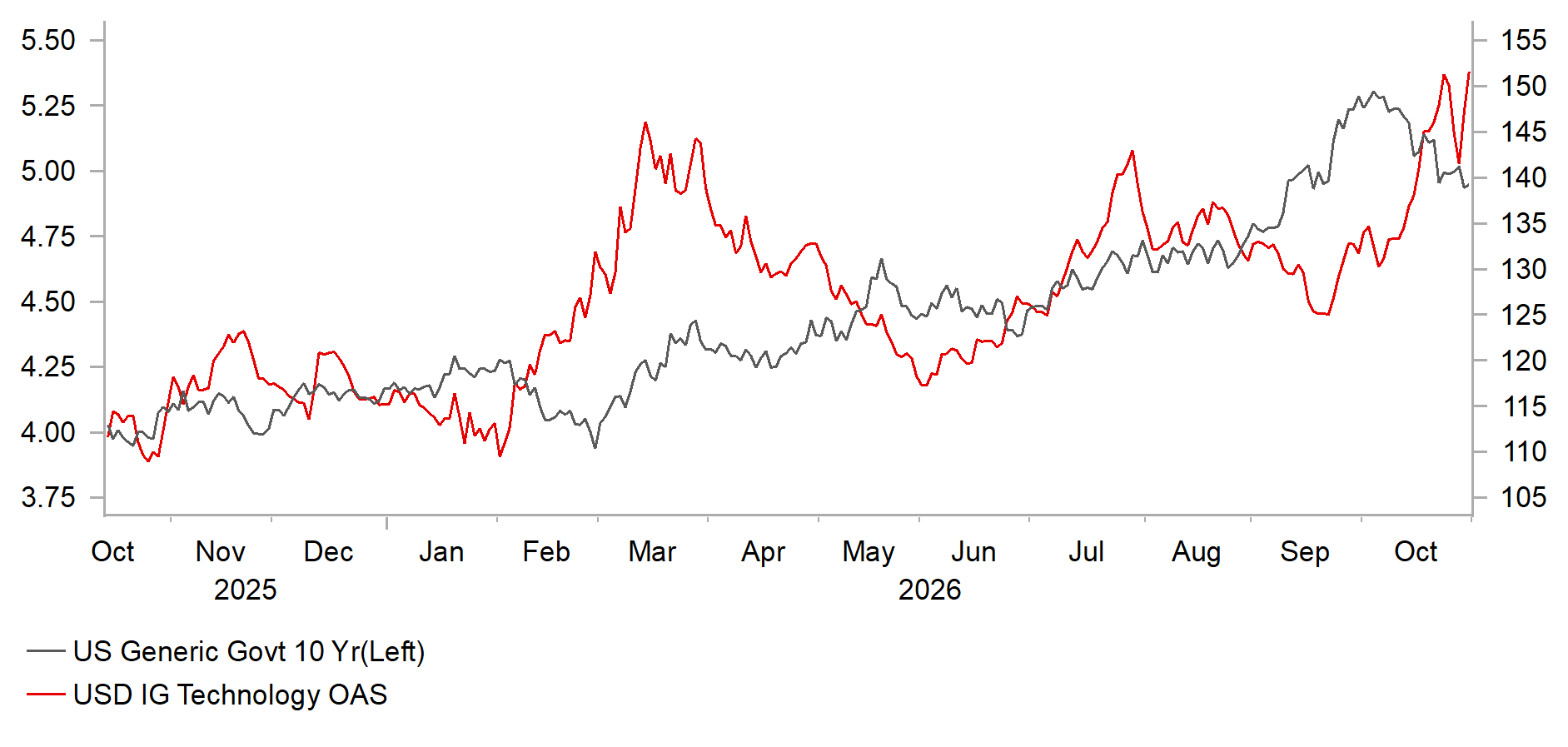
US 10Y TREASURY YIELD VS USD IG TECHNOLOGY OAS
Source: Bloomberg, Macrobond & MUFG GMR
Japanese yen
Spot close 30.10.26 | Q4 2026 | Q1 2027 | Q2 2027 | Q3 2027 | |
USD/JPY | 157.49 | 155.00 | 153.00 | 151.00 | 149.00 |
EUR/JPY | 175.81 | 173.60 | 174.40 | 175.20 | 175.80 |
Consensus | Consensus | Consensus | Consensus | ||
USD/JPY | 157.00 | 156.00 | 155.00 | 153.00 | |
EUR/JPY | 179.00 | 176.50 | 177.00 | 177.00 |
MARKET UPDATE
In October the yen weakened very marginally versus the US dollar in terms of London closing rates from 157.15 to 157.49. However, the yen strengthened versus the euro from 178.52 to 175.81. The BoJ at its meeting in October left the key policy rate unchanged at 1.25%, the highest level since 1995 after four 25bp hikes since January 2025. The BoJ continues to cut JGB monthly purchases at a pace of reduction of JPY 200bn per quarter through to Q1 2027 and will then halt the reduction with monthly purchases from then stabilising at around JPY 2trn per month.
OUTLOOK
The yen was roughly unchanged versus the US dollar in October but that equated to the second worst performance in October with only the euro performing worse. The yen did strengthen marginally on the final day of the month following the BoJ monetary policy meeting. The meeting marked the achievement of a significant milestone with Governor Ueda confirming that the BoJ had “roughly” reached the 2.0% inflation objective but that doing so sustainably was still a task. But acknowledging reaching the target is still an important development and reinforces the potential for more hikes. Ueda stated in answering a question about the future pace of tightening that an assessment would be done at every meeting, “including the next one” that firmly signals a strong prospect of a hike if current conditions continue to prevail. Being at the inflation goal does skew the reaction function – now the BoJ is no longer attempting to get to the 2% goal but is focused on avoiding any overshoot. The core inflation projection for FY27 was raised from 2.4% to 2.6% and the BoJ maintained that inflation risks were skewed to the upside. We see the BoJ hiking in December and then twice more in 2027 taking the policy rate to 2.00%.
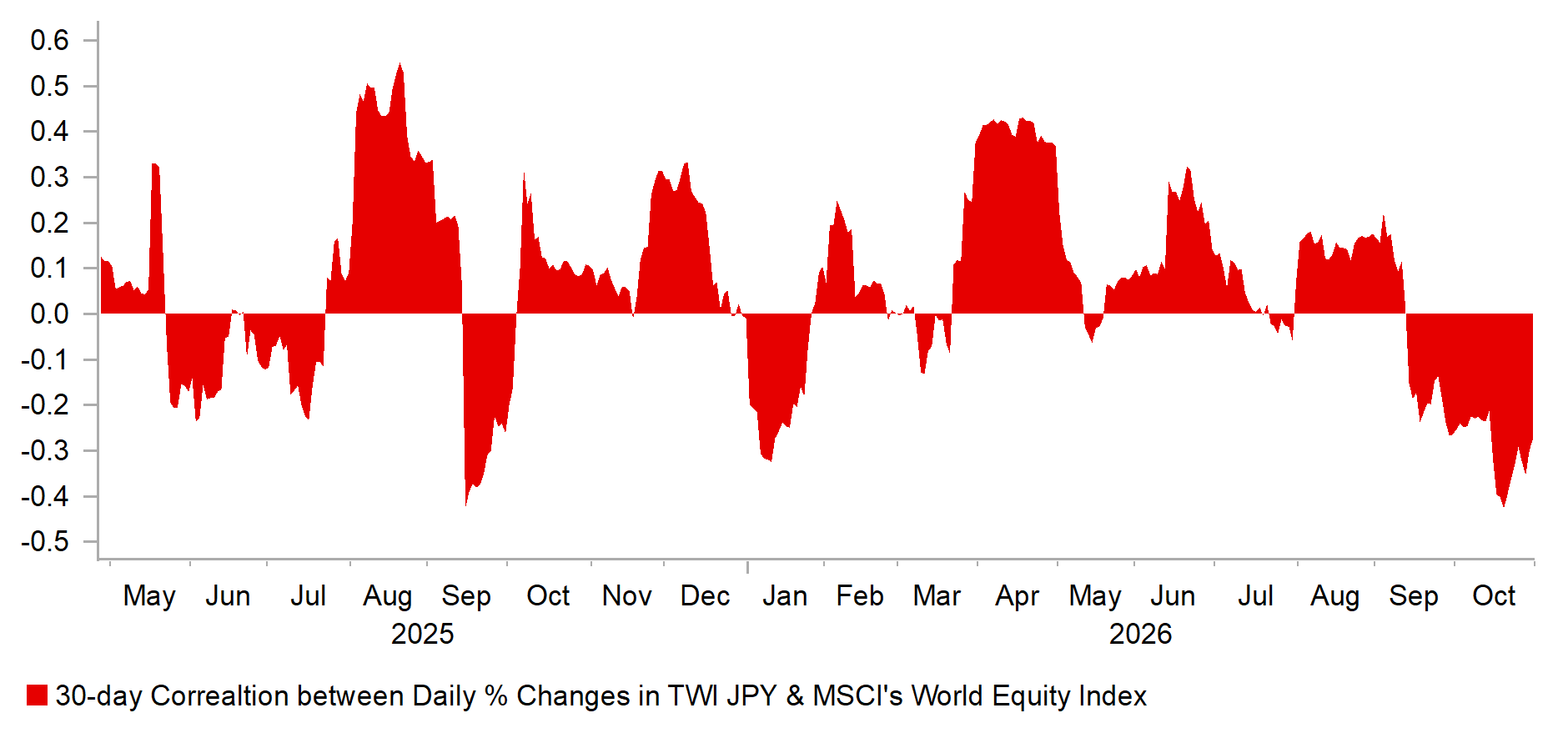
The yen continues to underperform despite the increased equity market volatility and correction lower in AI-related stocks. However, there are some tentative signs that the yen is performing better and there have been days when equities were lower and the yen was outperforming suggesting a return of better safe-haven performance. Year-to-date the yen is the third best performing currency. However, this includes intervention but performance after intervention also shows the yen performing 3rd best in G10. With the OIS market now priced for the BoJ policy rate getting to between 1.75%-2.00% the yen is deriving support. Global yields have fallen although remain elevated. If there was a bigger risk-off period that saw front-end yields drop more notably it would likely coincide with yen outperformance. Capital flows do not yet indicate any notable shift in preference to domestic assets by Japanese investors but that could gradually become evident going forward.
The tentative signs of better yen performance could be a sign of a gradual turn in yen dynamics and we maintain our view of a gradual strengthening of the yen going forward. An AI-related risk-off period would likely see the yen outperform our forecast profile.
INTEREST RATE OUTLOOK
Interest Rate Close | Q4 2026 | Q1 2027 | Q2 2027 | Q3 2027 | |
Policy Rate | 1.25% | 1.50% | 1.75% | 2.00% | 2.00% |
3-Month Bill | 1.25% | 1.60% | 1.80% | 2.10% | 2.20% |
10-Year Yield | 2.78% | 3.00% | 3.20% | 3.10% | 3.00% |
* Interest rate assumptions incorporated into MUFG foreign exchange forecasts.
The 10-year JGB yield declined in October, by 29bps to close at 2.78%, which was the largest one-month decline in the 10-year yield since August 2006. The close above 3.00% last month clearly drew in buyers The move coincided with the sharp reversal in global 10-year yields as risk aversion increased due to growing concerns over AI valuations. There is increased risks of a further global equity sell-off that would extend the move lower in yields. Nonetheless, our core view is that the BoJ has further tightening to undertake and that the curve is set to flatten as investors grow increasingly confident that the policy setting is credible and that inflation pressures will remain contained. The drop in JGB yields will likely also reflect better demand for JGBs amongst domestic investors as confidence in the BoJ improves further. The BoJ’s latest forecasts show core annual inflation moving up to 2.6% next fiscal year before then declining to the 2.0% target the following year. The two most hawkish members of the BoJ will depart in July next year which will further lift expectations that the policy tightening cycle will end.
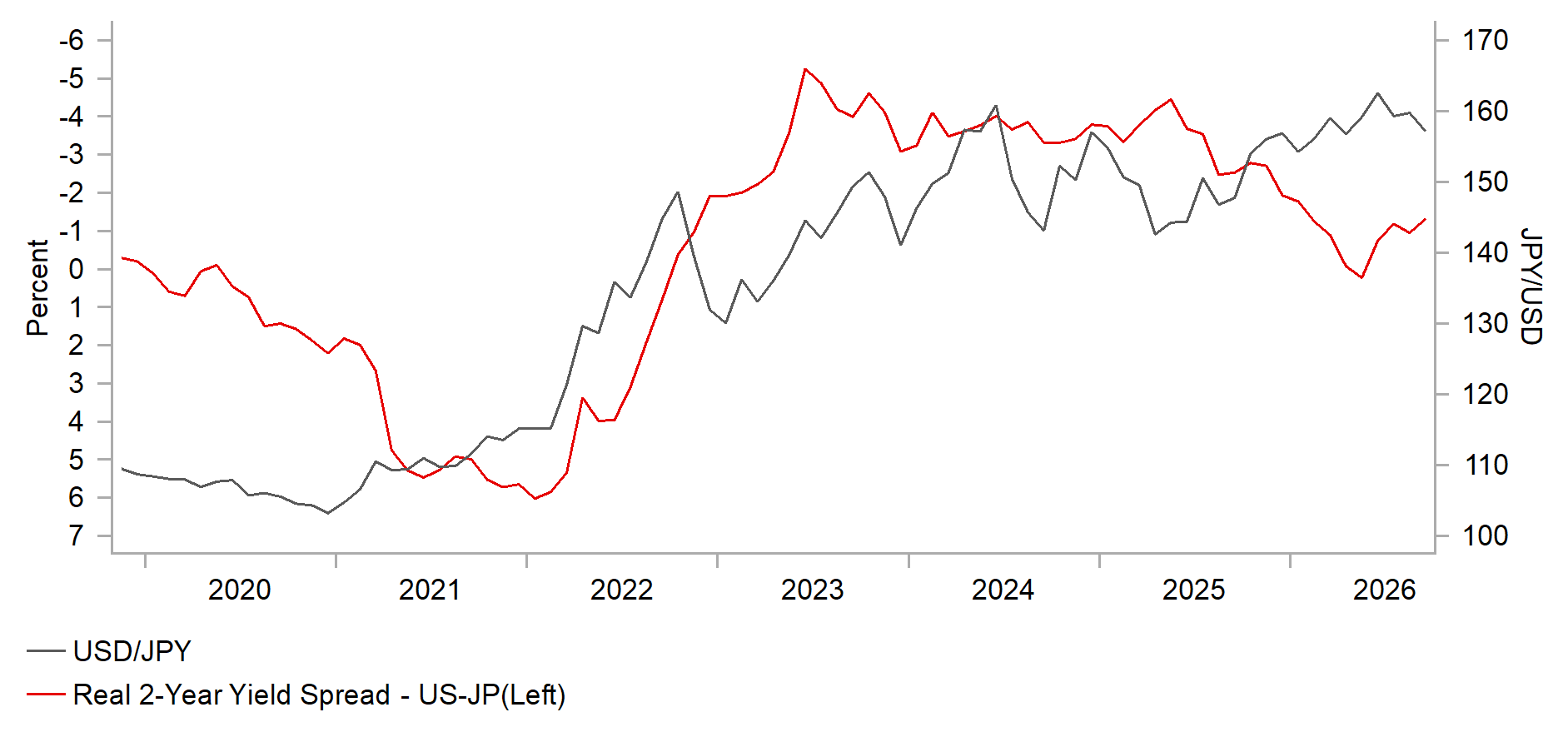
US-JAPAN REAL 2Y YIELD SPREAD VS USD/JPY
Source: Bloomberg, Macrobond & MUFG GMR
TWI JPY CORRELATION WITH GLOBAL EQUITIES
Source: Bloomberg, Macrobond & MUFG GMR
Euro
Spot close 30.10.26 | Q4 2026 | Q1 2027 | Q2 2027 | Q3 2027 | |
EUR/USD | 1.1163 | 1.1200 | 1.1400 | 1.1600 | 1.1800 |
EUR/JPY | 175.81 | 173.60 | 174.40 | 175.20 | 175.80 |
Consensus | Consensus | Consensus | Consensus | ||
EUR/USD | 1.1300 | 1.1300 | 1.1400 | 1.1500 | |
EUR/JPY | 179.00 | 176.50 | 177.00 | 177.00 |
MARKET UPDATE
In October the euro weakened further against the US dollar in terms of London closing rates from 1.1360 to 1.1163. The ECB at its meeting in October kept the deposit rate unchanged at 2.50%, the two hikes in September and June, which was the first since September 2023. Balance sheet reduction continues with the ECB’s projected maturities from both APP and PEPP expected to result in a EUR 500bn decline in balance sheet holdings in 2026.
OUTLOOK
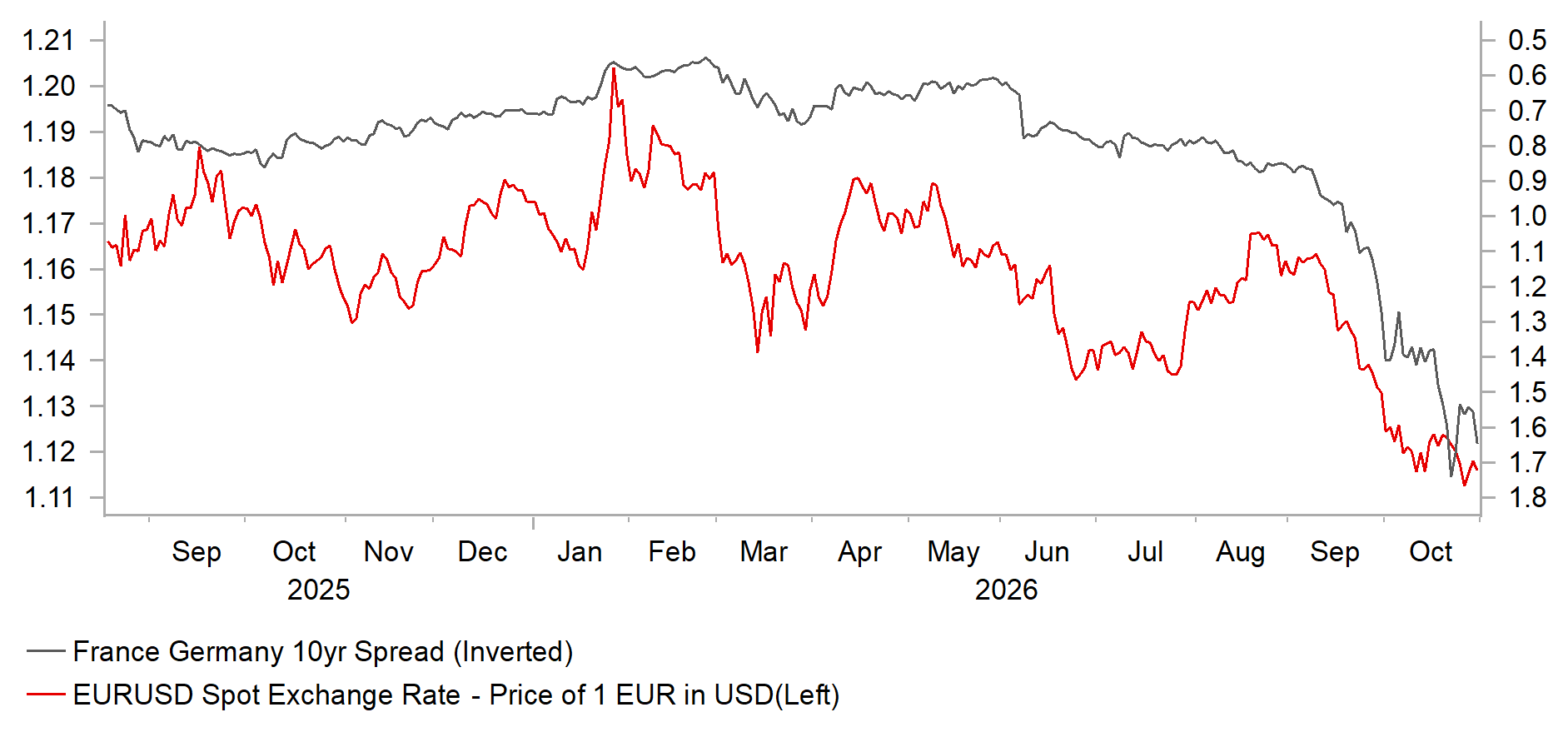
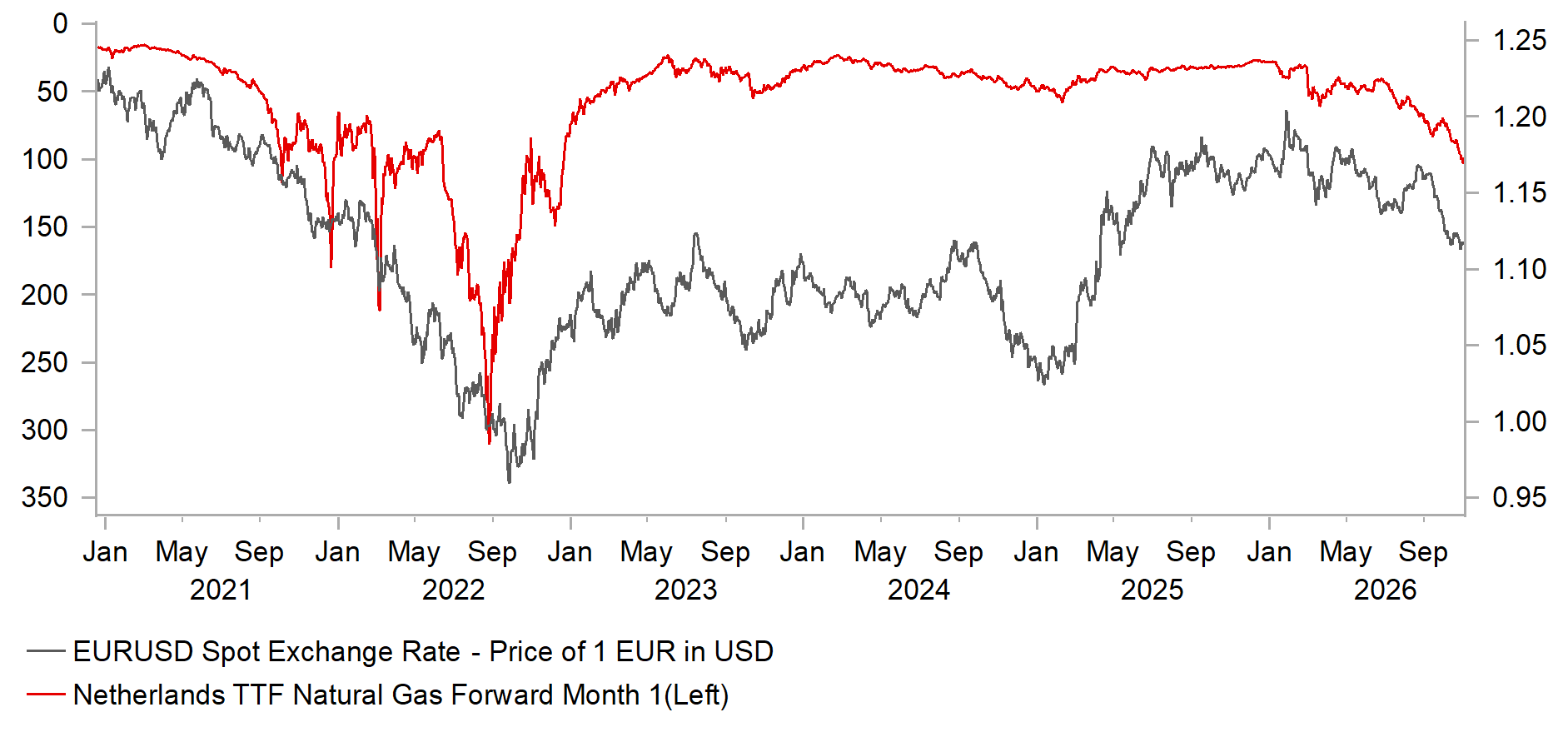
The euro was the worst performing G10 currency in October with rising natural gas prices and increased bond market selling in France undermining confidence. The TTF natural gas price advanced 43% in October and is now 236% higher since the conflict in the Middle East began at the end of February. The euro has underperformed this month despite the 2-year EU-US swap spread moving higher that indicates to us that investors are growing more concerned over the negative growth implications from higher energy. The euro-zone economy has been resilient to energy prices so far but whether that would continue if natural gas prices rise further is more questionable. The increased selling of OATs and the social unrest in France have encouraged investors to price in a greater risk premium at an earlier than expected time. ECB President Lagarde made clear at the policy meeting that if needed the ECB has “the instruments available to respond, and the criteria and conditions under which this applies are well known”. Certainly, the current conditions do not look like deterring the ECB from hiking again and Lagarde sent a clear message stating that the “direction of travel is quite clear for all of us” underlining the likelihood of a hike in December. A hike next year is certainly more debatable especially for the meetings from March onwards when the ECB will be under new leadership. President Lagarde confirmed she will step down on 7th February. Klaas Knot and Pablo Hernandes de Cos are the early front runners to replace Lagarde with Knot viewed as the more hawkish of the two.
The 2027 budget in France needs to be passed by year-end and there is a risk of a repeat of last year and the need to use Article 49.3 to force it through. That would inevitably trigger no-confidence motions and in this scenario the question is whether Le Pen would actively seek to bring down the government or possibly abstain. Or pursue a no-confidence motion that would not get the required support. However, this plays out we see a budget passed by year-end that could be followed by some respite before the focus shifts to the election. The ECB also has options but at this juncture we assume a budget is passed and risks subside, temporarily.
Last month we revised notably lower our EUR/USD forecasts and we maintain these levels. There remain downside risks for EUR/USD but expect those risks to ebb as a budget is passed. We don’t expect a Le Pen victory will lead to renewed bond market instability, and beyond then declining US yields will see a higher EUR/USD.
INTEREST RATE OUTLOOK
Interest Rate Close | Q4 2026 | Q1 2027 | Q2 2027 | Q3 2027 | |
Policy Rate | 2.50% | 2.75% | 3.00% | 3.00% | 2.75% |
3-Month Bill | 2.70% | 2.85% | 3.05% | 2.95% | 2.70% |
10-Year Yield | 3.32% | 3.50% | 3.40% | 3.20% | 3.00% |
* Interest rate assumptions incorporated into MUFG foreign exchange forecasts.
The 10-year German bund yield fell sharply in October by a substantial 23bps to close at 3.32%, nearly reversing the entire jump in September (+27bps). The bond market turmoil in France prompted increased demand for German bunds while the increased volatility in AI-related stocks added to renewed demand for fixed income in general – the UST bond 10-year yield fell 36bps. The general tightening of financial conditions also led to speculation that the inflation risks could subside and the ECB may not be as active as expected. The OIS market saw rate hike expectations cut by 20bps over the period to next September. That view was essentially endorsed by Lagarde who acknoweldged that financial conditions had tightened. It well have been the reason why the ECB chose not to hike in October – an option to hike had been discussed. Data on CPI continues to show limited evidence of pass-through from energy into broader inflation. YoY core CPI stood at 2.5% in September, 0.1ppt higher than the level a year earlier. YoY energy inflation stood at 18.9% in September. With nearly all G10 OIS markets indicating rate hikes as overpriced in our view we see plenty of scope for yields to decline.
EUR/USD VS. FRANCE-GERMAN 10YR SPREAD
Source: : Bloomberg, Macrobond & MUFG GMR
EUR/USD VS. TTF NATURAL GAS
Source:: Bloomberg, Macrobond & MUFG GMR
Pound Sterling
Spot close 30.10.26 | Q4 2026 | Q1 2027 | Q2 2027 | Q3 2027 | |
EUR/GBP | 0.8332 | 0.8400 | 0.8500 | 0.8600 | 0.8700 |
GBP/USD | 1.3398 | 1.3330 | 1.3410 | 1.3490 | 1.3560 |
GBP/JPY | 211.01 | 206.70 | 205.20 | 203.70 | 202.10 |
Consensus | Consensus | Consensus | Consensus | ||
GBP/USD | 1.3300 | 1.3200 | 1.3300 | 1.3400 |
MARKET UPDATE
In October the pound advanced modestly versus the dollar in terms of London closing rates, moving from 1.3276 to 1.3398. The pound gained versus the euro, moving from 0.8557 to 0.8332. The MPC did not meet in October and hence the key policy rate was unchanged at 3.75%, after six 25bp cuts since August 2024.
OUTLOOK
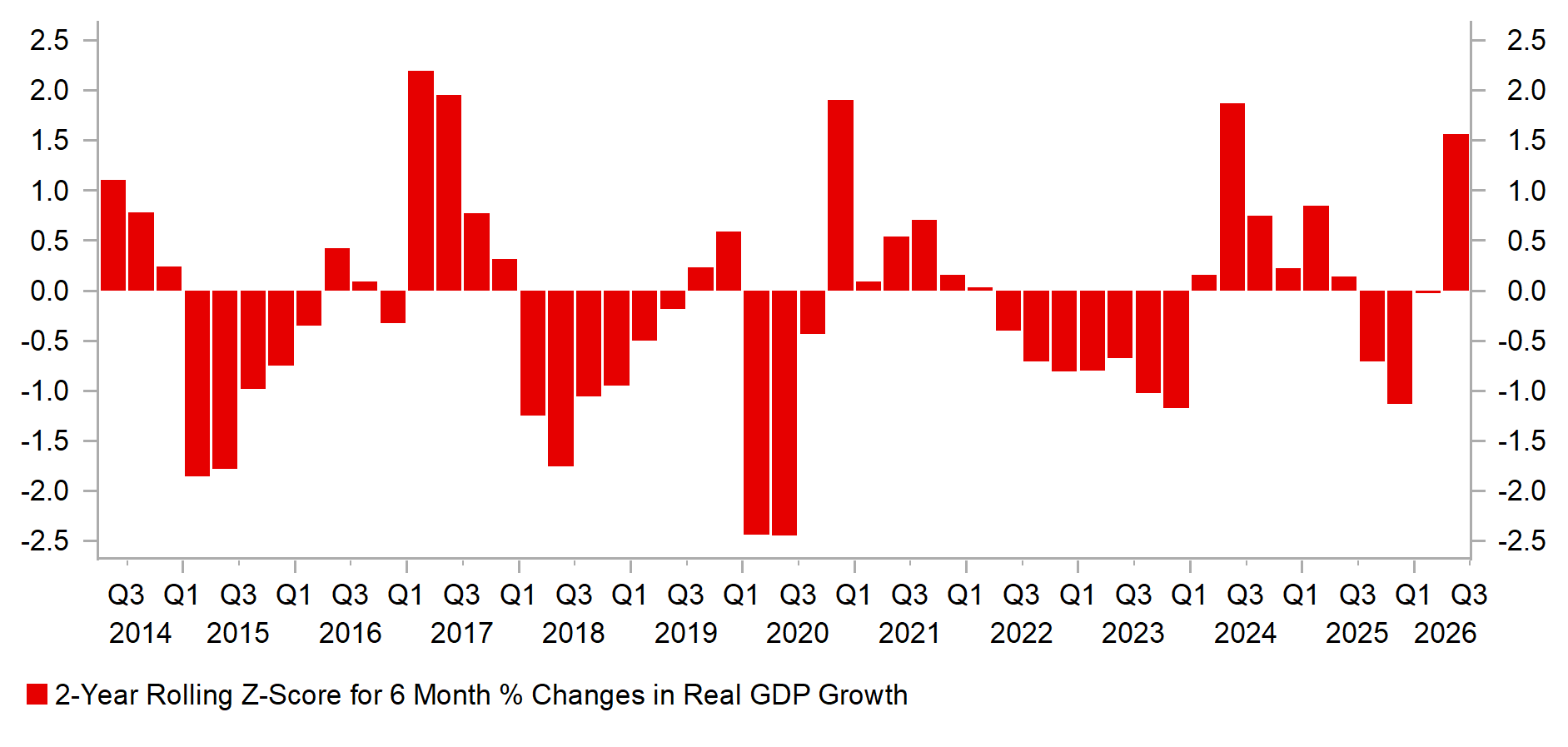
The pound strengthened against both the US dollar and euro in part reflecting the signs of better-than-expected growth in the UK that has helped lift expectations of monetary tightening. The OIS curve now implies the UK will have the highest policy rate, along with Australia, amongst G10 countries in 2027. Real GDP grew by 0.7% on a 3mth/3mth basis in August and this year the economy is showing more resilience helped by manufacturing growth. The consumer side of the economy is more mixed with risks ahead even though 3mth/3mth services activity increased 0.9% in August. Payroll employment also increased 13k in September while the August drop was revised away (-26k to +1k). The transmission mechanism from higher rates and tighter policy to be soon delivered could weigh on the consumer. The BoE Credit Conditions Survey revealed a jump in unsecured loan defaults.
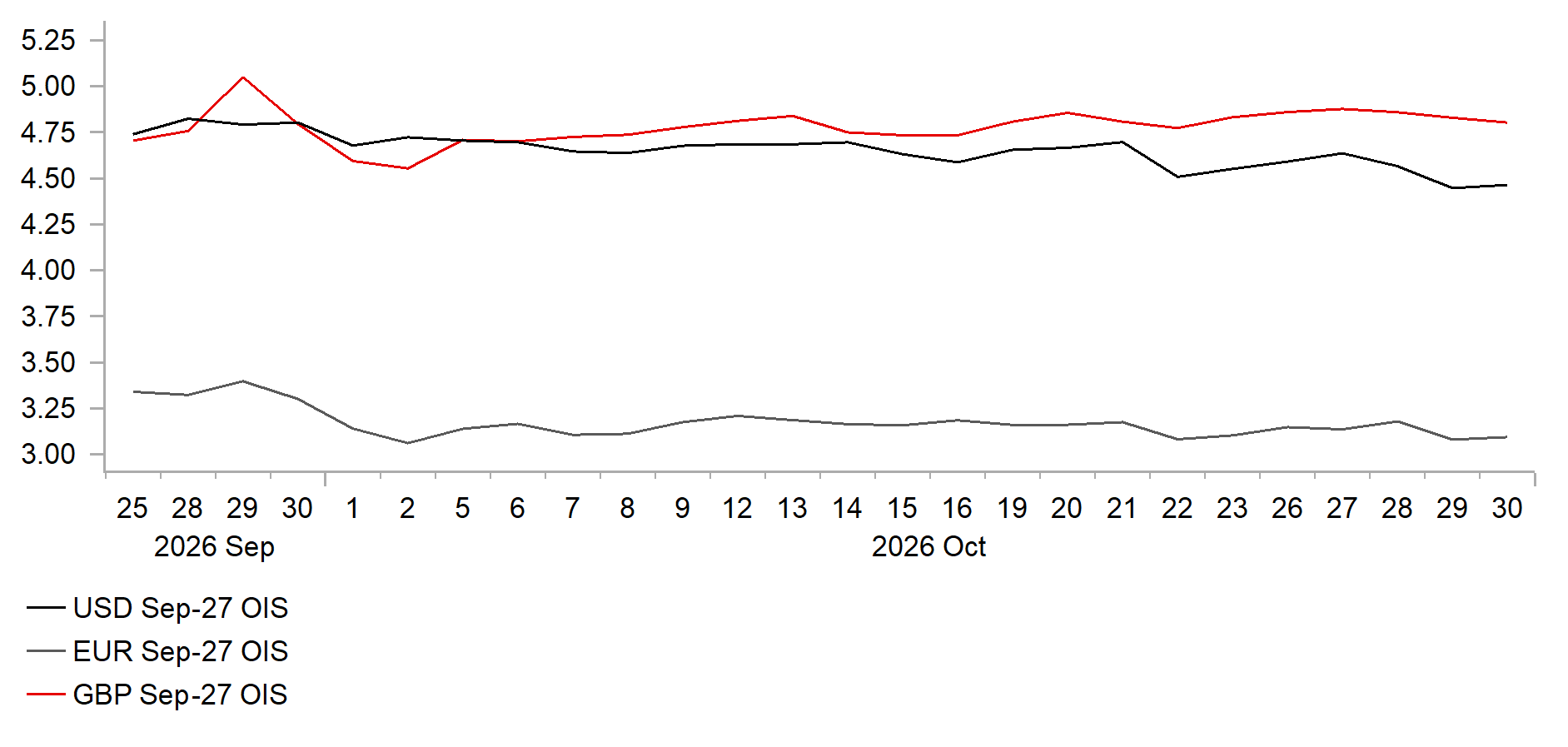
While the incoming data shows resilience, the transmission of higher rates is likely to slow economic activity ahead. Higher inflation is also still to come through and that will hit real incomes at the same time. This more mixed outlook leaves us sceptical of the BoE delivering what is currently priced into the market. We expect a rate hike on 5th November and one further hike (likely in Feb 2027) but the OIS market shows two further 25bp rate hikes by September next year which we see as excessive. While we view nearly all G10 OIS curves as overpriced, the UK curve is much more overdone than the euro-zone and hence there is scope for that adjustment in rate expectations to act as a drag on the pound versus the euro.
The UK budget delivered on 28th October contained no big surprises and Chancellor Healey confirmed that the government would utilise the headroom, allowing the headroom to drop from GBP 23.6bn to GBP 15bn. The budget included modest loosening worth GBP 7.6bn (0.25% of GDP) this fiscal year but tax increases worth GBP 5.5bn by the final year of parliament in 2029-30. The OBR revised higher its GDP projection for next year from 1.0% to 1.2% and the DMO estimated Gilt supply this fiscal year of GBP 250.6bn, close to the market consensus. This was a budget that avoided further increasing fiscal risks but those risks remain elevated.
We have not changed our view for the pound to strengthen modestly versus the dollar and weaken modestly versus the euro. The macro backdrop showing resilience has helped provide support for the pound but higher rates and energy prices could see that resilience questioned. The BoE is unlikely to meet current market pricing resulting in pound underperformance, albeit more versus non-dollar currencies
INTEREST RATE OUTLOOK
Interest Rate Close | Q4 2026 | Q1 2027 | Q2 2027 | Q3 2027 | |
Policy Rate | 3.75% | 4.00% | 4.25% | 4.25% | 4.00% |
3-Month Bill | 4.19% | 4.15% | 4.35% | 4.20% | 3.95% |
10-Year Yield | 5.28% | 5.40% | 5.20% | 5.00% | 4.70% |
* Interest rate assumptions incorporated into MUFG foreign exchange forecasts.
The 10-year Gilt yield declined modestly in October, by 14bps to close at 5.28%. The 10-year yield did trade at the highest level since July 2007 in October (5.52%) highlighting the elevated levels that could certainly start to have an impact on economic activity if sustained. Our view remains that the curve is currently overpriced for what the BoE will deliver in rate hikes and once that becomes apparent there is scope for the 10-year yield to retrace lower. The 10-year yield incorporates an inflation expectation and term premium with that premium in part determined by monetary policy expectations. The OIS price assumes a “higher for longer” scenario we don’t expect and we have assumed the BoE commnecing with a rate cut at the back-end of the forecast profile. Wage growth has slowed while inflation is picking up that will impact real incomes and consumer spending in 2027. The BoE’s Credit Conditions Survey that revealed the large jump in unsecured loan defaults was the largest increase since the Global Financial Crisis. We don’t see the current level of interest rates as sustainable and hence assume Gilt yields will retrace lower. The decline assumed is modest reflecting inflation and fiscal risks.
2YR ROLLING Z-SCORE 6M CHANGES IN GDP
Source: : Bloomberg, Macrobond & MUFG GMR
G3 OIS-IMPLIED POLICY RATES: SEPTEMBER 2027
Source: : Bloomberg, Macrobond & MUFG GMR
Chinese renminbi
Spot close 30.10.26 | Q4 2026 | Q1 2027 | Q2 2027 | Q3 2027 | |
USD/CNY | 6.6531 | 6.6500 | 6.6000 | 6.5500 | 6.5000 |
USD/HKD | 7.8451 | 7.8400 | 7.8300 | 7.8200 | 7.8000 |
Consensus | Consensus | Consensus | Consensus | ||
USD/CNY | 6.6900 | 6.6500 | 6.6200 | 6.6000 | |
USD/HKD | 7.8400 | 7.8200 | 7.8200 | 7.8200 |
MARKET UPDATE
In October, USD/CNY moved from 6.7037 to 6.6531. On 20th October, the PBoC held the 1Y and 5Y LPR unchanged at 3.00% and 3.50%, respectively. On 19th October, Governor Pan announced the plan to further optimize China’s monetary policy framework and will study switching the policy rate from 7-day reverse repo rate to overnight reverse repo rate “at an appropriate time”.
OUTLOOK
Growth momentum in China picked up toward the end of Q3 partly due to a faster pace of policy implementation. Positively, China’s 3Q GDP growth returned to the target range of 4.5-5.0% at 4.5%yoy driven by stronger exports alongside a very mild pick-up in retail sales, offsetting the drag from investment. Another encouraging sign is FAI going back to (very mild) expansion after months of consecutive contraction. While the retail sales growth picked up more than expected, this was in part driven by the Mid-Autumn Festival holiday shift to September this year. September monetary data also showed the household deleveraging continued as consumer confidence remained subdued dragged by prolonged property downturn and weak job prospects. As such, the K-shape economy remains entrenched though, with firmer industrial production and external demand. Looking ahead, we now have a higher conviction that the government can achieve its full-year growth target, as faster policy implementation and incremental measures introduced since the end-September take effect. For instance, the new RMB 800bn policy-based financial instrument has been fully dispatched within two months, helping to replenish project capital in major areas such as AI and digital economy, with supported projects involving total investment of up to CNY 11.6tn. The new incremental policies such as the inclusion of “Six Networks” into PSL policy scope and the utilization of RMB 250bn special local government bond (unused) quota for project funding should meaningfully support the rollout of new projects in Q4.
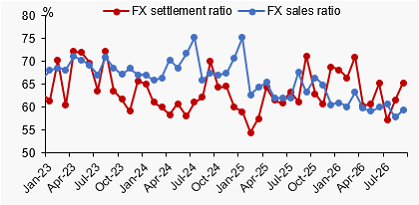
The pace of CNY appreciation picked up in October, supported by a modest improvement in fundamentals and stronger exporter FX conversion. The FX settlement ratio rose to 65% in September from a recent low of 57% in July, potentially reflecting improved RMB sentiment as the PBOC maintained stronger CNY fixings despite a firmer US dollar. Looking ahead, China’s sizeable trade surplus should remain an important source of RMB support, although external headwinds, including the risk of further Fed tightening, elevated US yields and persistently high oil prices, could constrain appreciation through year-end. Recent stronger fixings also suggest that the PBOC remains reluctant to tolerate meaningful RMB depreciation. The key question, however, is increasingly how much RMB appreciation the authorities are willing to accommodate, particularly if the US dollar weakens materially against other currencies. We maintain our view of USD/CNY trading around 6.6500 until the end of this year and then declining to 6.5000 by Q3 2027.
INTEREST RATE OUTLOOK
Interest Rate Close | Q4 2026 | Q1 2027 | Q2 2027 | Q3 2027 | |
LPR 1Y | 3.00% | 3.00% | 3.00% | 3.00% | 3.00% |
7-Day Reverse Repo Rate | 1.40% | 1.40% | 1.40% | 1.40% | 1.40% |
10-Year Yield | 1.64% | 1.65% | 1.75% | 1.80% | 1.85% |
* Interest rate assumptions incorporated into MUFG foreign exchange forecasts.
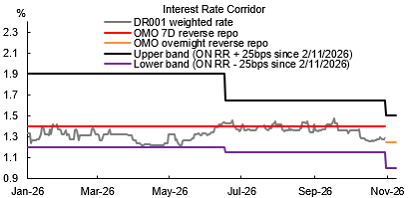
The PBOC’s transition of its effective policy anchor from the 1.4% 7-day reverse repo rate to the 1.25% overnight rate, leaving markets to interpret the 15bps change as the rate cut. We see the recent development more as PBOC’s optimization of its monetary-policy transmission mechanism, as daily operations strengthen the signalling effect. The plan to diversify loan-pricing benchmarks which allows financially stronger corporates to have the option to use interbank overnight repo rate for floating-rate loans is a clear example, linking the policy rate more directly to the borrowing cost. The latest PBoC announcement also includes making the overnight reverse repo operation daily, effective from 2nd November. With the current interbank overnight repo rate (DR001) already low at 1.28%, the actual easing impulse could be much smaller than the headline 15bps suggests. Looking ahead, while the strong government bond issuance in November-December will create upward pressure on 10y CGB yield, the overall more relaxed monetary policy than fiscal policy, as well as weak domestic (credit) demand would likely keep government bonds yields low.
FX SETTLEMENT RATIO HAS PICKED UP SINCE JULY THIS YEAR
Source: CEIC, MUFG GMR
INTERBANK OVERNIGHT REPO RATE (DR001) IS NOW TRADING AT ~1.28%
Source: Bloomberg, PBoC, MUFG GMR