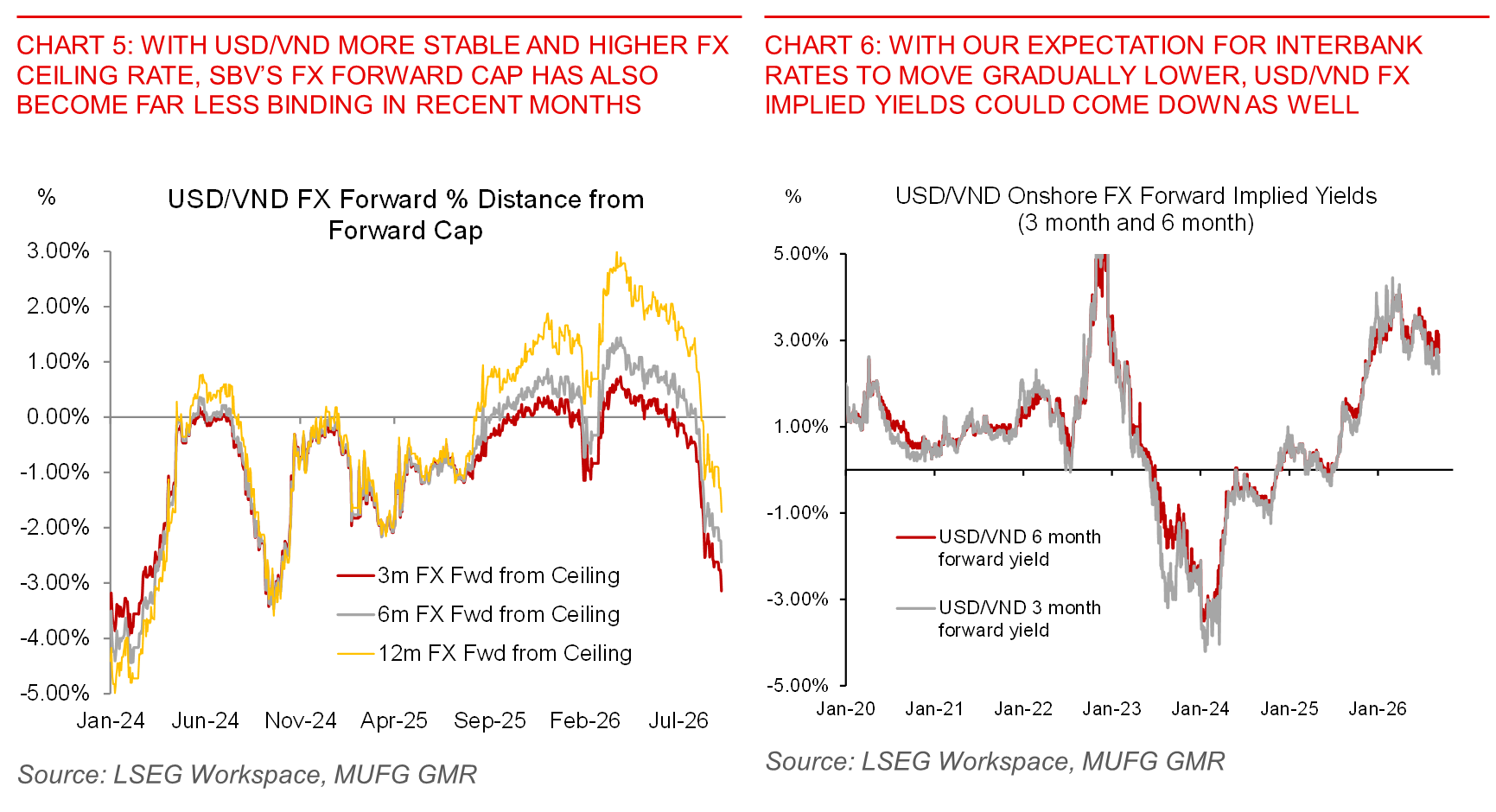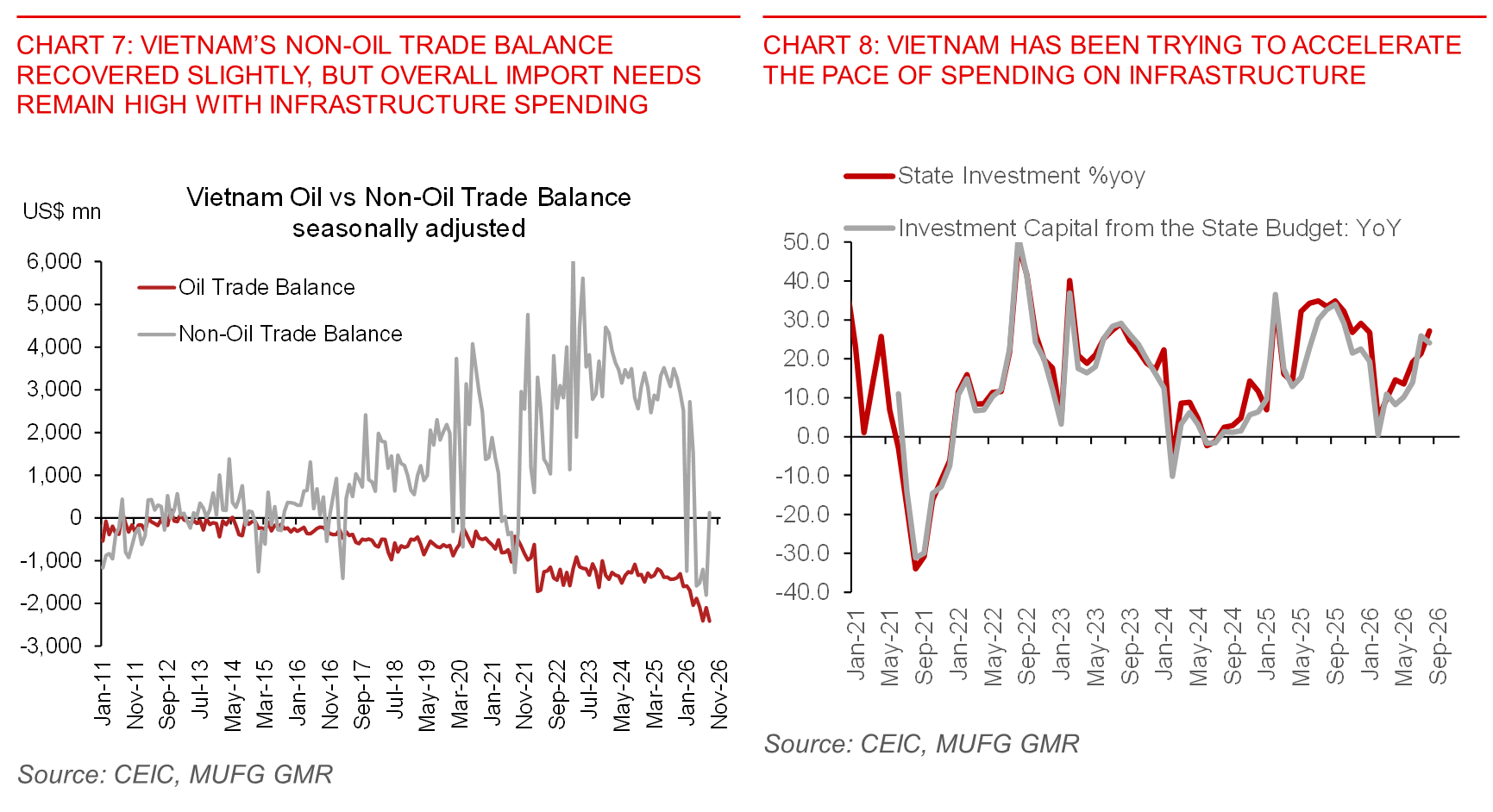

We are forecasting USD/VND to be more stable. We see USD/VND at 26,000-26,100 over the next few months into end-2026, before moving towards 26,200-26,300 levels later in 2027. These forecasts were already updated in our latest Global FX Monthly for September 2026 (see here), and compares with our expectation made until August 2026 for USD/VND to rise towards 26,700 by 2Q2027.
With a more stable USD/VND FX rate, we also expect SBV to keep rates on hold through 2027, compared with our earlier forecast made until August 2026 of modest rate hikes. We correspondingly also expect the 3-month interbank rate to move gradually lower below 7% over time.
There are a few factors driving our forecast.
First, there have been larger capital inflows than we have anticipated and which looks likely to continue, and this is coming despite the widening of the trade deficit in Vietnam. In particular, implemented FDI rose by 15%yoy on a rolling YTD basis, up from around 9-10% a few months ago. This is also reflected in a pick-up in FDI registrations and commitments, some of which should start to show up and be converted to actual FDI later in 2027.
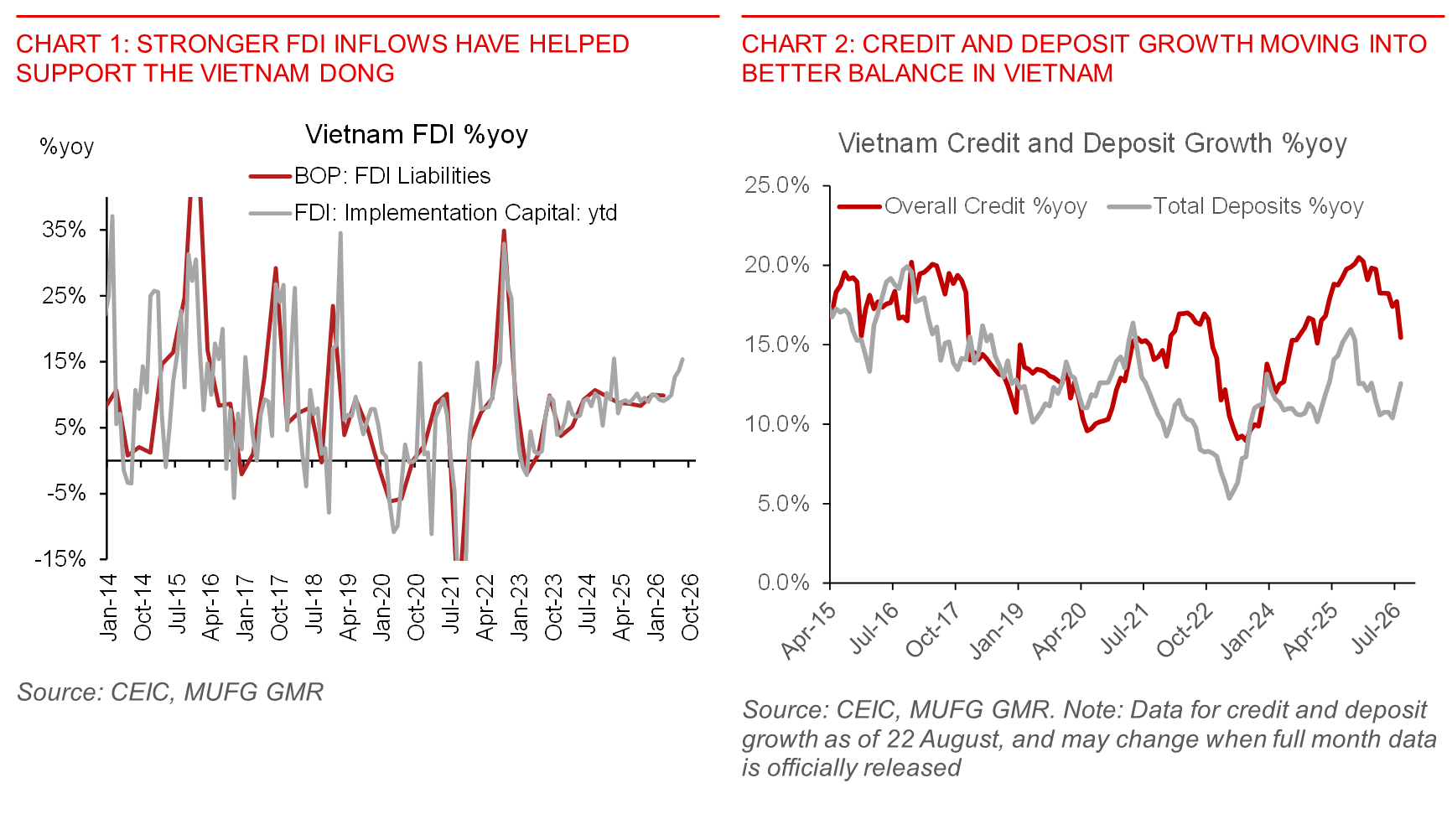
Second, from a broader balance of payments perspective, we think a combination of lower Dollar deposit outflows by residents, coupled with greater inflows of offshore loans to fund onshore investment can help explain the stronger and more stable performance by USD/VND so far. The balance of payments data is somewhat lagged as of 1Q2026, but overall we do see some initial signs that domestic capital outflows are slowing.
Third, Vietnam received a larger-than-expected weighting in FTSE Russell’s semi-annual index review, with a weight of 0.49%, above FTSE’s earlier projections. This is estimated to bring around US$3bn of foreign inflows over time, compared with earlier estimates of US$2bn, with actual passive flows taking place until September 2027. Together with that, we have also seen a slower pace of foreign selling by foreign portfolio equity investors over the past 2 months in Vietnam, and if continued this should be an additional factor helping to support VND.
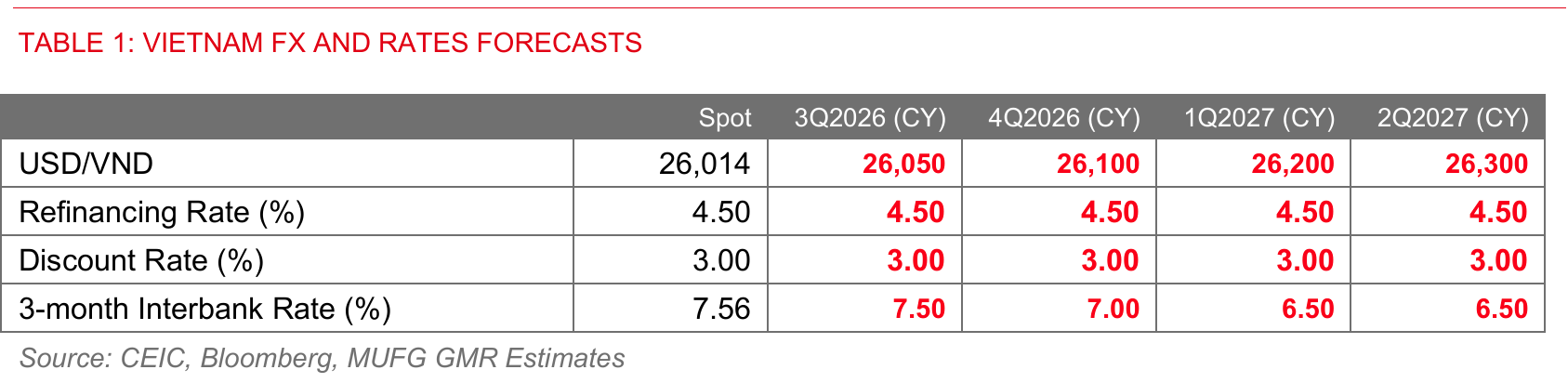
Fourth, credit and deposit growth seems to have reached a better balance, even as credit is still overall outpacing deposits. The latest data as of 22 August suggests credit growth of around 16%yoy, but down from close to 20%yoy at the start of the year. In contrast, we are seeing some gradual signs of a pickup in deposit growth, rising to 13%yoy as of 22 Aug, up from 11%yoy previously.
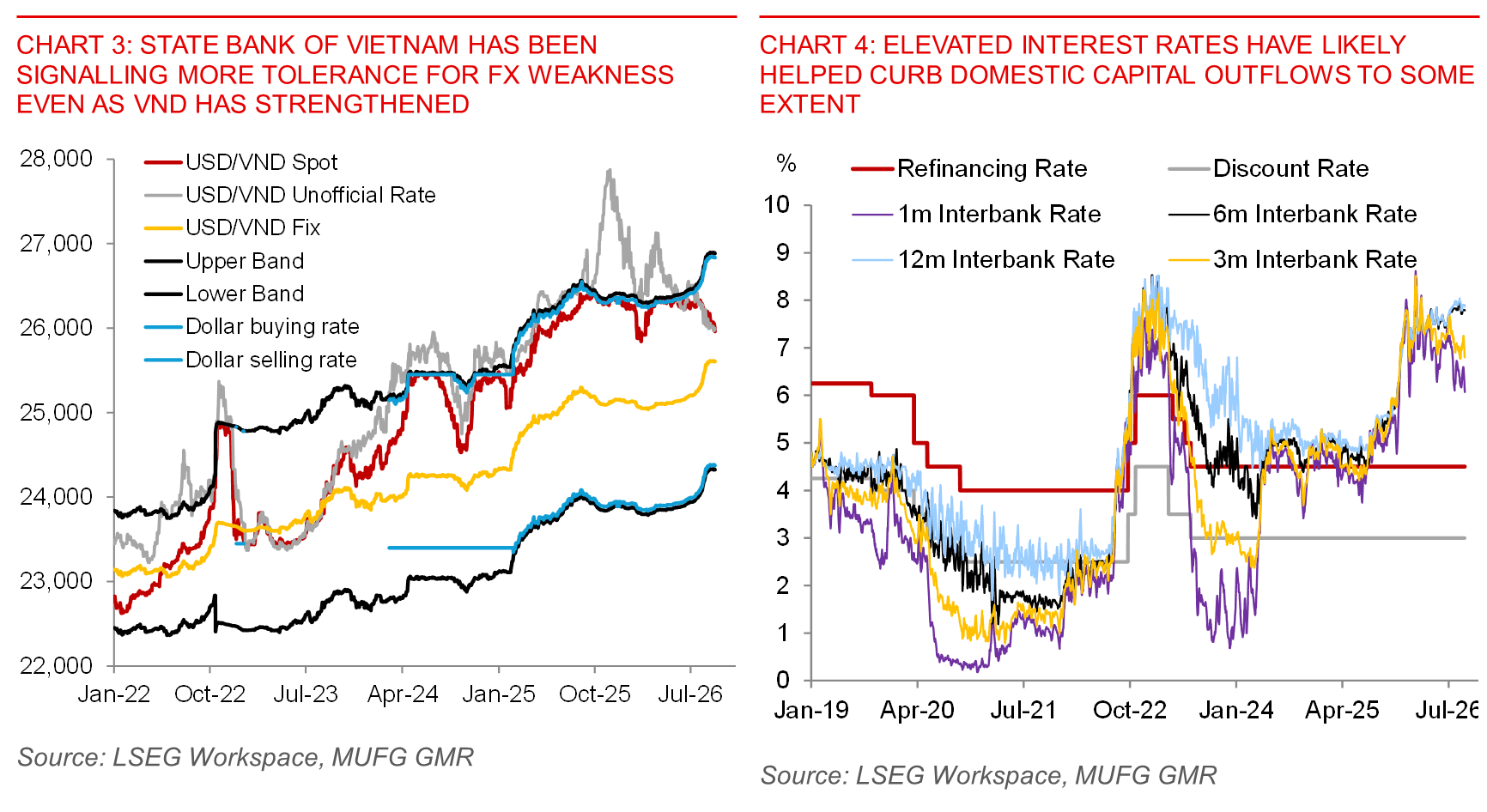
From a fundamental perspective, we think the common thread is that higher domestic VND interest rates coupled with slightly better macro stability have combined to create a better balance in the FX flow picture for USD/VND. In addition, with some key Asian currencies such as the South Korean won and Japanese Yen strengthening significantly, this has also spilled over to some extent to support VND.
We still think the direction of travel is for USD/VND to rise from here. State Bank of Vietnam has been gradually raising its USD/VND fixing rate and with that the FX ceiling rate over the past few months, and as such we think this signals more tolerance for FX weakness over the medium-term. There is also some chance that SBV could raise its Dollar buying rate to cap USD/VND downside. In addition, with a high GDP growth target of 10%, we think there will be a greater push by authorities to support the economy through credit and liquidity from here.
We expect SBV to keep rates on hold, and see 3-month interbank rates trending lower gradually below 7%.