

Food, housing and energy are key drivers of Turkish inflation
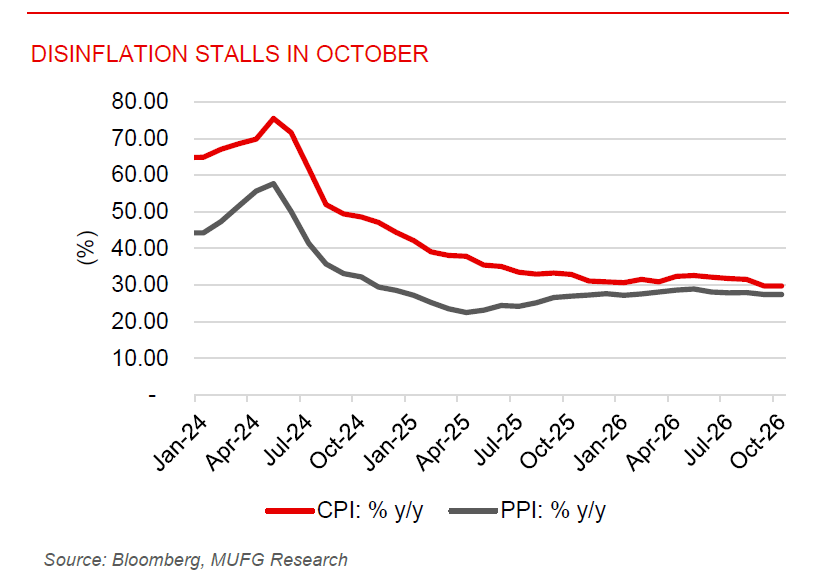
Inflation in Turkey accelerated marginally in October, rising to 29.77% y/y from 29.73% a month earlier. On a sequential basis, the uptick was more notable with the monthly pace of inflation rising by 2.6% m/m up from 1.8% in September.
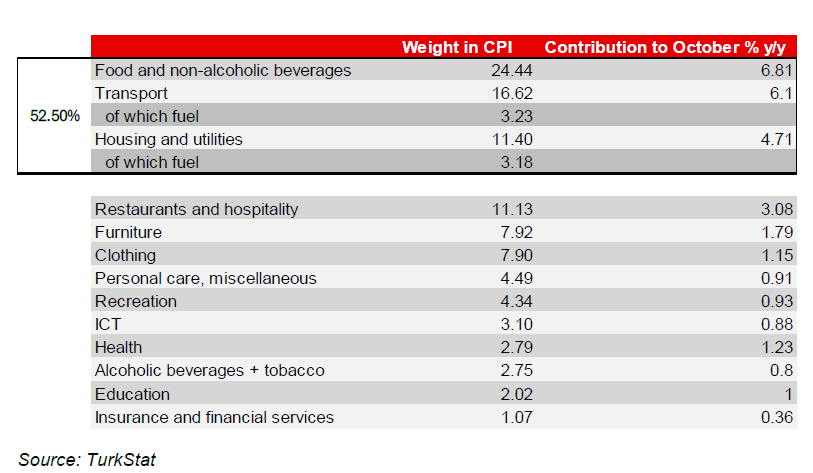
The primary contributors to inflation in October remain the same as they have been for 2026 overall: food prices, transport costs and housing. Food prices were up 27% y/y in October while transport costs were higher by 36% and housing prices, including utilities, were up by 40%. Those three components account for more than 52% of the total CPI basket in Turkey and drive the headline index but this month there was also a notable increase in the contribution from clothing prices.
Economic activity is slowing, supporting disinflation
Disinflation in Turkey has slowed in 2026 with prices holding close to 30% y/y as the impact of higher imported energy prices works against domestic economic conditions that support further easing in inflation. Industrial production has been near flat on average in the first eight months of the year compared with growth of closer to 3% last year while the manufacturing PMI remains below the neutral 50 level. Slowing retail activity has also been contributing to a widening output gap in Turkey’s economy, which is they key force helping to push the pace of inflation lower compared with where price gains had been in the last few years.
Renewed conflict in the Middle East could worsen energy inflation
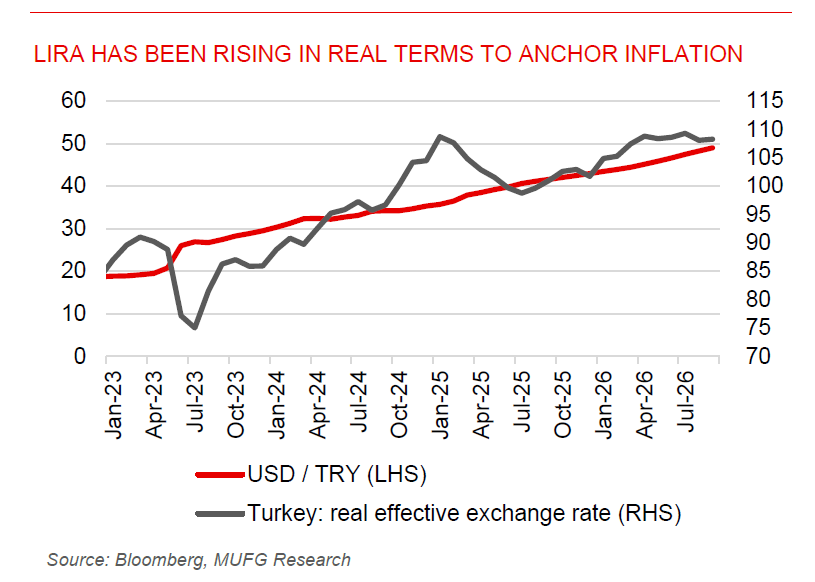
Risks to the inflation outlook in Turkey will largely be external. A renewed conflict in the Middle East that impacts exports of oil and natural gas would push energy prices higher, filtering directly into transport and housing costs and also raising prices across supply chains in Turkey’s economy. A spike in energy prices would also risk more pressure on USD/TRY beyond the control of the central bank. The CBRT has been working to keep the nominal pace of lira depreciation below the monthly pace of inflation to create an appreciation in real effective exchange rates. A disorderly rise in energy costs would put further strain on Turkey’s terms of trade and FX reserves.
The latest uptick in inflation also creates more uncertainty about the CBRT’s next decision at the December MPC. The bank cut policy rates by 100bps in October, taking the one-week repo rate to 36%, in the first move by the CBRT since January. While the broader domestic disinflationary pressure remains supportive of more rate cuts from the CBRT, near term risks on the energy outlook have a bilateral skew and another spike in energy prices may prompt a hold at the December 10 meeting.