
Fed hikes to be another headwind for GCC economies
GCC central banks will keep rates aligned with moves from the Fed, with the dollar peg remaining the key policy anchor despite heightened regional geopolitical volatility.
Inflation has accelerated across much of the GCC in 2026 as higher energy prices and conflict-related supply chain disruptions filter through to consumer prices.
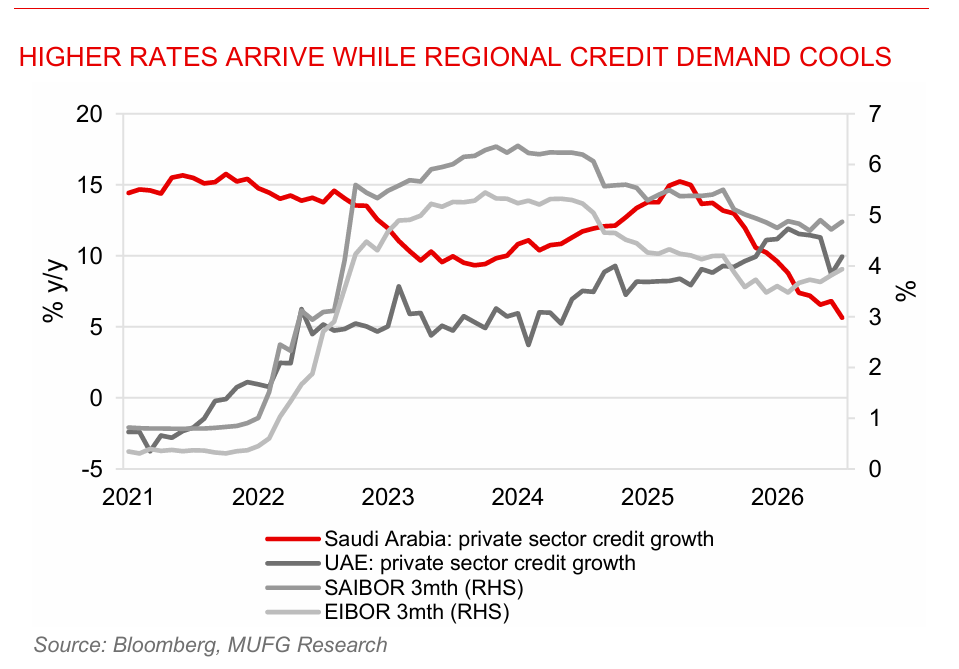
Higher interest rates are arriving at a more challenging point in the cycle, with non-oil growth and private-sector credit demand softening, raising the risk that imported tighter US monetary policy becomes misaligned with domestic economic conditions.
Currency peg an anchor of stability amid geopolitical volatility
The central banks of the Gulf Cooperation Council economies will track the Federal Reserve in keeping rates on hold following the October FOMC meeting. In order to preserve their currency pegs to the US dollar, Gulf central banks necessarily import monetary policy from the US and that peg stability has provided a policy anchor in 2026 when the region’s economies have been buffeted by the ongoing conflict between the US and Iran.
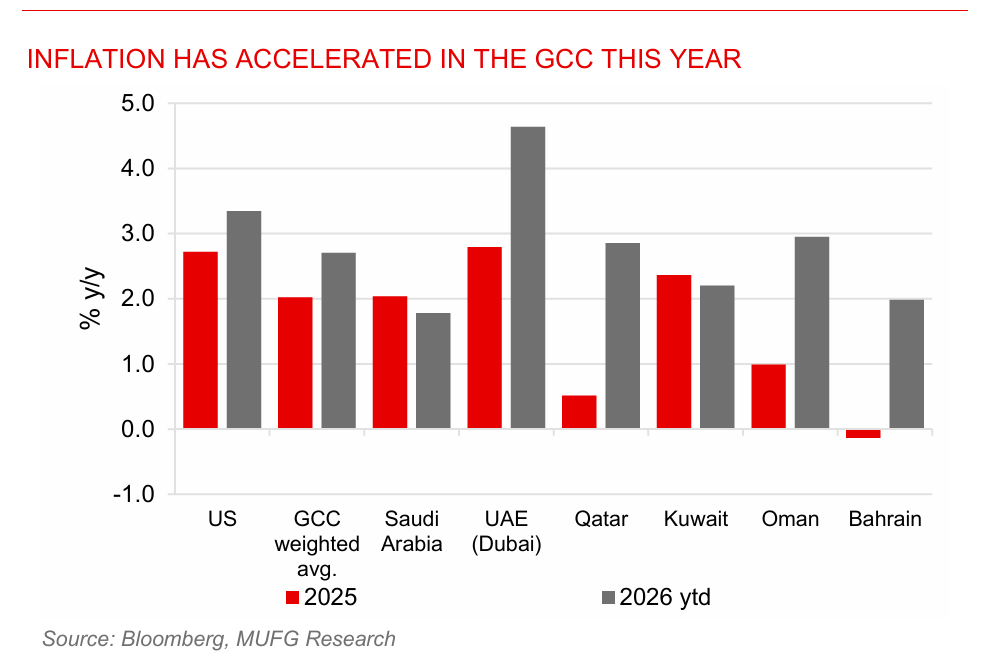
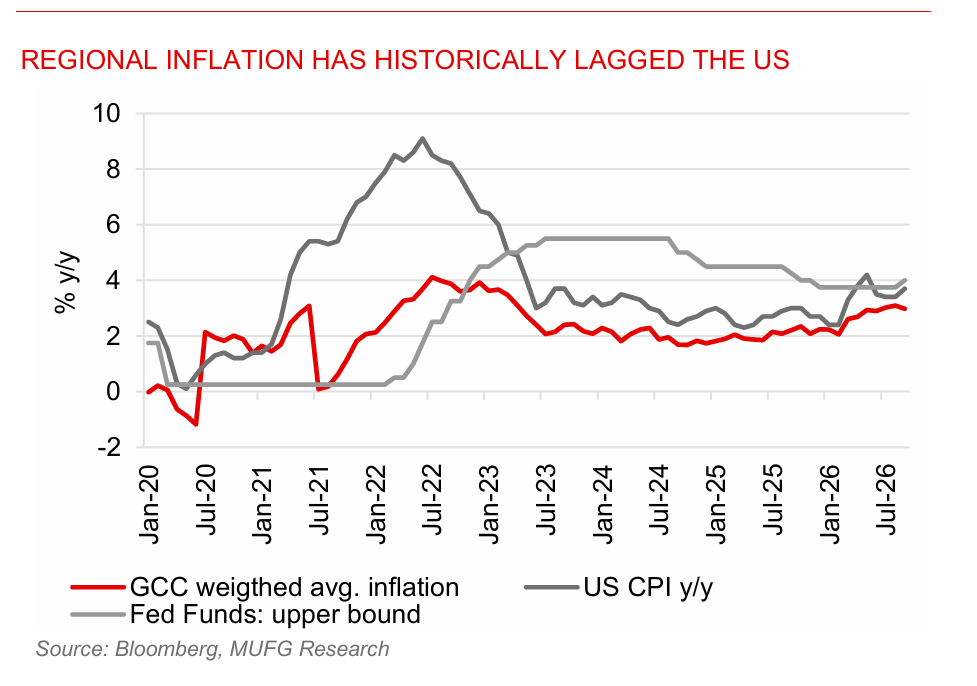
In 2026 inflation has been tracking higher across many of the Gulf economies as higher energy prices and disruptions to supply chains brought about by the regional conflict push prices higher. In the US, inflation has accelerated to an average of 3.3% y/y on the headline CPI as of September, compared with an average of 2.7% in 2025. For the GCC, inflation has also moved higher with weighted average regional inflation at 2.7% year-to-date compared with 2% in 2025.
Inflation impact has been uneven across GCC
However, the aggregate move higher in inflation disguises variance across the region. In Dubai, inflation has accelerated to an average of nearly 4.6% y/y in 2026 as of September, largely thanks to the pass through of higher energy costs: mid-grade gasoline prices have increased by 63% by October from the end of 2025. Inflation in the housing component of the Dubai CPI basket has eased but still contributes a large overall share to headline CPI given it has a near 41% weighting in the basket. Inflation in Dubai was already starting at a higher base compared with the rest of the Gulf economies thanks to a strong run higher in housing inflation over the last several years.
Inflation rates are moderate but a swing from previous periods of low inflation or deflation
Elsewhere in the Gulf, the acceleration in inflation has been more pronounced. Qatar has seen prices rise more than 200bps on the headline CPI to 2.9% on average as of July while Oman and Bahrain have also seen significantly faster inflation this year. The increase in CPI across these economies is consistent with messaging from regional PMIs which have cited higher input and output prices in 2026 with firms noting higher shipping costs in particular as the conflict has not only impacted oil and gas exports from leaving the Gulf but also imposed constraints on imports of capital and consumer goods.
Headline inflation rates in the GCC do appear moderate compared with other peer economies but the swing to accelerating inflation from several years of low inflation or out of outright deflation is a headwind to economic activity. From 2023 until the end of 2025, regional inflation recorded an average of 100bps lower than the US.
Saudi Arabia the odd inflation story out
Saudi Arabia, though, is the notable standout among the Gulf countries with inflation at modest levels of less than 1.8% on average so far in the first nine months of the year, compared with slightly more than 2% last year. A sharp slowdown in housing price inflation has helped to keep the rate of inflation in the Kingdom more moderate than the rest of the GCC economies along with access to supply chains on the Red Sea which were less impacted by the conflict until recent attacks.
Hiking cycle starting with softer growth rates
In previous hiking cycles, the economies of the GCC were able to absorb higher rates even as their domestic inflation dynamics were more muted than in the US. Strong growth post-pandemic thanks to growing populations, increased productivity and widescale project spending from both the private and public sectors meant that the Fed taking rates up to 5.5% on the upper bound by 2023 did little to slow economic activity. Interbank lending rates—which drive domestic credit costs—rose in line with the Fed in 2022-23 but lending to the private sector was still showing more than 10% growth in Saudi Arabia at that time while in the UAE credit growth was largely steady.
Rate hikes arriving amid softer conditions in non-oil sectors
However, at the start of this hiking cycle the economic conditions in the non-oil sectors are softer. National accounts data showed the non-oil economy in Saudi Arabia contracted in Q2 by 0.3% y/y while in the UAE the non-oil economy contracted by 1.1% y/y in Q2. PMI data have shown recovery since then, albeit with higher input costs. Credit growth to the private sector in Saudi Arabia has cooled to 6.1% growth as of August 2026 compared with 10.2% at the end of 2025 while in the UAE the pace of growth is at slightly less than 10% as of July 2026, down from more than 11% at the end of last year.